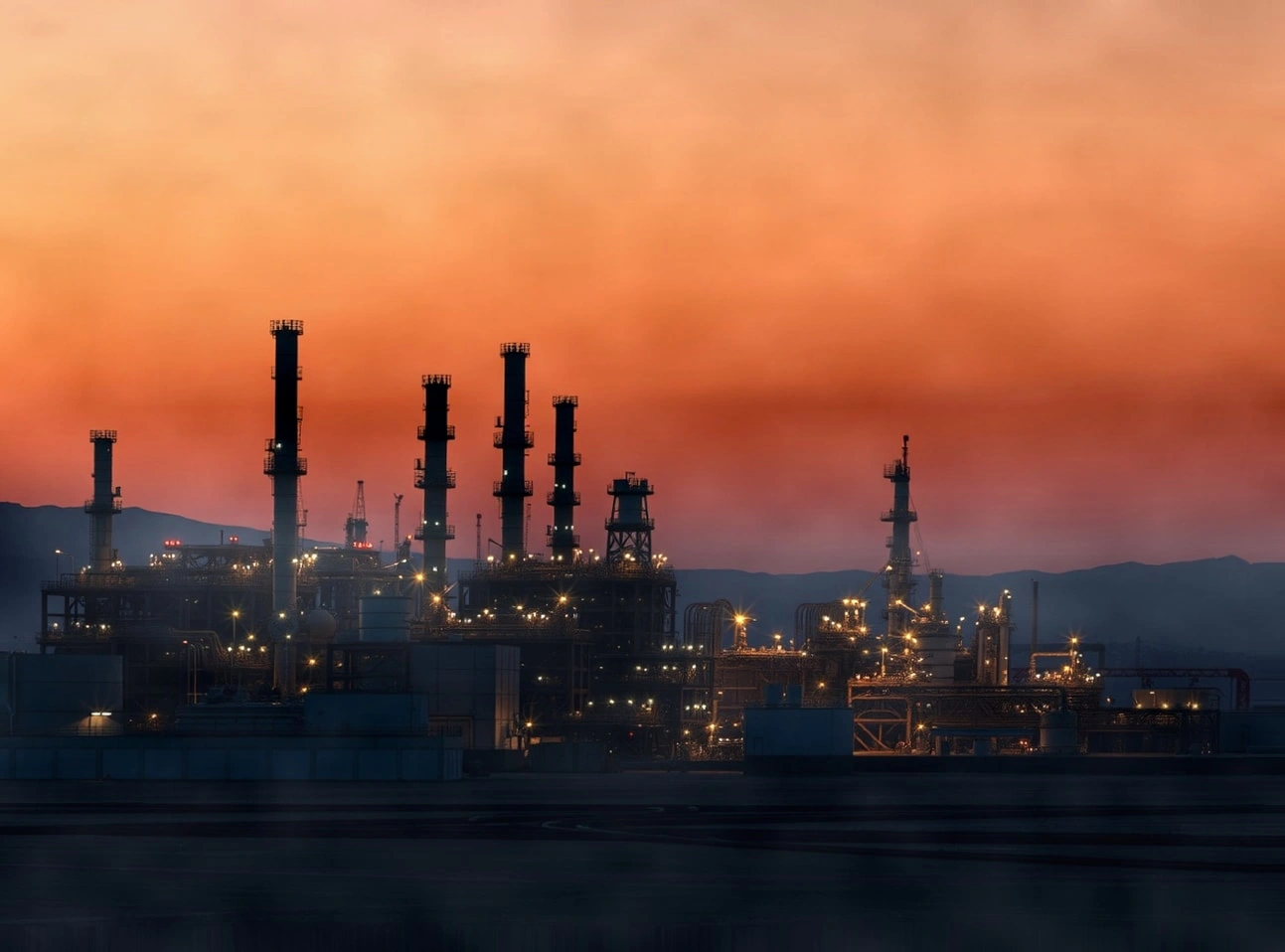
Escalating military strikes between Iran and Israel on key energy infrastructure mark a new phase of regional conflict, posing significant challenges to global oil markets and Middle East stability in 2025. This analysis delves into the historical roots, strategic considerations, economic impacts, and global market reactions, exploring the profound implications for the region's geopolitical landscape.
Recent military exchanges between Iran and Israel targeting critical energy infrastructure signal a dangerous escalation in regional tensions, posing significant challenges to global oil markets and Middle East stability in 2025.
**A New Phase of Regional Conflict: Direct Strikes on Energy Facilities**
Since the beginning of 2025, Iran and Israel have engaged in multiple direct strikes on energy facilities, according to reports from Bloomberg. This shift marks a significant evolution in the region's conflict dynamics. Previously, the two nations primarily engaged through proxy wars and cyberattacks. However, direct attacks on energy infrastructure have now ushered in a new chapter of confrontation. The International Energy Agency is closely monitoring developments, while regional analysts express concern over potential ripple effects.
Energy facilities have become strategic targets for several reasons. Firstly, they represent a vulnerable point in both nations' economies. Secondly, attacks can quickly exert domestic pressure on both governments. Furthermore, such strikes can serve to demonstrate military capability while avoiding large-scale casualties. The United Nations Security Council has convened to discuss related incidents, and global oil prices have experienced notable volatility as a result.
**Historical Roots and Regional Power Plays**
The current conflict is rooted in decades of historical grievances. Relations between the two nations have been tense since the Iranian Revolution in 1979. Disagreements over Iran's nuclear program have further exacerbated their antagonism over the past two decades. Power struggles among regional heavyweights have complicated the situation, with Syria and Lebanon often serving as indirect battlegrounds, and the conflict in Yemen involving Iran-backed Houthi forces.
Recent developments have significantly altered the conflict's dynamics. The Saudi-Iranian normalization agreement brokered by China in 2023 reshaped the regional landscape. The expansion of relations between Israel and Arab nations has also altered traditional alliances. Iran's continuous advancement in nuclear capabilities has heightened Israel's security concerns. Moreover, economic pressures faced by both nations have made energy assets more susceptible targets.
**Strategic Considerations from an Expert Perspective**
Military strategists believe these strikes involve multiple, carefully calculated strategic intentions. Dr. Amina Hassan, a Middle East security analyst at the Chatham House, explained, "Energy facilities are chosen targets that effectively showcase capability while avoiding uncontrolled escalation." She added that such attacks also serve as tests for air defense systems and response mechanisms, and as a way to convey resolve to domestic populations and the international community.
The table below outlines recently confirmed attack incidents:
**Economic Impact and Global Market Reactions**
The global energy market has reacted swiftly to these developments. Following the initial wave of attacks, Brent crude oil prices surged by 8%. However, prices stabilized somewhat after the announcement of strategic reserve utilization. The United States released additional crude oil from its Strategic Petroleum Reserve, and China [The original text is incomplete here, possibly intended to describe China's actions].
0 comment A文章作者M管理员
No Comments Yet. Be the first to share what you think
❯
Profile
Search
Checking in, please wait...
Click for today's check-in bonus!
You have earned {{mission.data.mission.credit}} points today