

Key Takeaways
The U.S. stock market experienced a significant decline on Thursday, March 19, due to military conflicts between Israel and Iran affecting oil and gas infrastructure in the Persian Gulf region. This event led to a sharp rise in crude oil prices, further unsettling investors already anxious about inflation concerns.
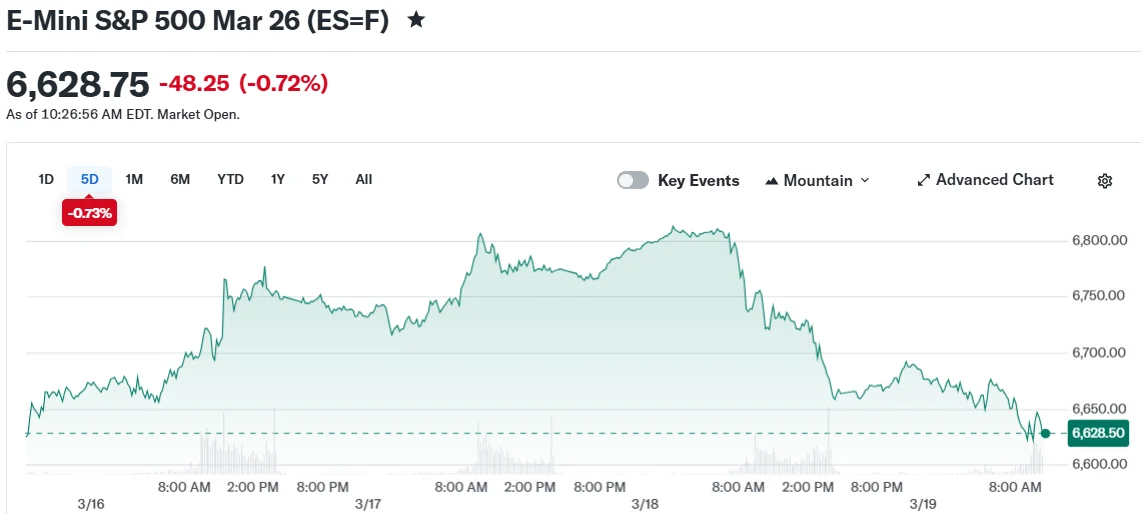
The Dow Jones Industrial Average plummeted nearly 300 points at the open, a drop of about 0.7%. The S&P 500 fell by 0.9%, while the Nasdaq Composite dropped 1.3% at the open, although both indices partially recovered some losses as trading progressed.
Brent crude futures surged by as much as 10%, reaching $119 per barrel, before stabilizing around $112. West Texas Intermediate crude saw a more moderate increase, hovering around $96 per barrel, creating the largest price differential between the two oil benchmarks in recent years.
This situation is truly unbelievable:
The world is facing the largest energy crisis in history.
The trading price of U.S. crude futures is over $20 lower than Brent crude, marking a record gap.
As the U.S. increases production and intensifies extraction...
The Israeli military struck Iran's South Pars gas facilities, prompting Iran to retaliate against energy facilities in Qatar and Saudi Arabia. Market analysts view these reciprocal strikes as a new escalation of regional hostilities.
David Rosenberg of Rosenberg Research warned that damage to energy infrastructure indicates that oil prices will remain elevated even after any potential resolution of the conflict, making it difficult to return to pre-crisis price levels quickly.
Federal Reserve Policy and Interest Rate Outlook
In its recent policy meeting, the Federal Reserve maintained current interest rates and indicated that only one rate cut might occur for the remainder of the year. Chairman Jerome Powell's remarks were interpreted as more hawkish, leading traders to eliminate expectations for rate cuts in 2026. Some market observers are even discussing the possibility of recent rate hikes.
Summary of Federal Reserve Decisions (March 18, 2026):
- The Federal Reserve paused rate cuts for the second consecutive meeting.
- The Federal Reserve expects one rate cut in 2026 and another in 2027.
- The Federal Reserve raised its 2026 PCE inflation forecast to 2.7%.
- The Federal Reserve stated that the impact of the Middle East situation is “still uncertain.”
Additionally, the central bank raised its inflation forecast, further intensifying concerns that soaring oil prices could exacerbate the inflationary environment.
Weekly jobless claims registered at 205,000, a decrease from the previous week, becoming one of the few encouraging economic indicators on this challenging trading day.
Company-Specific Dynamics
Alibaba's stock price also saw a decline,
This article contains 1 image, marked with