

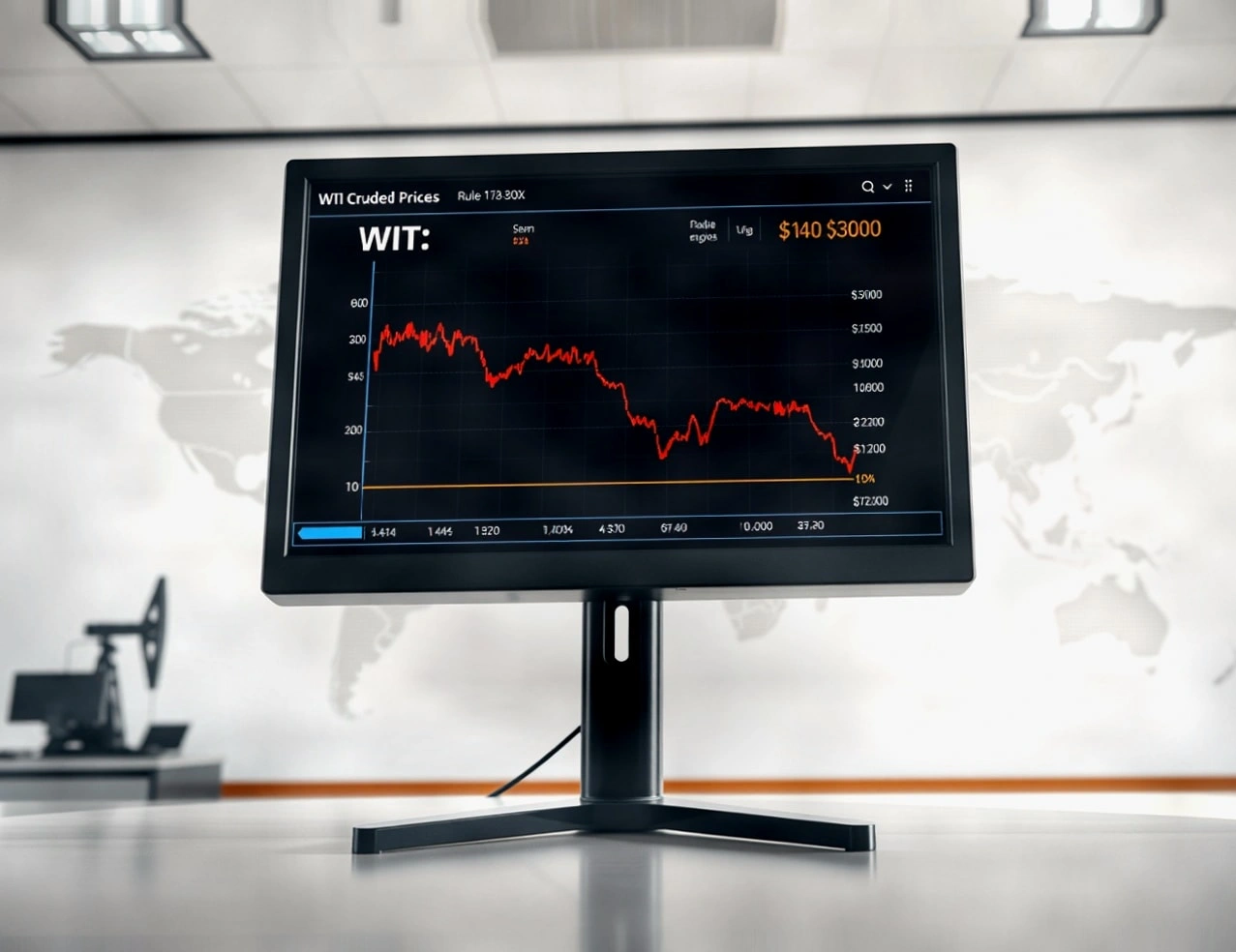
This week, the global crude oil market experienced a significant shift as West Texas Intermediate (WTI) prices retreated from the critical $100 per barrel threshold. This change impacted major trading hubs from New York to Singapore, reflecting the complex interplay between geopolitical dynamics and fundamental supply-demand relationships. The easing of U.S. sanctions on Venezuela's oil industry exerted immediate downward pressure; however, analysts caution that ongoing risks in the Middle East could still stir the market, adding uncertainty to the outlook for the remainder of 2025.
WTI Oil Prices Retreat from Key $100 Threshold
The benchmark price for WTI crude oil futures for December delivery briefly touched $100.78 during the week before plummeting to close around $96.50 per barrel. This marks a decline of approximately 3.5% within five days. The $100 price point is considered a significant technical and psychological barrier for traders and analysts. Therefore, the price falling below this level triggered automatic sell orders and profit-taking across major exchanges. Market data from CME Group indicates that trading volume surged during the price decline, reflecting broad market participation.
Factors contributing to this price movement include: first, the U.S. Treasury's statement regarding the easing of sanctions on Venezuela altered market expectations for supply; second, the Energy Information Administration (EIA) reported weekly inventory data showing that crude oil stockpiles increased more than expected; finally, concerns about global demand resilience, particularly from China, have also intensified bearish sentiment in the market. The price trend clearly indicates a rapid shift in sentiment within the oil market.
Intersection of Technical and Fundamental Analysis
Chart analysis shows that the $100 price level had acted as a strong resistance point over the past month. Failing to maintain above this level triggered a classic reversal pattern. From a fundamental perspective, given the rapid rise from the low $80s by the end of 2024, the market may have become overbought. The Relative Strength Index (RSI), a key momentum indicator, has risen above 70 into overbought territory, suggesting that a price correction may be imminent. The convergence of technical signals and fundamental news has collectively contributed to this price retreat.
Easing of Sanctions on Venezuela Reshapes Global Supply Dynamics
The Biden administration's decision to significantly ease sanctions on Venezuela's oil industry marks a major policy shift. Specifically, the Treasury's Office of Foreign Assets Control (OFAC) issued General License 44A, allowing transactions related to Venezuela's oil and gas industry for six months. This update of the license follows credible progress in Venezuela's electoral roadmap. The immediate market impact of this license on global heavy crude oil supply is a reassessment of its availability.
Venezuela holds the world's largest proven oil reserves, estimated at over 300 billion barrels. However, years of underinvestment and sanctions have severely weakened its production capacity. Before the sanctions...