

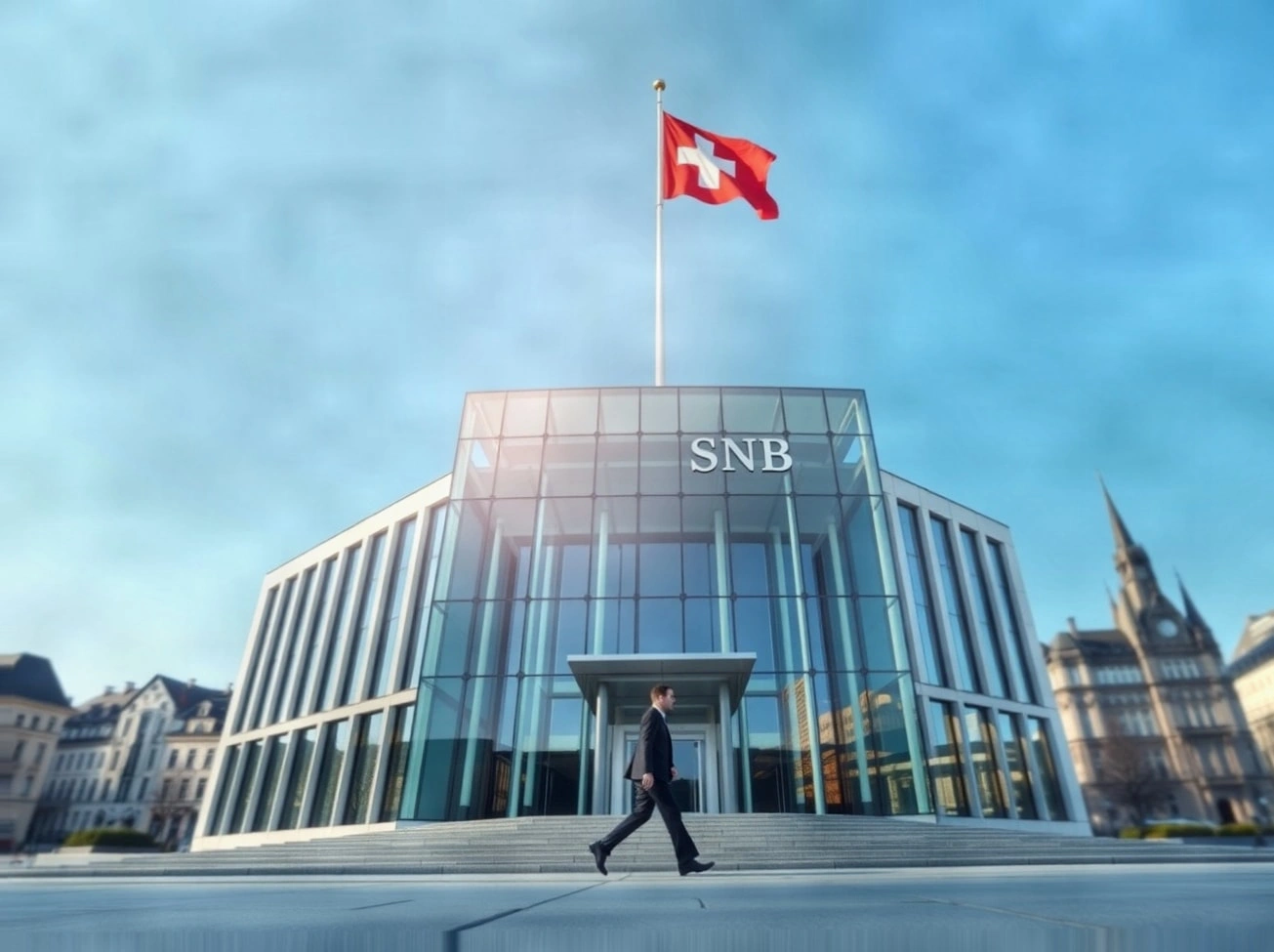
The Swiss National Bank (SNB) announced on March 20, 2025, from its Zurich headquarters, that it will maintain its key policy rate at 0%. This closely watched decision continues the central bank's long-standing accommodative monetary policy stance, directly influencing the Swiss franc's exchange rate and the broader European economic landscape. Consequently, global market participants closely monitored this announcement for signals regarding future monetary policy direction.
SNB Adheres to 0% Interest Rate Policy
The SNB's Governing Board confirmed its commitment to an expansionary monetary policy. Specifically, the policy rate remains at 0%, while the rate on sight deposits is unchanged at -0.75%. This marks the seventh consecutive quarter the bank has held rates steady. The central bank stated its dedication to ensuring price stability while also considering the overall economic situation. Furthermore, the SNB reiterated its readiness to intervene in the foreign exchange market if necessary to counter appreciation pressure on the Swiss franc.
Market analysts had largely anticipated this outcome. Latest inflation data showed that Swiss consumer prices rose by 1.2% year-on-year as of February 2025. This figure is well within the SNB's definition of price stability. Moderate global economic growth and heightened geopolitical tensions also contributed to the central bank's cautious approach. Therefore, the decision brought stability rather than surprise.
Economic Context and Global Comparison
The SNB's policy operates within a complex global monetary policy framework. Major central banks such as the European Central Bank (ECB) and the Federal Reserve have recently paused their interest rate hiking cycles. For instance, at its last meeting, the ECB kept its deposit facility rate unchanged at 3.75%, signaling a potential peak in its rate hike cycle. Meanwhile, the Bank of Japan continues to pursue its ultra-accommodative monetary policy. This global synchronization towards caution alleviates pressure on the SNB to act unilaterally.
Switzerland's unique economic position has profound implications for its monetary policy. The country consistently runs a substantial current account surplus, a structural factor that naturally exerts upward pressure on the Swiss franc. While franc appreciation helps curb imported inflation, it can also harm export-oriented industries like pharmaceuticals and machinery. The SNB's negative interest rate policy and its willingness to intervene in currency markets are designed to mitigate this dilemma. These tools form a crucial part of its monetary policy toolkit.
Expert Interpretation of SNB Strategy
Financial experts point to the SNB's dual mandate of maintaining price stability and fostering economic development. "The SNB is walking a fine line," commented Dr. Elena Fischer, an expert in central banking at the University of St. Gallen. "Its primary focus is inflation, but it must also consider the exchange rate of the Swiss franc and its impact on Switzerland as a small, open economy. The current decision to hold rates reflects an assessment of the balance between moderate inflation risks and a fragile global growth outlook."