

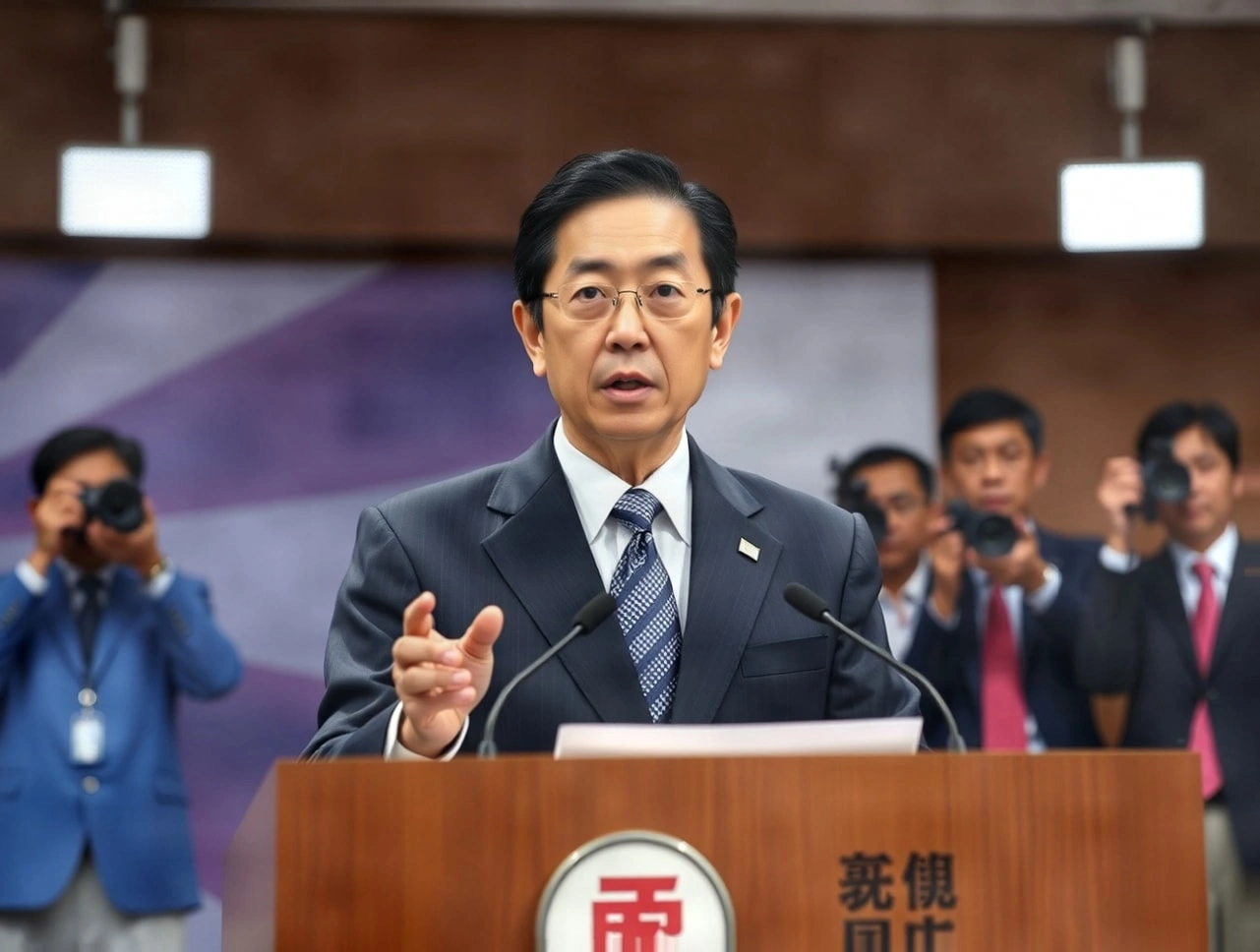
TOKYO, March 2025 – Following widespread expectations of a decision to maintain its current interest rate framework, Bank of Japan (BoJ) Governor Kazuo Ueda delivered a pivotal policy outlook speech today. The address offered significant insights into the trajectory of Japan's monetary policy amidst ongoing economic uncertainties and a shifting global financial landscape. Global market participants closely parsed his every word for signals regarding Japan's exit from its prolonged period of ultra-loose policy.
Bank of Japan Maintains Policy Framework
At the conclusion of the Bank of Japan's Policy Board meeting in March 2025, a unanimous vote decided to keep the short-term policy interest rate target unchanged at -0.1%. Furthermore, the central bank maintained its Yield Curve Control (YCC) parameters, continuing to target the 10-year Japanese Government Bond (JGB) yield around 0%, with an upper bound of 1.0%. This marks the fourth consecutive meeting without a policy adjustment since the BoJ ended its negative interest rate policy in early 2024. Consequently, market focus shifted entirely to Governor Ueda's subsequent press conference for forward guidance.
Governor Ueda highlighted several key factors influencing the decision. Firstly, the central bank's continued attention to wage growth trends following the spring wage negotiations this year. Secondly, inflation expectations remain a primary concern, despite a recent moderation in consumer price gains. Thirdly, global economic conditions, particularly monetary policy divergences among major central banks, present external pressures. Thus, the BoJ must balance domestic demand considerations with international financial stability concerns.
Kazuo Ueda's Monetary Policy Communication Strategy
Governor Ueda's communication approach represents a significant evolution from his predecessors. His address today exhibited three distinct characteristics. Firstly, he provided clearer forward guidance regarding the timeline for policy normalization. Secondly, he emphasized data dependency over pre-set schedules. Thirdly, he acknowledged the intricate interplay between monetary policy and fiscal sustainability. This transparent communication style aims to mitigate market volatility during Japan's delicate policy transition.
The speech contained important technical details regarding the BoJ's assessment framework. Ueda explained how the central bank evaluates the sustainability of its 2% inflation target. He outlined specific metrics the Policy Board monitors, including services price inflation, unit labor costs, and inflation expectations across different time horizons. Additionally, he discussed the central bank's evolving approach to balance sheet management as it considers reducing its substantial holdings of government bonds.
Expert Analysis on Policy Implications
Financial analysts immediately dissected Ueda's remarks for policy signals. Many noted his cautious balancing act between acknowledging improving economic conditions and maintaining accommodative support. He mentioned the need for "patient persistence"...