

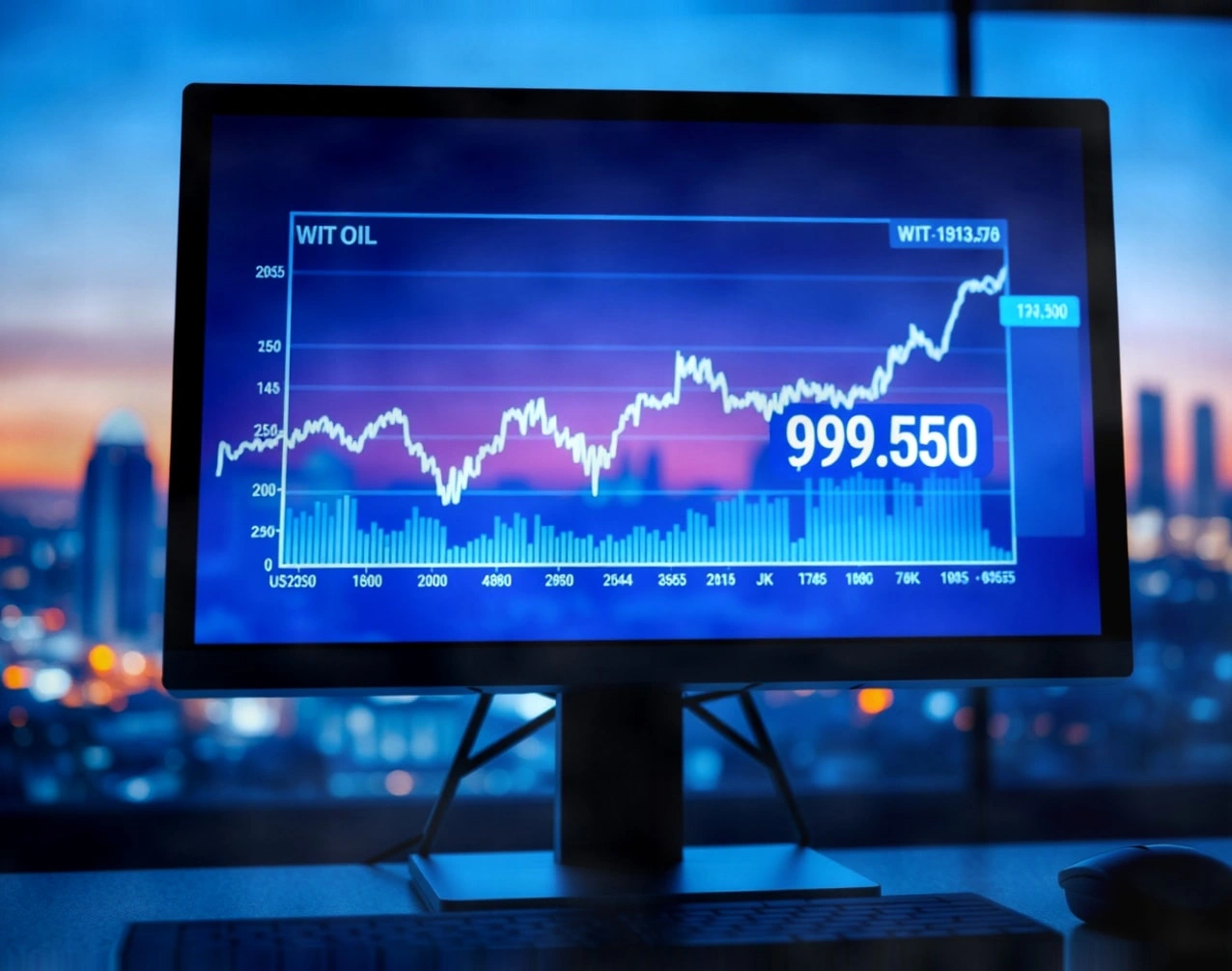
Global energy markets saw a significant shift on Thursday as West Texas Intermediate (WTI) crude futures retreated to around $93.50 per barrel. This pullback followed intensive diplomatic engagement by leaders in the United States and Israel, aimed at alleviating market concerns over a potential escalation of conflict in the Middle East. The immediate risk of severe supply disruptions in a critical oil-producing region has consequently diminished.
WTI Oil Price Volatility Amid Geopolitical Tensions
Benchmark WTI crude for November delivery hovered in the $93.50 range on the New York Mercantile Exchange, marking a retreat from recent multi-month highs. This price movement directly reflects a shift in market sentiment, which had previously priced in a substantial geopolitical risk premium. However, official statements from Washington and Jerusalem have introduced new factors for market assessment. The market is now reassessing the immediate likelihood of regional warfare threatening the security of transit through the Strait of Hormuz.
Analysts note that oil price volatility remains elevated. Data indicates that WTI's 30-day historical volatility has surged above 40%, significantly higher than its five-year average. The market's sensitivity underscores the fragile supply-demand balance in the region. Furthermore, any diplomatic misstep could trigger a swift reversal in oil prices. The current price level is at a critical technical juncture, closely watched by both algorithmic and fundamental traders.
Diplomatic Push to De-escalate Regional Tensions
Coordinated statements released this week by the White House and the Prime Minister's Office of Israel emphasized a commitment to diplomatic solutions and containing the spread of conflict. A senior U.S. administration official, speaking on condition of anonymity, stated that efforts are focused on "preventing a wider regional war." Similarly, Israeli officials have reiterated their strategic objectives as being limited and precise. These public assurances have provided tangible information to an anxious market.
This diplomatic advancement occurs against a complex geopolitical backdrop. The Middle East accounts for nearly one-third of global seaborne oil trade. Past major conflicts in the region have historically triggered sharp fluctuations in oil prices. For instance, the 1990 Gulf War saw oil prices double. Market memory of these historical events helps explain the initial rapid ascent of oil prices and the subsequent cautious retreat following diplomatic news.
Expert Analysis on Market Psychology
Dr. Anya Petrova, Chief Geopolitical Analyst at Global Energy Insights, elaborated on this dynamic. "The market is trading on two time horizons," she explained. "The short-term horizon reacts to hourly news and diplomatic rhetoric. The long-term horizon assesses structural supply security. The current dip in oil prices reflects a short-term 'relief rally.' However, the underlying structural risks have not disappeared." Petrova's analysis suggests that the market will likely remain sensitive.