

In the context of escalating geopolitical tensions, Bitcoin (BTC) has surged, reaching $70,800. Meanwhile, traditional financial markets are facing ongoing downward pressure.
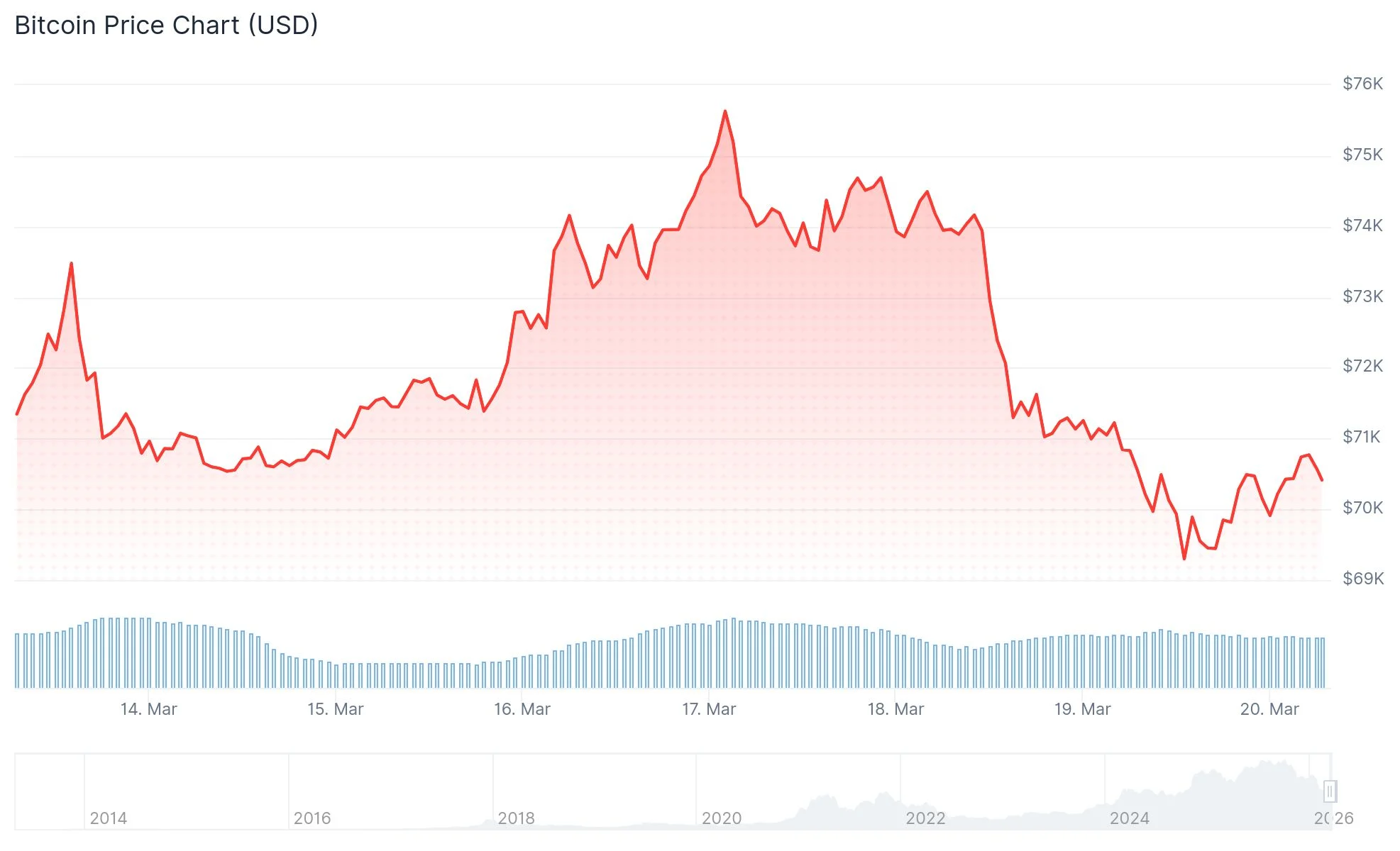
The rise in Bitcoin's price coincides with a joint statement issued by six major industrialized nations— the UK, France, Germany, Italy, the Netherlands, and Japan. These countries collectively condemned Iran's recent military actions and pledged to ensure the safety of shipping in the strategically vital Strait of Hormuz. The statement was released through the official channels of UK Prime Minister Keir Starmer.
In response to this news, West Texas Intermediate (WTI) crude oil prices fell by about 2%, settling at $93.80; Brent crude oil also experienced a similar decline. Additionally, U.S. Treasury Secretary Jack Lew mentioned on Thursday that the government might consider lifting sanctions on Iranian oil tankers and could tap into the country's strategic oil reserves.
Despite the rebound, market volatility remains. Conflicts in the Middle East continue to evolve, with WTI crude oil prices still significantly above pre-conflict levels, hovering around the critical support level of $92. Mott Capital Management's market analysts noted that as long as oil prices can maintain above this support level, the upward trend will continue.
Stock Markets Under Pressure
As the weekend approaches, traditional stock markets continue to bear pressure. In early trading on Friday, U.S. stock index futures saw a modest uptick, with Dow futures rising 0.2% and S&P 500 futures increasing by 0.1%. However, the overall market trend remains negative.
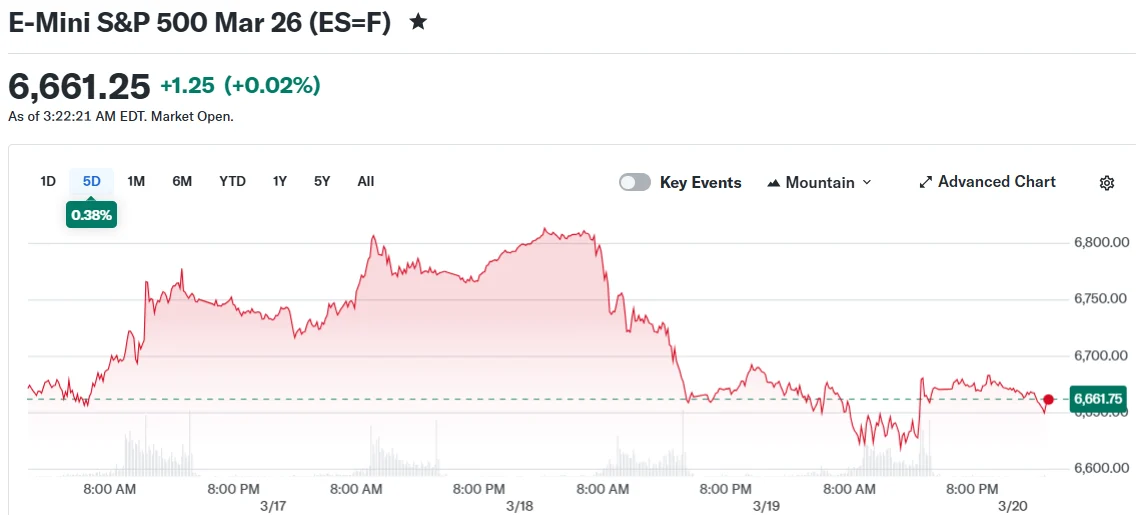
Major U.S. stock indices may face their fourth consecutive week of declines. The Dow Jones index has dropped approximately 1.2% this week, the S&P 500 has retreated about 0.4%, and the Nasdaq index has fallen around 0.1%. Currently, both the Dow and Nasdaq indices are down about 8% from recent historical highs.
During Thursday's trading session, the S&P 500 closed below its 200-day simple moving average for the first time since May of last year. This technical signal has drawn close attention from market participants and is seen as an indicator of changing market dynamics.
Comments from Israeli Prime Minister Benjamin Netanyahu brought a glimmer of hope to market sentiment. He stated that Israel is assisting U.S.-led efforts to reopen the Strait of Hormuz through intelligence cooperation and additional support. He also hinted that regional conflicts might end sooner than widely expected.
Central Bank Policies Heighten Market Uncertainty
This week, the Federal Reserve expressed growing uncertainty regarding economic growth and inflation pressures. Recent remarks from Fed Chair Jerome Powell have led market participants to expect interest rates to remain stable in the short term, although policymakers acknowledged that a rate cut may occur at some point in the future.