

Gabriel Makhlouf, a member of the European Central Bank's Governing Council, has provided crucial clarification on the institution's monetary policy trajectory, explicitly stating that the ECB currently holds no bias towards tightening. This statement comes at a pivotal moment for the Eurozone economy, as policymakers navigate the delicate balance between persistent inflation concerns and growing recessionary risks. Makhlouf's remarks offer significant insight into the ECB's strategy regarding interest rates and quantitative tightening measures leading up to and beyond 2025.
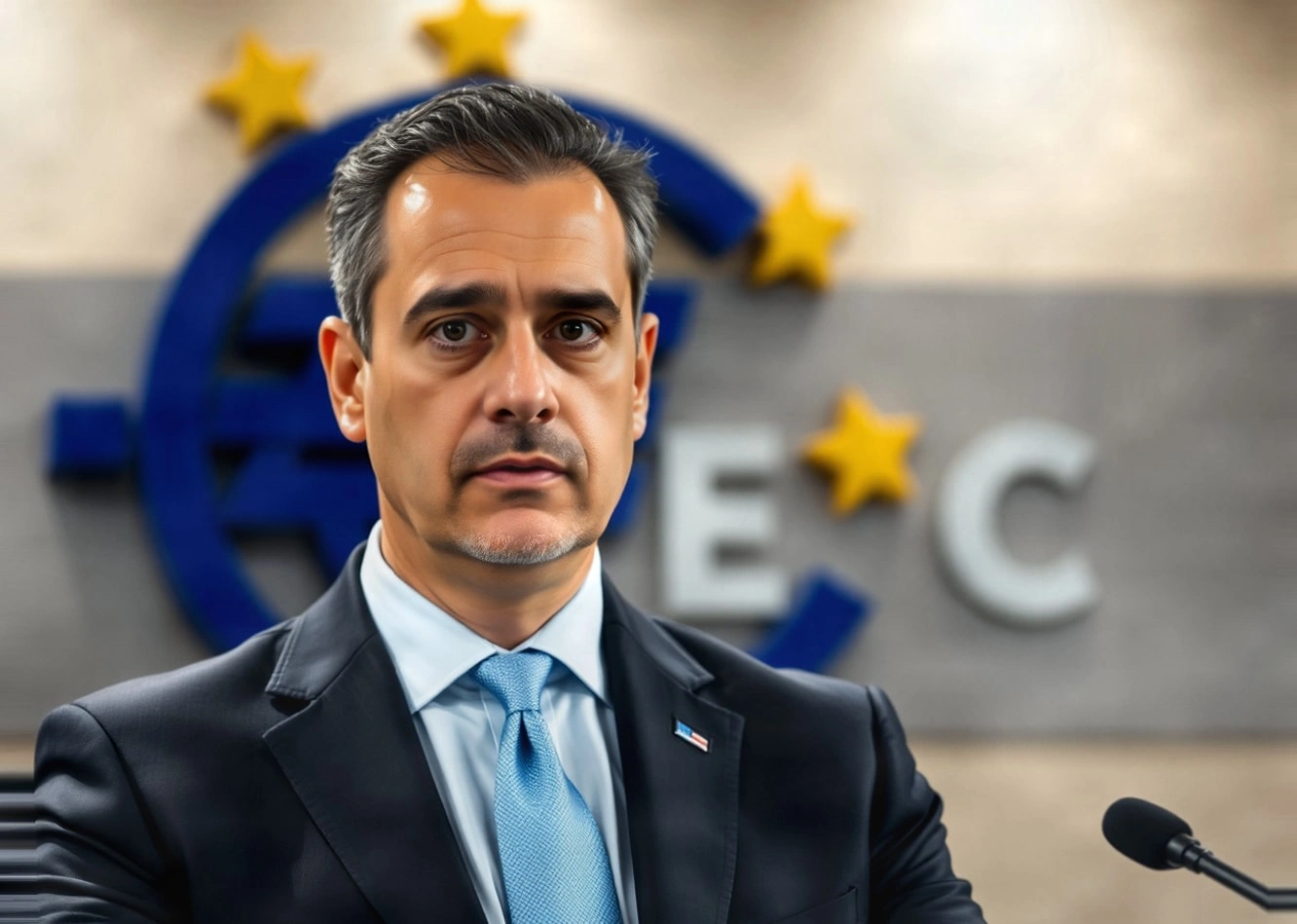
ECB's Monetary Policy Enters New Phase, No Tightening Bias
Makhlouf emphasized that the ECB's current decision-making is highly data-dependent. He specifically pointed to recent economic indicators that present a mixed picture of the Eurozone's recovery. Furthermore, he highlighted the importance of distinguishing between temporary price fluctuations and sustained inflationary pressures. The ECB's latest projections, released in December 2024, indicate that inflation is expected to return to the 2% target by mid-2025, although considerable uncertainty surrounds this timeline.
Eurozone Economic Landscape Shapes Policy Decisions
Heading into 2025, the Eurozone economy faces a complex set of challenges. Firstly, while headline inflation has retreated from its 2022 peak, it remains above the ECB's target. Secondly, core inflation, which excludes volatile energy and food prices, exhibits persistent stickiness. Thirdly, manufacturing activity in key economies, including Germany, continues to contract, while the services sector shows modest growth. Finally, the labor market, despite widespread economic headwinds, has demonstrated surprising resilience.
This intricate economic backdrop helps explain why ECB policymakers like Makhlouf stress the need for policy flexibility. The central bank must balance multiple competing priorities.
Makhlouf specifically addressed the process of balance sheet reduction, or quantitative tightening (QT). He noted that this process is continuing in the background but is distinct from interest rate decisions. This distinction is crucial, as markets sometimes conflate these two monetary policy tools.
Historical Perspective on the ECB's Policy Shift
To understand Makhlouf's comments, it's essential to recall the ECB's recent policy evolution. The central bank initiated interest rate hikes in July 2022, marking the first increase in over a decade. This was followed by nine consecutive hikes, which concluded in September 2023. Since that pause, the ECB has maintained its deposit facility rate at 4.00%, the main refinancing operations rate at 4.50%, and the marginal lending facility rate at 4.75%.
Makhlouf's remarks about not holding a tightening bias align with this historical context. Essentially, the ECB has transitioned from an aggressive tightening phase to a more balanced, meeting-by-meeting assessment mode of decision-making.
Global Central Bank Coordination and Divergence
The ECB's policy...