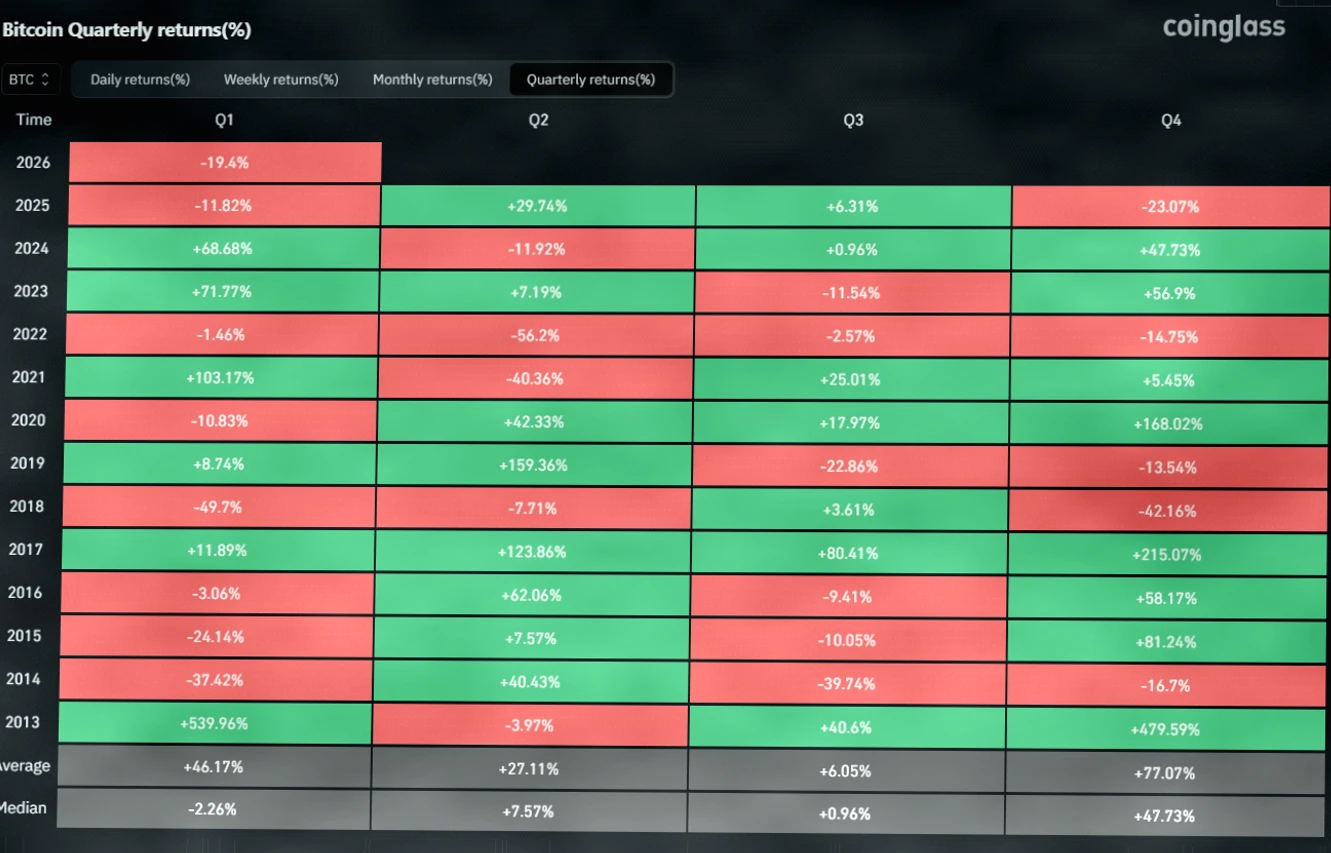
While historical data suggests cryptocurrencies often perform well in the second quarter following a Q1 downturn, evolving macroeconomic pressures and escalating geopolitical tensions are significantly altering investor expectations.
Looking back at the 2025 cycle, the crypto market saw a robust 23.4% overall gain in Q2, attracting approximately $640 billion in inflows during the same period. Bitcoin also surged by around 30%, marking its best quarterly performance of the year. However, as of March 2026, the overall crypto market remains down over 18% from its recent cyclical highs. In stark contrast, standard benchmarks like the S&P 500 recorded only a modest decline of about 3.2% by the end of 2025.
Q2 Performance: Historical Norm or Fleeting Moment?
The strong quarterly gains mentioned above occurred after a significant ~12% pullback in Q1 2025, which had demonstrated the market's ability to rebound from early-year headwinds. Investors typically cite this historical pattern to support a bullish outlook for Q2. However, the risks of relying solely on past cycles to predict future performance become apparent when the macroeconomic environment shifts dramatically.
Macroeconomic Data Undermines Rebound Narrative
Despite the market having priced in expectations of unchanged interest rates before the relevant reports, crypto assets still experienced negative price action. Following the news, the overall crypto market declined by approximately 3.24%. Furthermore, inflation indicators, including the Producer Price Index (PPI), have reached 12-month highs, largely attributed to surging energy prices and supply chain disruptions. Such inflationary trends tend to make central banks cautious about cutting interest rates, thereby increasing the opportunity cost of holding risk assets like cryptocurrencies.
This shift is already evident in the market: crypto's sensitivity to macroeconomic data has significantly increased, with Bitcoin falling below key psychological levels like $70,000. This suggests that systemic economic pressures may be overshadowing bullish momentum.
Escalating Geopolitical Tensions Add to Market Pressure
These macroeconomic and geopolitical dynamics are prompting traders to reassess their risk exposure, contributing to a broad pullback across both traditional and digital assets.
Crypto's Relative Strength and Resilience
Despite macroeconomic headwinds, the cryptocurrency market has shown a degree of resilience in recent months. Inflows into spot Bitcoin ETFs remained positive overall in March, with reports indicating net inflows exceeding $1.5 billion amidst recent volatility. This suggests that institutional interest persists, even as short-term market sentiment leans defensive.
On the other hand, cryptocurrencies have also demonstrated significant relative performance compared to traditional safe-haven assets. During periods of macroeconomic stress, assets like gold have sometimes recorded weekly declines nearly double that of Bitcoin. This resilience offers a basis for a bullish Q2 outlook, with analysts believing the market's structural interest in digital assets remains intact.