

The escalation of conflicts in the Middle East is beginning to reshape market psychology, with impacts extending far beyond the oil sector. The initial geopolitical shock has now directly influenced inflation expectations, bond volatility, and a comprehensive reassessment of economic growth risks. This shift presents investors with a dual threat: on one hand, the risk of an energy-driven economic slowdown, and on the other, the risk that central banks may maintain a hawkish stance. As these pressures mount, the operational strategies for traditional risk assets become increasingly difficult to trust.
The escalation of war has reignited concerns about a recession in the United States.
The expansion of military actions has heightened worries about the potential duration of the conflict, thereby exerting sustained pressure on energy markets. This change has brought old recession expectations back to the forefront: rising fuel costs, intensifying inflation, and weakening consumer demand.
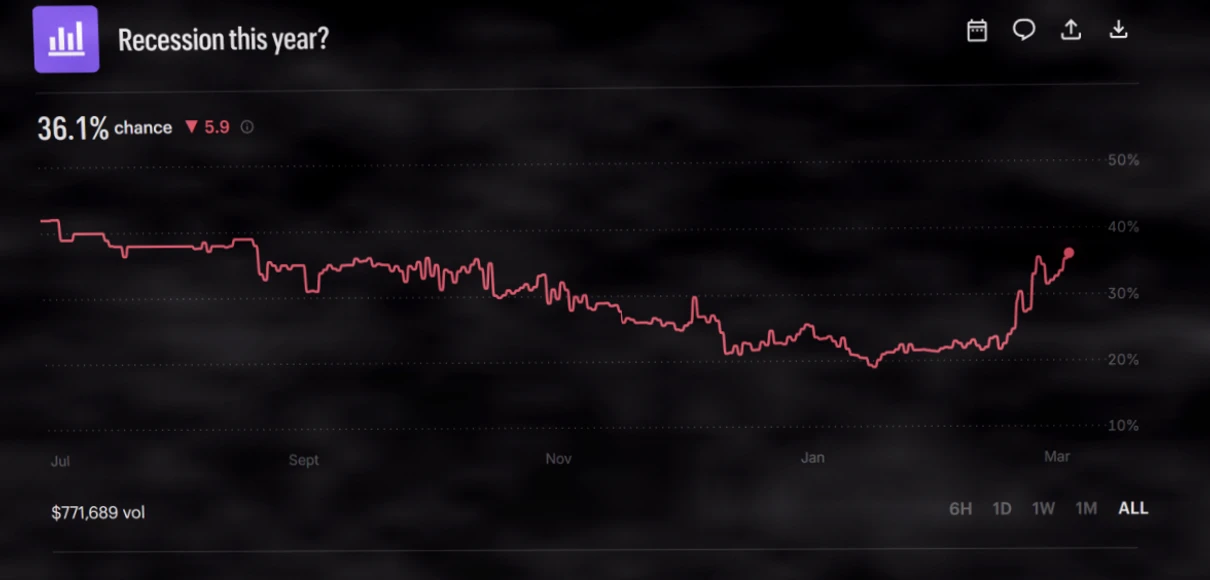
Stock markets, gold, and interest rate expectations all show signs of pressure.
Even traditional safe-haven assets appear less stable. Investors have not smoothly transitioned to safe assets as anticipated; instead, they face a complex situation characterized by intertwined fears of inflation, rising yields, and economic slowdown.
Cryptocurrency sentiment has sharply deteriorated.
Against this backdrop, the sentiment in the cryptocurrency market has significantly declined, aligning with the overall price trends.