The Trump administration has released a national artificial intelligence (AI) legislative framework, urging Congress to establish a unified federal regulatory system. The administration emphasized that allowing individual states to enact fragmented AI laws and regulations could hinder U.S. innovation and international competitiveness.
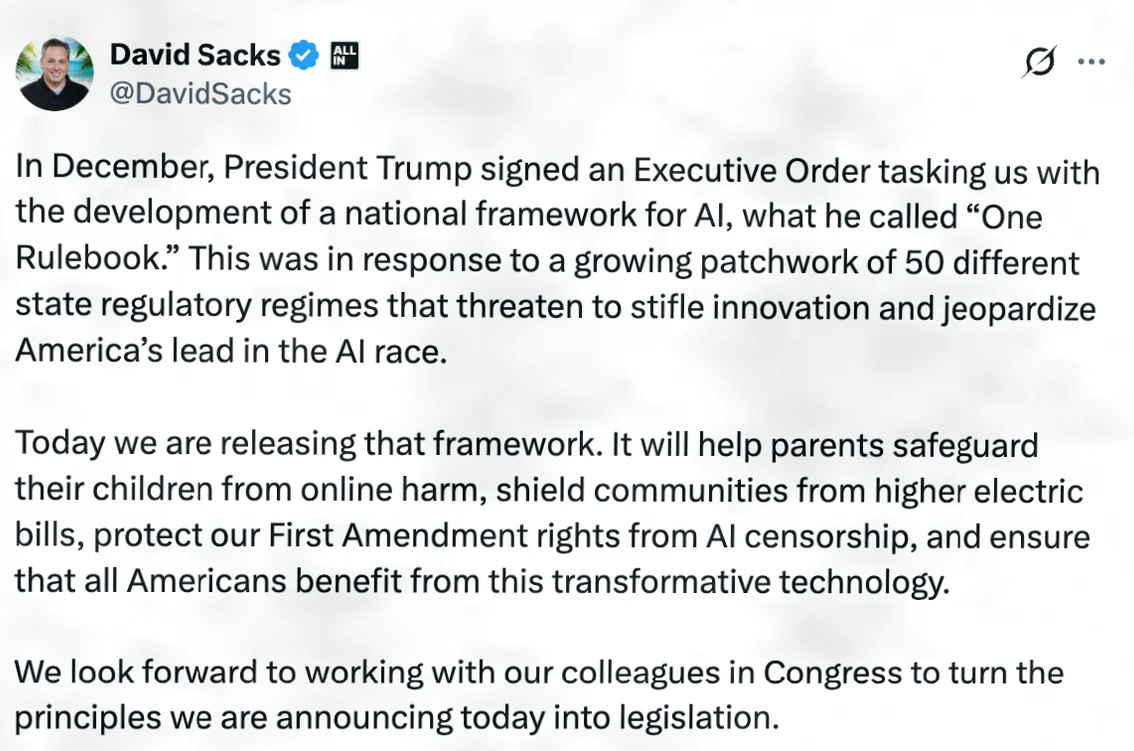
The core of the proposal lies in promoting unified federal management. The administration strongly recommends that Congress reject state-level laws that could impose unnecessary burdens on AI developers. The framework explicitly states: "Congress should reject state AI laws that impose undue burdens." It also warns that "conflicting state laws will weaken America's innovative capacity and our ability to lead in the global AI race."
Furthermore, the framework advocates for reducing barriers to AI deployment, promoting regulatory sandbox mechanisms, and expanding access to federal datasets. However, it opposes the establishment of a new regulatory agency specifically for AI.
Regarding intellectual property, the proposal suggests:
The proposal also links AI expansion to energy policy, calling for expedited approval processes for data centers and supporting on-site power generation. Concurrently, the administration believes that residential electricity rates should not bear the cost of new infrastructure.
Other measures include providing tools to protect minors online, combating AI-driven fraud, and implementing training programs to help workers adapt to changes in the AI-driven labor market.
It is important to note that the framework itself is non-binding and requires congressional action to become official policy.
AI Adoption Accelerates, Layoffs Emerge in Cryptocurrency Sector
While the White House's AI framework focuses on workforce development and job creation in an AI-driven economy, it does not fully address the potential unemployment risks arising from the accelerated adoption of AI across various industries.
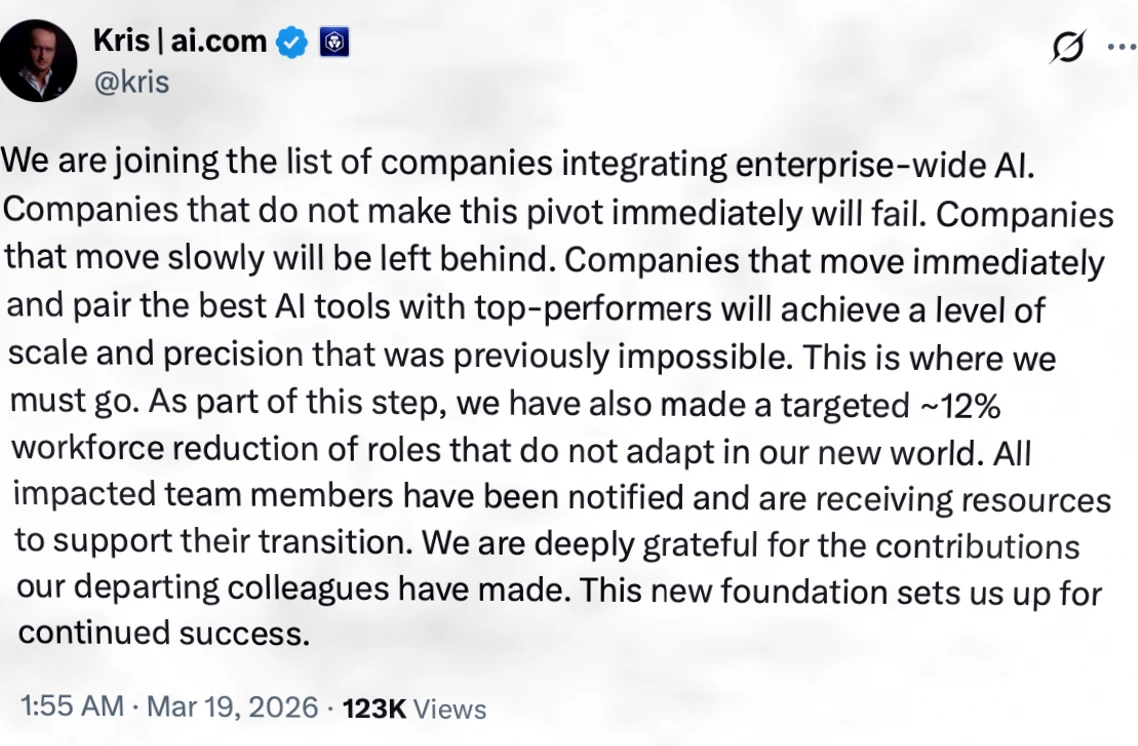
This shift is already becoming apparent in the cryptocurrency sector. As companies rapidly integrate AI into their operations, an increasing number of fintech and crypto firms have reported layoffs over the past two months.