

The upcoming Polkadot staking upgrade has sparked lively discussions in the blockchain community, as the system is set to undergo one of its most significant improvements. This transformation shifts financial responsibility onto validators and reduces the risks for nominators, marking an important turning point for the chain under the Nominated Proof of Stake (NPoS) paradigm. In discussions among various stakeholders, many are focused on whether the Polkadot staking upgrade can ultimately make staking safer and more economical for millions of DOT holders.
A New Era of Validator Responsibility
The forthcoming Polkadot staking upgrade proposal requires all validators to self-stake at least 10,000 DOT. This stipulation mandates that validator operators commit their own assets, thereby making them financially accountable for any misconduct on the network.
A core architect involved in the discussions commented, “This upgrade combines economic risk with network responsibility. Validators running the infrastructure should bear most of the financial risks.”

Nominators Will Become “Non-Dilutable”
One of the most anticipated outcomes of the Polkadot staking upgrade is the significant reduction of risks for nominators. Currently, nominators may face financial penalties when the validators they support are slashed. Under the new model, the principal staked by nominators will no longer be subject to slashing risks, providing a safer and more user-friendly staking experience.
An ecosystem analyst pointed out, “By eliminating the slashing risk for nominators, Polkadot is transitioning towards a validator-centric risk model. Ordinary users can finally stake with peace of mind.”
The Polkadot staking upgrade aims to encourage broader participation by making staking more accessible, particularly for users who previously avoided it due to concerns over potential losses.
Faster Unlocking and Improved Liquidity
Another key aspect of the Polkadot staking upgrade is the significant reduction of the unlocking period, from the current 28 days to potentially just 24 to 48 hours. This change enhances liquidity for DOT holders, allowing them quicker access to their assets.
This is a crucial improvement for market participants and active traders. The increase in liquidity also strengthens the economic fluidity of the network, further aligning with the goals of the Polkadot staking upgrade.
A More Sustainable Staking Economy
Overall, the Polkadot staking upgrade is expected to rebalance incentive mechanisms, promote more responsible validator behavior, protect nominators, and modernize liquidity mechanisms. As the proposal moves through governance discussions, it has already been recognized as one of the most impactful reforms since Polkadot's launch.
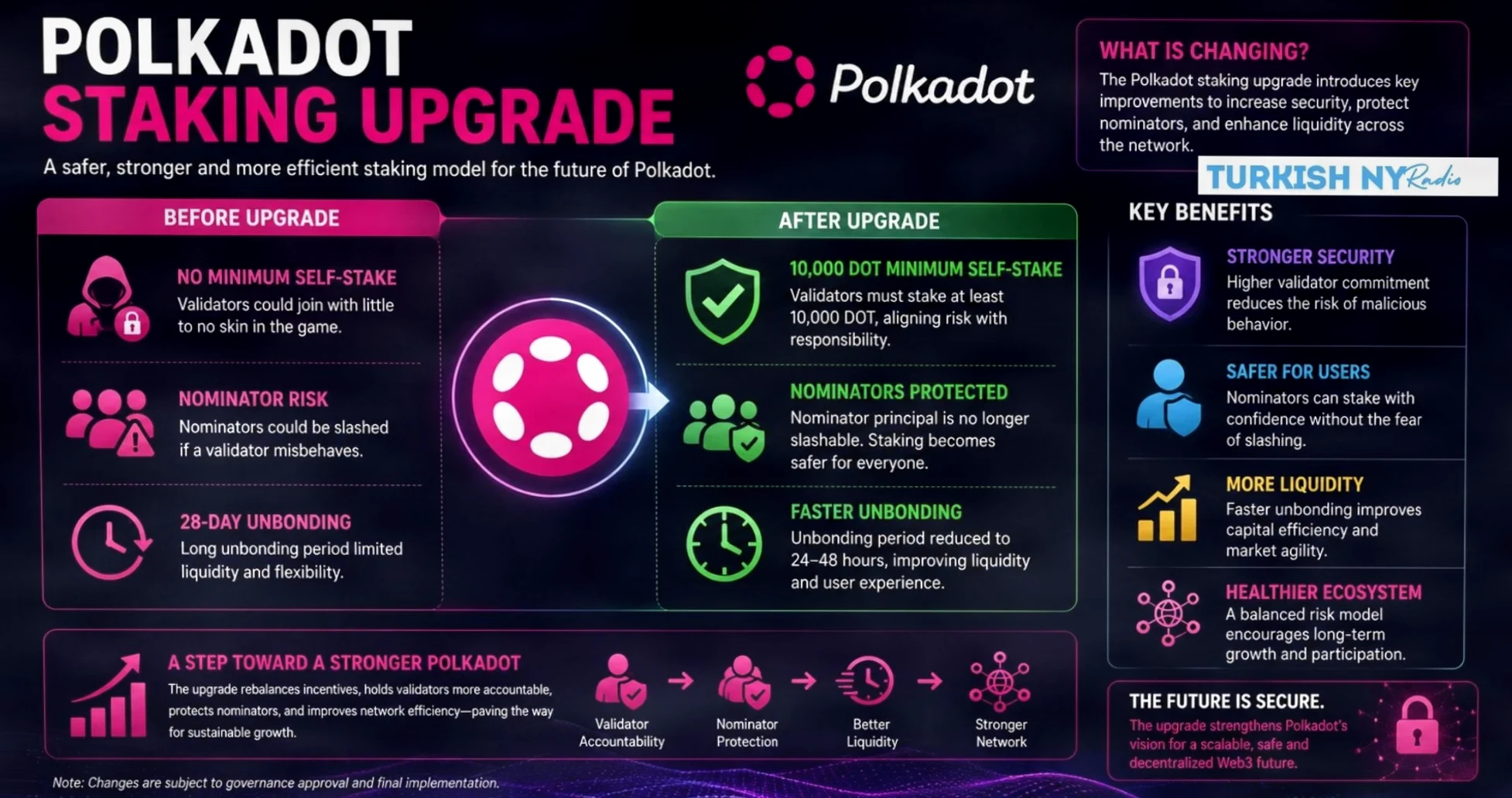
The Polkadot staking upgrade includes significant enhancements aimed at improving network protection and user satisfaction. The transformation requires validators to self-stake 10,000 DOT, eliminates slashing risks for nominators, and drastically shortens unlocking times. By shifting economic responsibility onto validators, Polkadot is moving towards a safer staking environment.