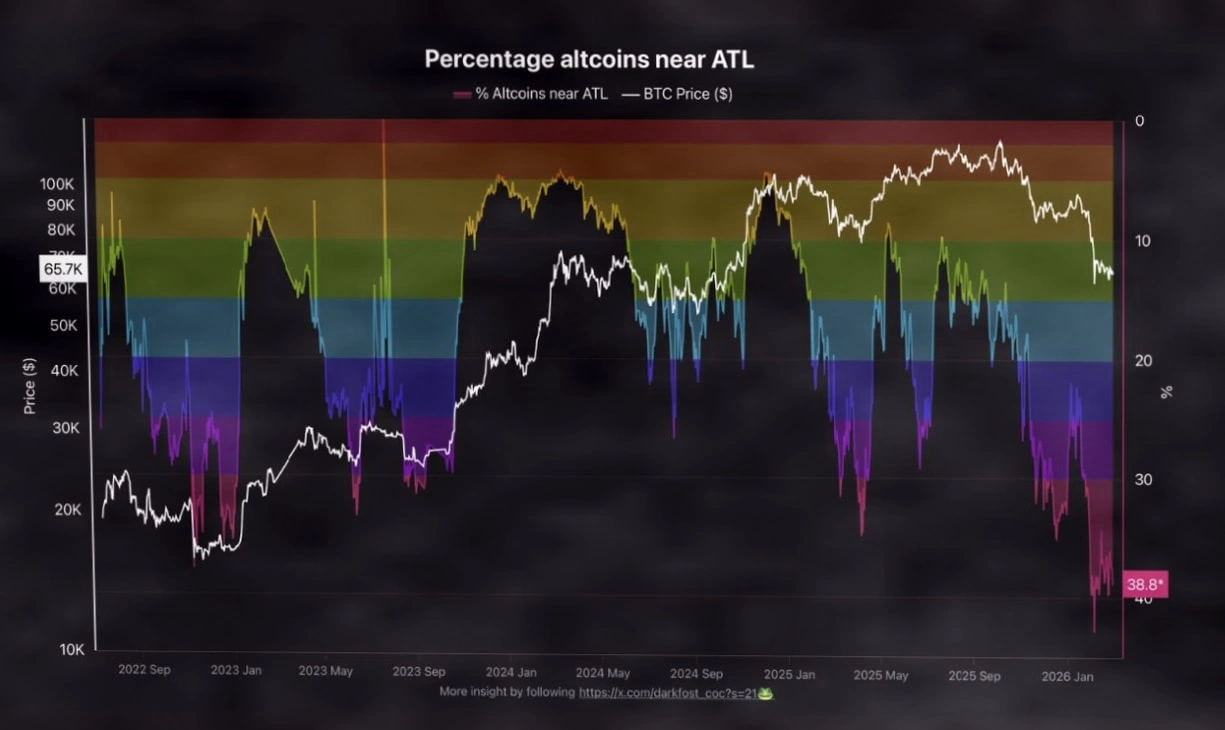
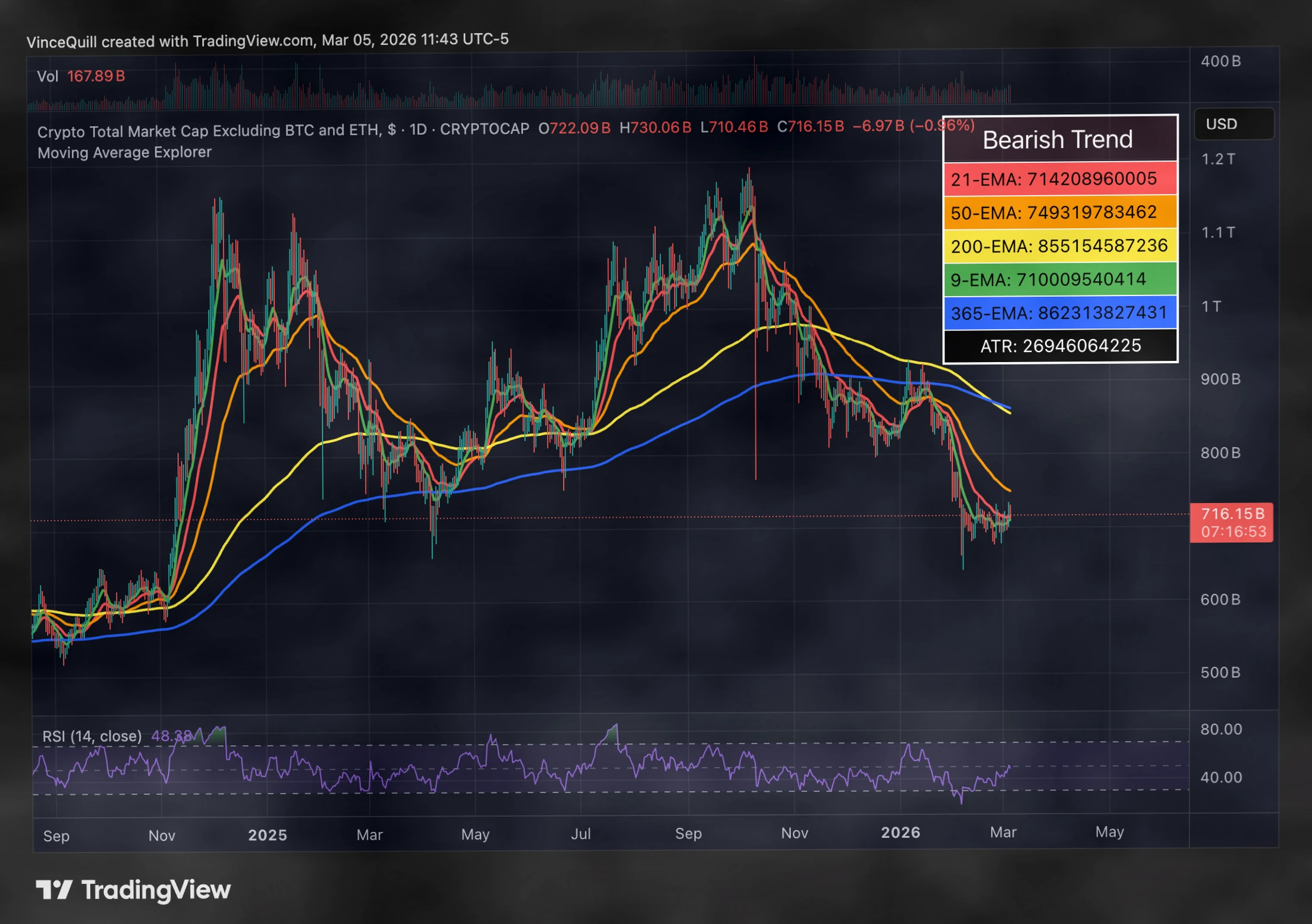
According to CryptoQuant analyst Darkfost, approximately 38% of altcoins are currently trading near their all-time lows, a figure exceeding the market downturn following the FTX collapse in 2022. Data indicates that the total market capitalization of altcoins, excluding Bitcoin and Ethereum (Total3 index), has retreated to levels seen in November 2024, reflecting a severe contraction in market liquidity.
Despite daily cryptocurrency trading volumes reaching as high as $268 billion between February and March 2026, market activity has noticeably declined, with funds increasingly concentrating in Bitcoin. Analysts point out that this is the most significant correction in the current bull market cycle, with some investors believing that a long-term accumulation window may now be open.
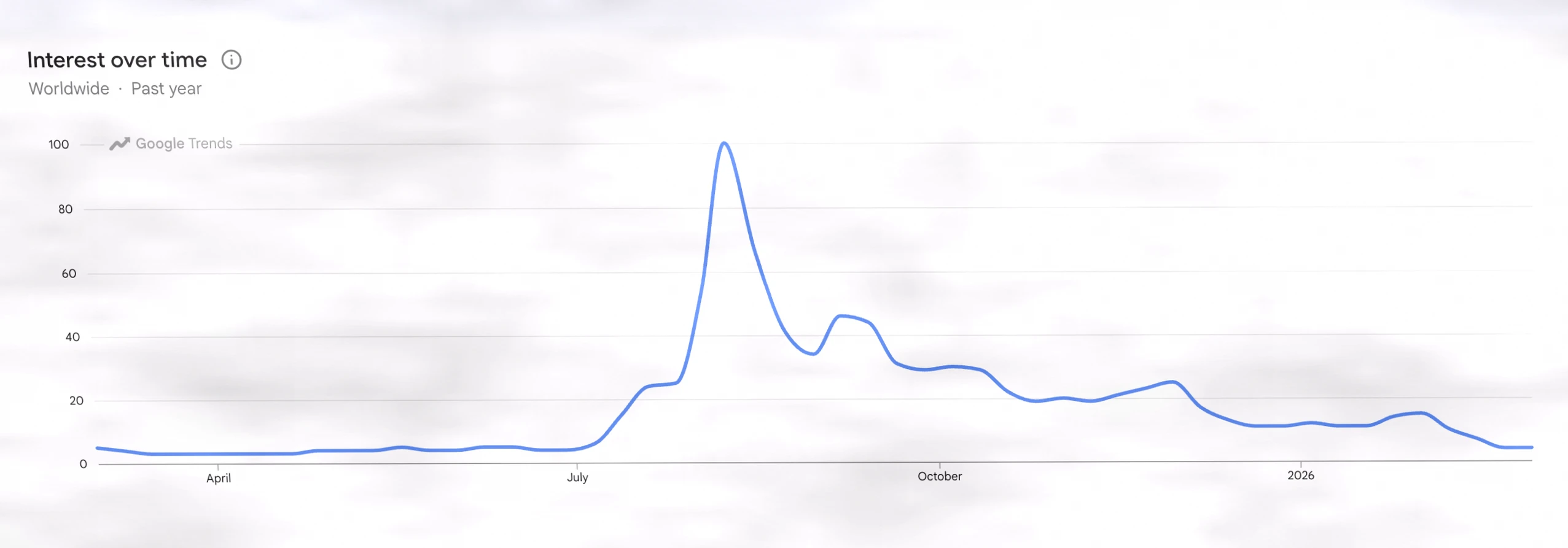
Concurrently, market attention towards altcoins continues to wane. Google Trends data shows that global search interest for the term "altcoins" has fallen to its lowest level in a year, reflecting a significant cooling of public interest.
Jimmy Xue, co-founder of liquidity platform Axis, suggests that altcoins are facing a severe "liquidity crunch" – even slight shifts in market sentiment can trigger large-scale sell-offs. This is primarily due to the lack of institutional backing enjoyed by Bitcoin and the absence of a mainstream narrative like Bitcoin's "digital gold" status.
Currently, CoinMarketCap lists over 36.8 million cryptocurrencies, a vast number, but many lack practical use cases and trading support, exacerbating market fragmentation. In an environment dominated by risk-averse sentiment, projects with genuine use cases and active communities are likely to stand out.