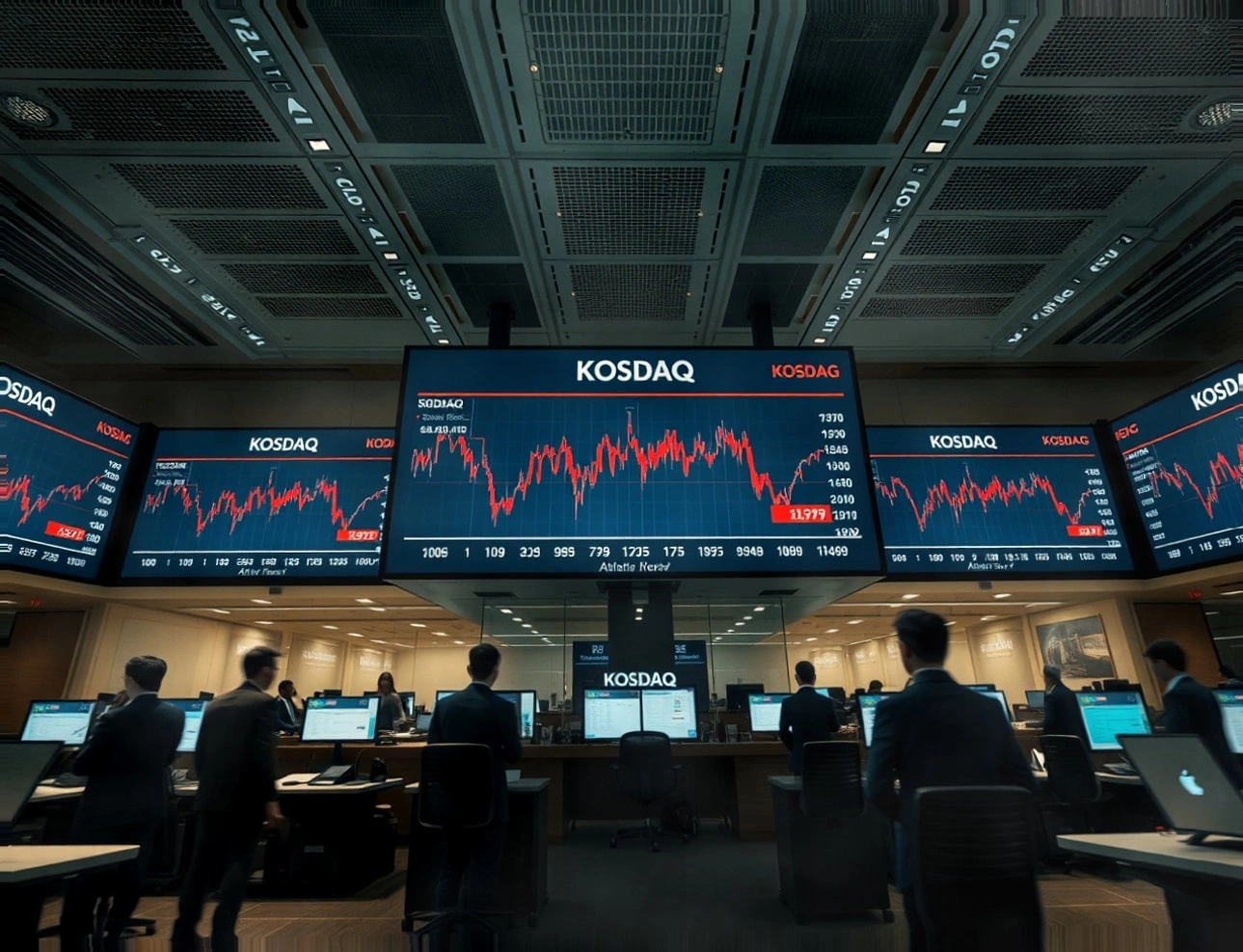
The KOSDAQ buy-side circuit breaker has been triggered for two consecutive days, revealing that the market is facing sustained buying pressure. This article details its operational logic, trigger conditions, and historical background, revealing its key role in stabilizing the stock market.
The KOSDAQ buy-side circuit breaker is an important market stabilization tool in the South Korean financial system. The mechanism is automatically activated when the KOSDAQ 150 futures price deviates by more than ±4% from the previous trading day's closing price within five minutes. At this point, all buy orders for index constituent stocks will be suspended, but sell orders and non-constituent stock trading will not be affected. This design is not a complete market shutdown, but rather a brief cooling-off period to give market participants time to re-evaluate information and replenish sell-side liquidity, thereby promoting more rational and orderly price discovery.
The trigger threshold for this mechanism is strictly monitored by the Korea Exchange (KRX) and calculated in real time based on the KOSDAQ 150 futures contract, a core derivative product. While ±4% is the standard, the regulatory committee has the power to dynamically adjust the threshold during periods of heightened systemic risk. The five-minute suspension window draws on global best practices to strike a balance between stabilizing the market and maintaining liquidity. During this period, limit orders can still be submitted and placed, but market buy orders are frozen, effectively avoiding the risk of liquidity depletion and sharp price reversals.
The triggering of this mechanism for two consecutive days is rare and usually indicates that the market is under sustained one-sided pressure. Historically, such events have been concentrated during periods of increased macroeconomic uncertainty, sudden industry shocks, or global financial turmoil. For example, cryptocurrency-related volatility in 2018 and the market crash at the beginning of the COVID-19 pandemic in 2020 triggered similar circuit breakers. The Korea Exchange gradually improved this mechanism after learning from the Asian financial crisis in 1997 and the global financial crisis in 2008, aiming to protect institutional and retail investors from the impact of extreme intraday volatility. Its design philosophy is also highly consistent with the price limit mechanisms in mature markets such as the United States and Europe.
From a comparison of major Asian exchanges, South Korea's buy-side circuit breaker is more targeted in terms of trigger conditions and execution methods, especially focusing on curbing irrational buying behavior rather than comprehensively restricting price fluctuations.
0 comment A文章作者M管理员
No Comments Yet. Be the first to share what you think
❯
Profile
Search
Checking in, please wait...
Click for today's check-in bonus!
You have earned {{mission.data.mission.credit}} points today