

The decentralized finance (DeFi News) platform Curve Finance has recently publicly accused PancakeSwap of using its proprietary StableSwap algorithm code without permission in its new version, PancakeSwap Infinity. This technology is primarily used for efficient swapping of stablecoins and closely pegged assets, and is a key component of Curve's core competitiveness.
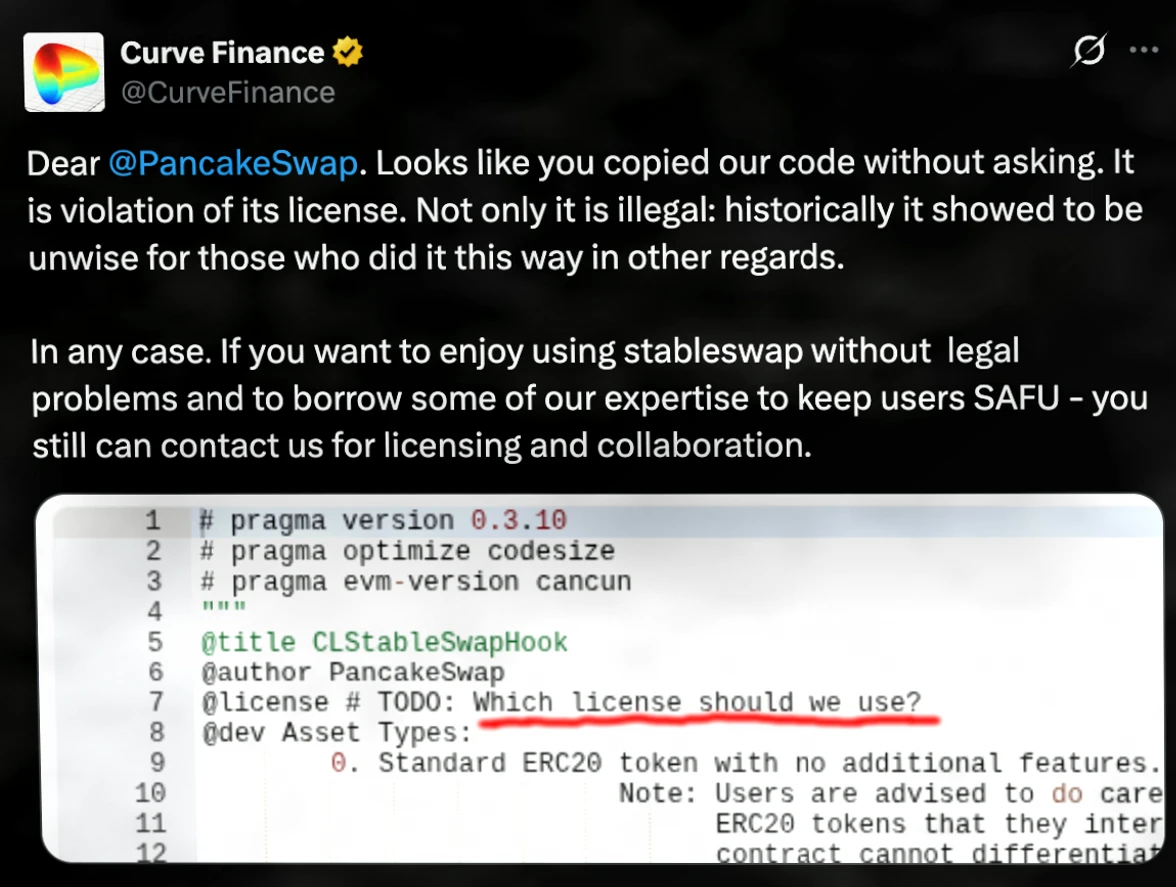
According to the Curve team, the stablecoin liquidity pool mechanism introduced in PancakeSwap Infinity exhibits a high degree of similarity to StableSwap in terms of trading curve design, slippage control, and capital efficiency optimization, potentially violating the terms of the open-source license. As of the time of publication, Cointelegraph has attempted to contact both teams for a response but has not received an official reply.
This controversy highlights the potential risks associated with the increasingly blurred boundaries of code reuse and intellectual property in the DeFi News ecosystem. While open-source licenses allow for code borrowing, they must adhere to licensing norms. If it is indeed a case of unauthorized direct copying, it could not only lead to legal disputes but also impact the trust system within the industry.
The upgrade to PancakeSwap Infinity also introduces a smart contract plugin system called “hooks,” which supports dynamic fee rates for liquidity pools, customized rebates, and on-chain conditional limit orders, among other advanced features. Additionally, the platform has reduced the liquidity pool creation fees by up to 99%, aiming to lower the barriers for developer participation and support more diverse liquidity strategies.
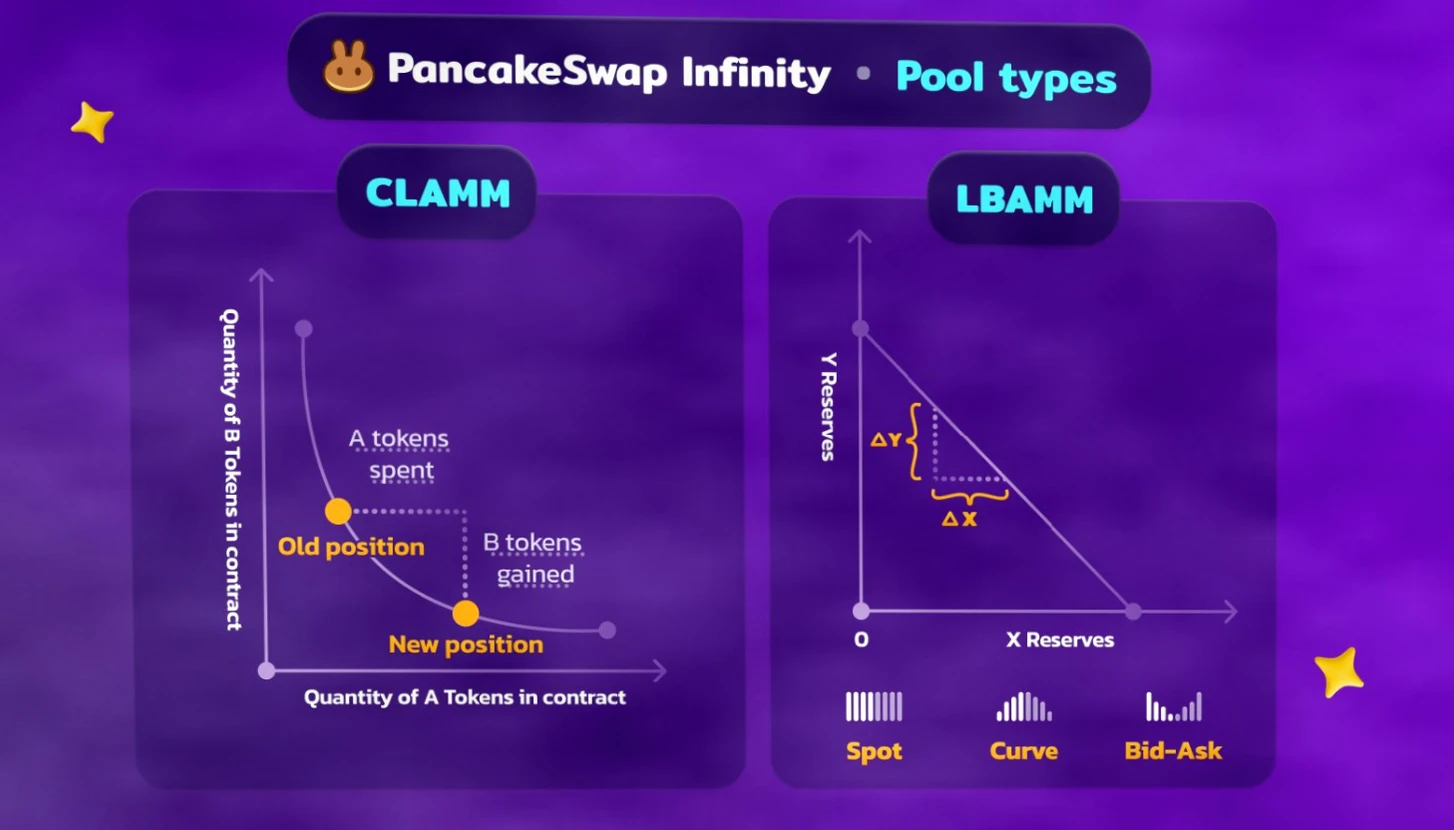
It is noteworthy that PancakeSwap Infinity is accelerating its evolution towards a cross-chain architecture, supporting interactions among various on-chain assets, while ERC-20, as the mainstream token standard in the Ethereum ecosystem, remains the foundation for its compatibility with various tokens (including L2 gas tokens, meme coins, etc.). This incident may prompt DeFi News projects to handle code licensing and innovation boundary issues more cautiously.