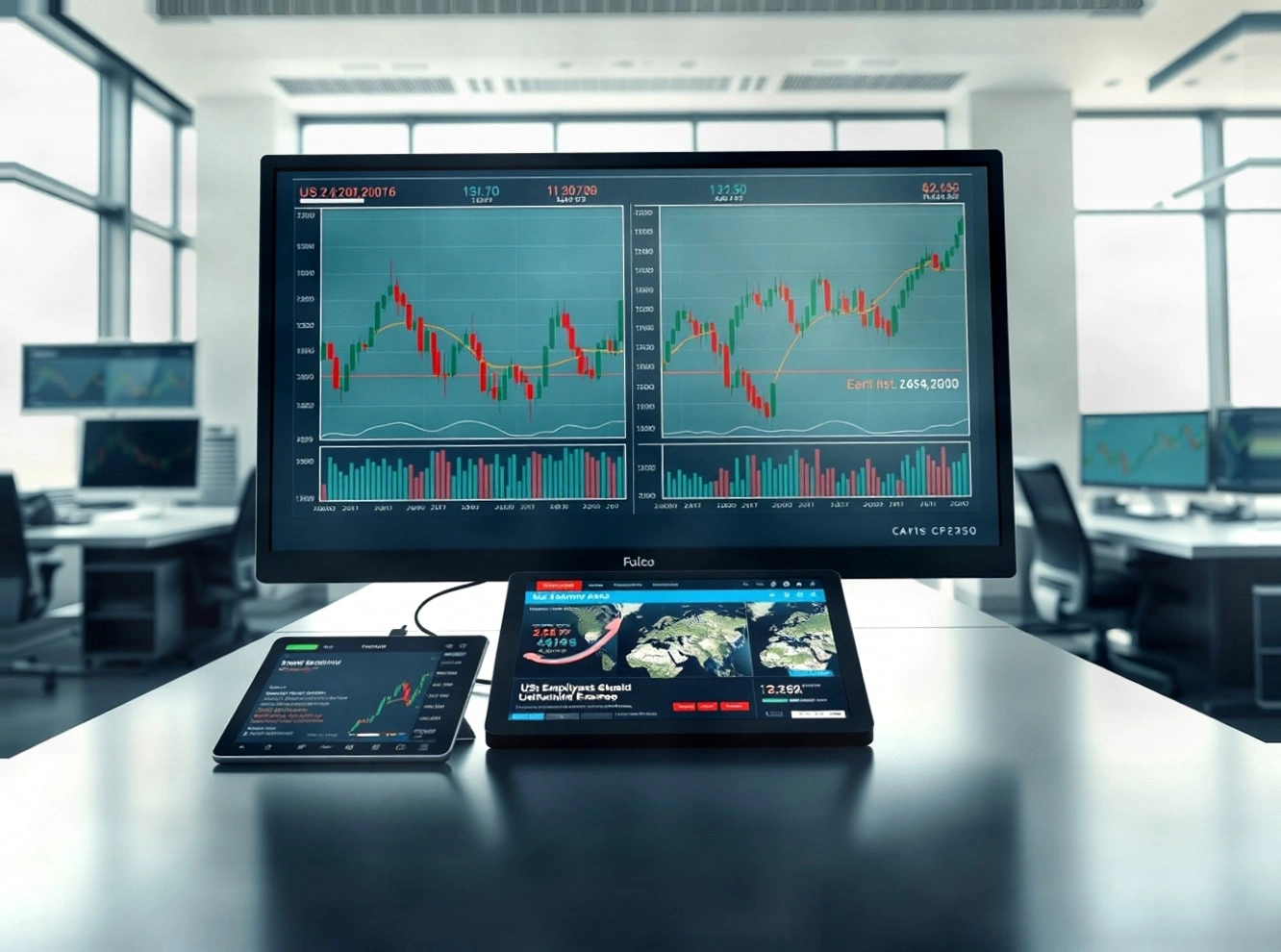
In early 2025, the forex market was rocked by the dual impact of US jobs data and Middle East tensions, with major currency pairs like the dollar, euro, and yen experiencing volatile swings. The market is focused on how the Fed will balance strong employment with geopolitical risks in its policy decisions.
The global foreign exchange market experienced a period of intense volatility in early 2025, as the release of key US non-farm payroll data coincided with escalating geopolitical tensions in the Middle East, jointly fueling market uncertainty. This combination of macroeconomic and geopolitical pressures triggered sharp fluctuations in major currency pairs, including the US dollar, euro, Japanese yen, and Swiss franc, posing significant strategic challenges for both institutional and individual traders.
From a market microstructure perspective, high-frequency trading algorithms reacted swiftly within seconds of the non-farm payroll data release, capitalizing on minute price discrepancies. Subsequently, macro hedge funds and asset management firms initiated large-scale directional positioning based on expectations of the Federal Reserve's policy path. The ongoing escalation of the Middle East situation further attracted commodity trading advisors (CTAs) and risk parity funds, prompting them to reassess the correlation changes between currencies, stocks, and crude oil, and driving adjustments in asset allocation.
Dr. Anya Sharma, Chief Strategist at Global Macro Advisors, noted: "The Federal Reserve is currently facing a classic policy dilemma – strong employment data should support interest rate hikes to curb inflation, but supply chain disruptions and growth risks stemming from geopolitical conflicts are forcing policymakers to be cautious. The market is now focused less on the data itself and more on how the Fed will adjust its stance in response to external shocks." This anticipation-driven game is precisely why the dollar's gains were limited, even with positive non-farm payroll data, due to market concerns about the Fed turning dovish.
In the derivatives market, demand for straddle and strangle strategies surged among options traders, indicating that professional money was more inclined to hedge against extreme volatility rather than bet on a single direction. From a volatility premium perspective, implied volatility across one-week to three-month tenors broadly increased, reflecting a widespread expectation of heightened uncertainty in the coming months.
Technically, EUR/USD broke below the key support level of 1.0750 after the non-farm payroll data release, but subsequently found support around 1.0720 from geopolitical safe-haven buying, forming a pattern of repeated back-and-forth movement. Other major currency pairs exhibited similar characteristics: the US Dollar Index oscillated between data-driven and risk-averse sentiment, while the yen and Swiss franc received temporary buying support due to their safe-haven status. The market is entering a new phase dominated by the interplay of data and geopolitical factors, with short-term movements highly dependent on subsequent policy signals and the evolution of the conflict.
0 comment A文章作者M管理员
No Comments Yet. Be the first to share what you think
❯
Profile
Search
Checking in, please wait...
Click for today's check-in bonus!
You have earned {{mission.data.mission.credit}} points today