

In March 2026, the crypto market is entering a new active cycle, with increased capital flow and project competition. Investors are focusing on core projects expected to lead the next phase of development. Among many projects, BlockDAG, Solana, NEAR, and Hyperliquid have become the focus of market attention due to their unique development paths.
BlockDAG (BDAG) has made a strong entry with a "full-stack online" approach. Its mainnet is running stably, with total funding reaching $452 million, and it has been listed on major global exchanges. Unlike most new projects still in the testing phase, BlockDAG has been tradable from the start, with a large number of tokens circulating in wallet addresses and trading volume rising rapidly. Some data platforms show that its initial trading activity has surpassed the early stages of Solana or Kaspa. Market analysis suggests that its price is expected to reach $0.2 in the short term and has the potential to hit $0.4 to $0.5. With major exchanges in the United States and Europe successively connecting, its price trend is now driven entirely by real market demand rather than speculative expectations. In addition, its staking yield mechanism is also seen by some analysts as a potential point that may surpass the early levels of Solana. Currently, the project has entered the public market stage, with a clear growth path and positive market sentiment.

Solana (SOL), as a representative of high-performance public chains, is currently maintaining a price around $84. Although short-term price fluctuations may be affected by market sentiment, with the possibility of a callback to the $50 area, the resilience of its underlying ecosystem remains strong. With high-speed processing capabilities, extremely low transaction fees, and a mature developer ecosystem, Solana continues to attract a large number of DApps and users. Its long-term growth logic has not been weakened. Its widespread application in decentralized finance and NFT fields still makes it one of the most promising crypto assets.
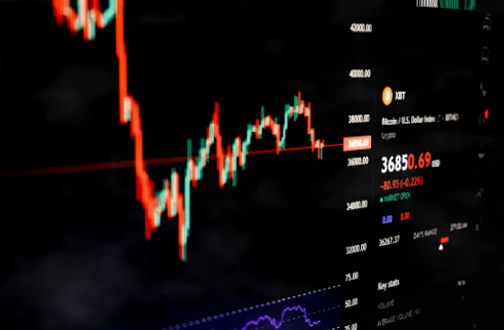
The NEAR protocol is accelerating its evolution into an AI-driven blockchain. Through its sharding architecture and developer-friendly tools, it attracts a large number of AI model deployments and data service projects. Its positioning of "scalability + machine learning integration" makes it stand out in the next-generation decentralized AI infrastructure track. Projects within the NEAR ecosystem are gradually building a closed loop of data, computing power, and smart contracts, and are expected to become a key node in the integration of AI and blockchain in the future.
Hyperliquid, as a decentralized derivatives trading platform, has quickly occupied an important position in the on-chain trading track with its low latency, high liquidity, and zero counterparty risk design. Its innovative liquidity pool mechanism and institutional-grade trading experience make it a preferred platform for professional traders. As the scale of the crypto derivatives market continues to expand, Hyperliquid's trading volume and user growth are showing a synchronous upward trend, and it is regarded as one of the most promising trading protocols in the DeFi News field.

Overall, these four projects represent breakthroughs in different dimensions of the crypto ecosystem: BlockDAG disrupts the entry method of new projects with the "completed product" model, Solana consolidates its leading position in high-performance public chains, NEAR opens up new scenarios for AI + blockchain, and Hyperliquid solidifies the decentralized trading infrastructure. They not only have technical advantages, but also demonstrate real momentum in terms of ecological implementation and market demand, making them core targets worthy of attention in 2026.