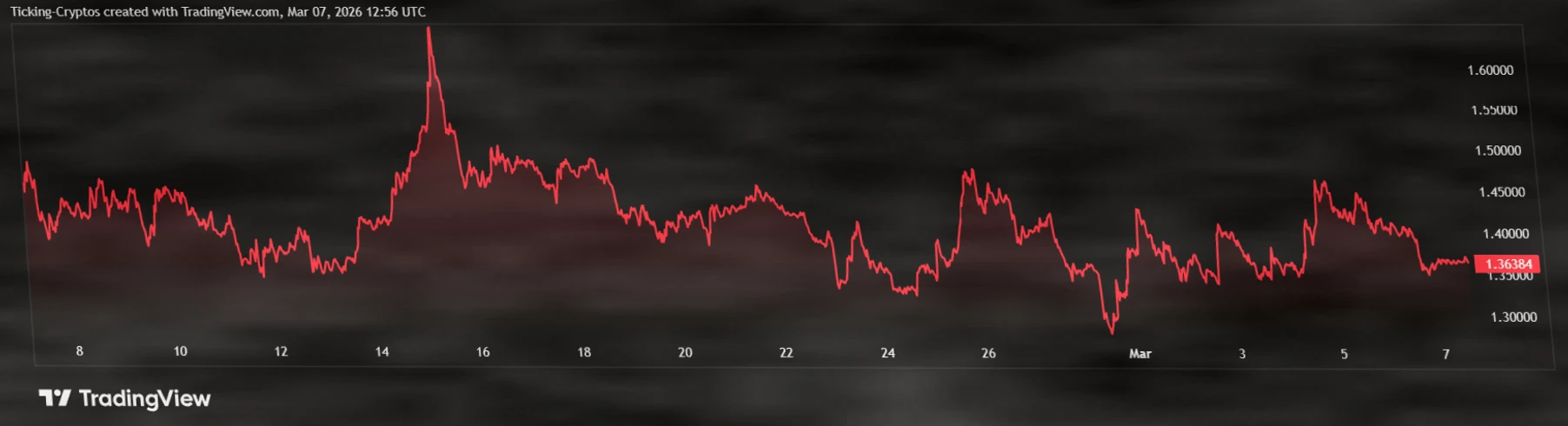
XRP price is currently fluctuating around $1.42, constrained by $1.45 resistance and historical low liquidity. Geopolitical risks are driving XRPL use cases, but market risk aversion is suppressing upside. Whether it can return to $1.50 depends on breaking key resistance and increased volume.
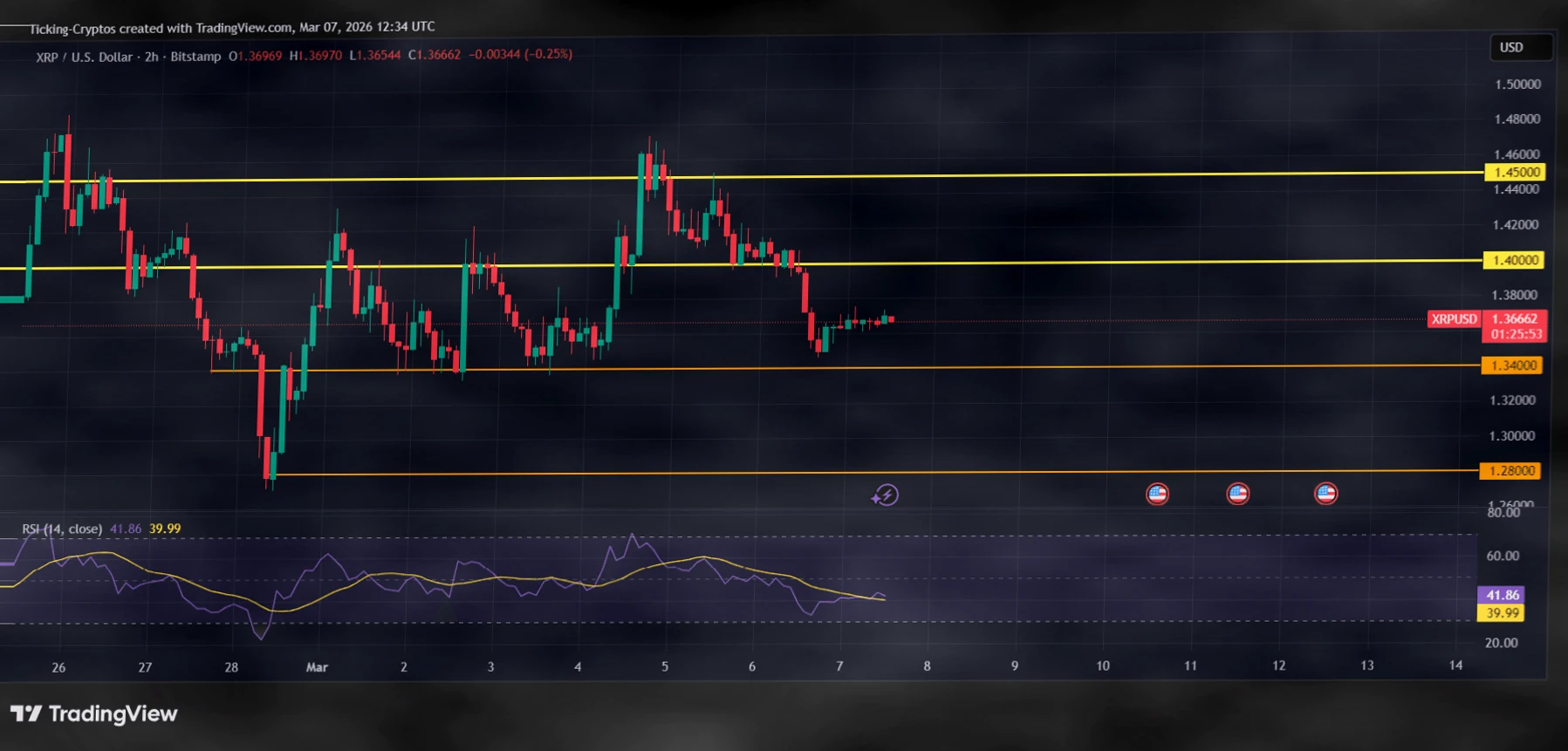
As of March 7, 2026, the XRP price is hovering around $1.42, with the market exhibiting typical "post-crash consolidation" characteristics. Compared to the nearly 60% drop from its 2025 high, the current price has stabilized, but the technical outlook remains fragile. Multiple attempts to break through the $1.45 resistance level have failed, indicating that bearish pressure remains strong.
The price pressure is due to both a systemic contraction in market sentiment and the profound impact of the macro environment. Recent escalating geopolitical tensions in the Middle East, with the potential for a blockade of the Strait of Hormuz, have prompted some institutions to re-examine non-traditional fiat currency settlement routes. XRP Ledger (XRPL), with its efficient cross-border payment capabilities, has once again entered the scope of consideration as a liquidity alternative. However, overall market risk aversion is high, with investors preferring to hold cash or mainstream assets, suppressing XRP's upside potential.
From a technical perspective, to achieve a breakthrough towards $1.50 or even $2, XRP needs to form a clear bottom confirmation signal in the near term, accompanied by a moderate increase in trading volume. The current key support is at $1.35, and a break below this level could lead to a further test of the $1.20 range. Conversely, if it can effectively break through $1.45 and hold, it could be the starting point for a new round of gains.
Despite liquidity being at historical lows, transaction activity on the XRPL underlying network and progress in institutional partnerships have not stalled. Some market observers believe that the current downturn may be a window of opportunity for long-term value investors to position themselves, but in the short term, caution is still needed regarding the risk of increased volatility.
0 comment A文章作者M管理员
No Comments Yet. Be the first to share what you think
❯
Profile
Search
Checking in, please wait...
Click for today's check-in bonus!
You have earned {{mission.data.mission.credit}} points today