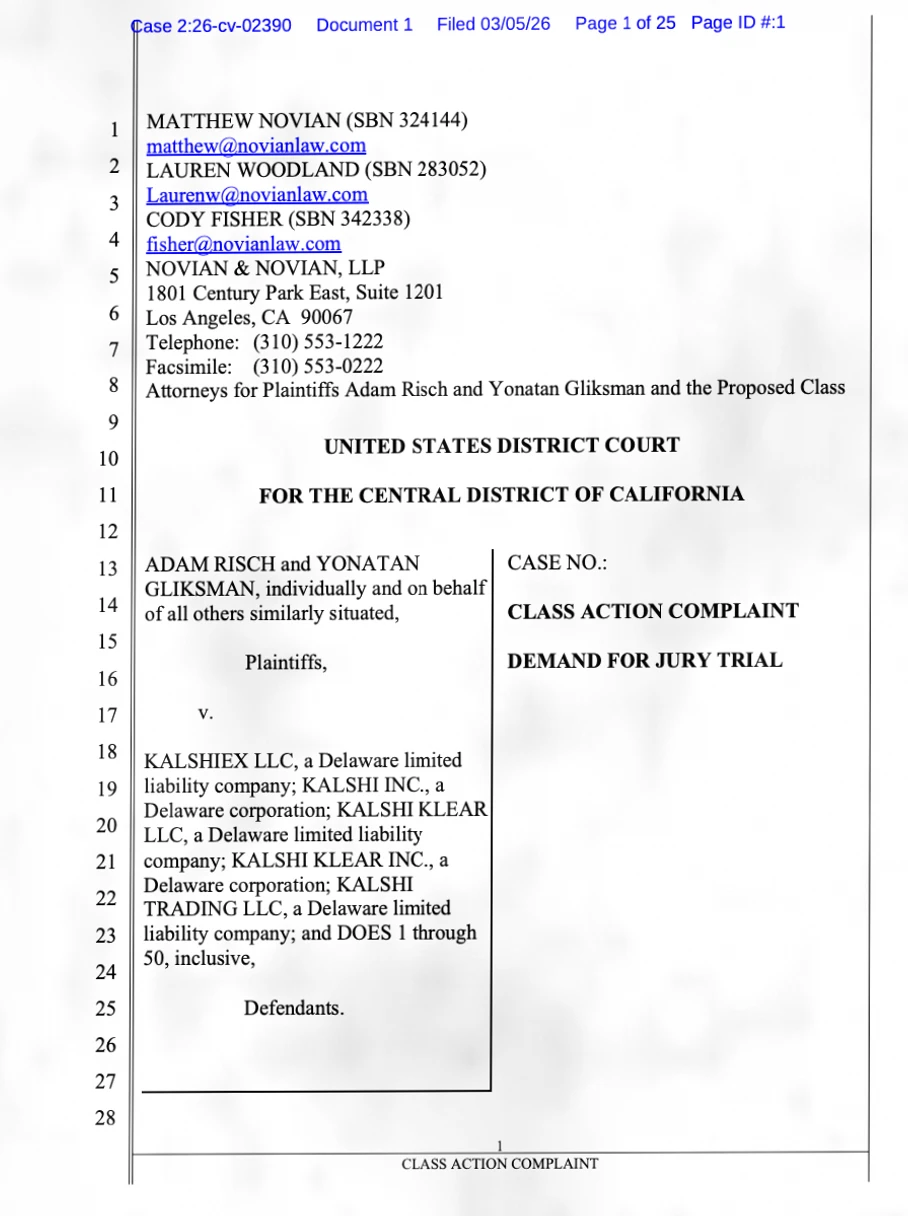
Recently, prediction market platform Kalshi has been hit with a class action lawsuit, accusing it of failing to adequately disclose the critical "death exemption" clause in the prediction contract regarding "Ali Khamenei no longer serving as Supreme Leader," and of not fulfilling its payment obligations to winning traders. The lawsuit documents indicate that Kalshi later acknowledged that its previous explanation of the clause contained "grammatical ambiguities," which may have led to misunderstandings of the rules by users.
The plaintiffs argue that the exemption mechanism is "predatory" and "unfair," particularly in a prediction market involving the life and death of political figures, where a lack of transparency severely undermines investor rights. Additionally, the lawsuit questions the timestamps and algorithmic logic used by Kalshi to calculate the "final transaction price," which were not disclosed to users, further exacerbating the opacity of market operations.
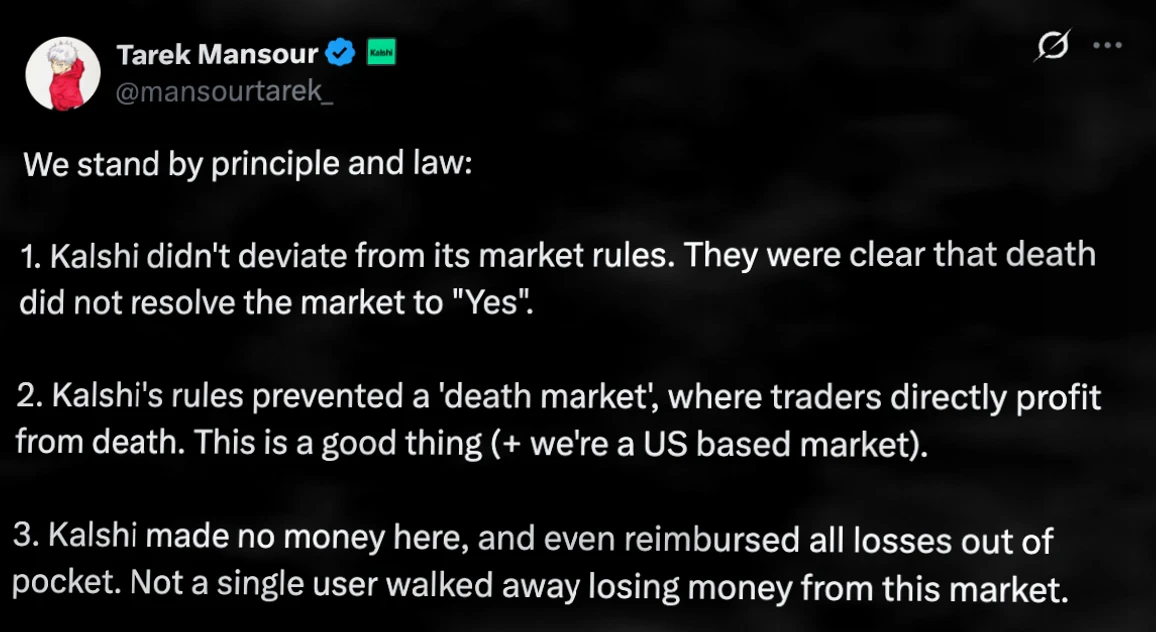
In response, Kalshi co-founder Tarek Mansour emphasized that the platform has always strictly enforced its established policy of "prohibiting death-related markets," and pointed out that the relevant rules are clearly outlined in the market terms, with no intent to conceal. He stated that the exemption mechanism was implemented as a compliance measure to avoid the platform's involvement in sensitive ethical and legal boundaries.
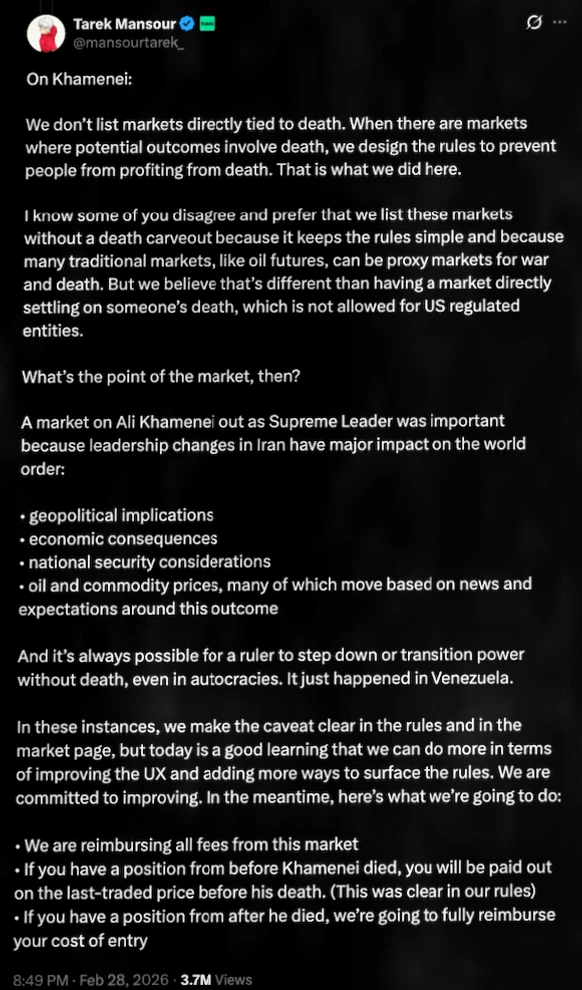
Despite the platform's claims of adhering to internal norms, the legal community is generally concerned about the balance between information disclosure, clarity of terms, and user protection in such prediction markets. This lawsuit may become an important case for regulators to examine the operational standards of decentralized prediction platforms.