

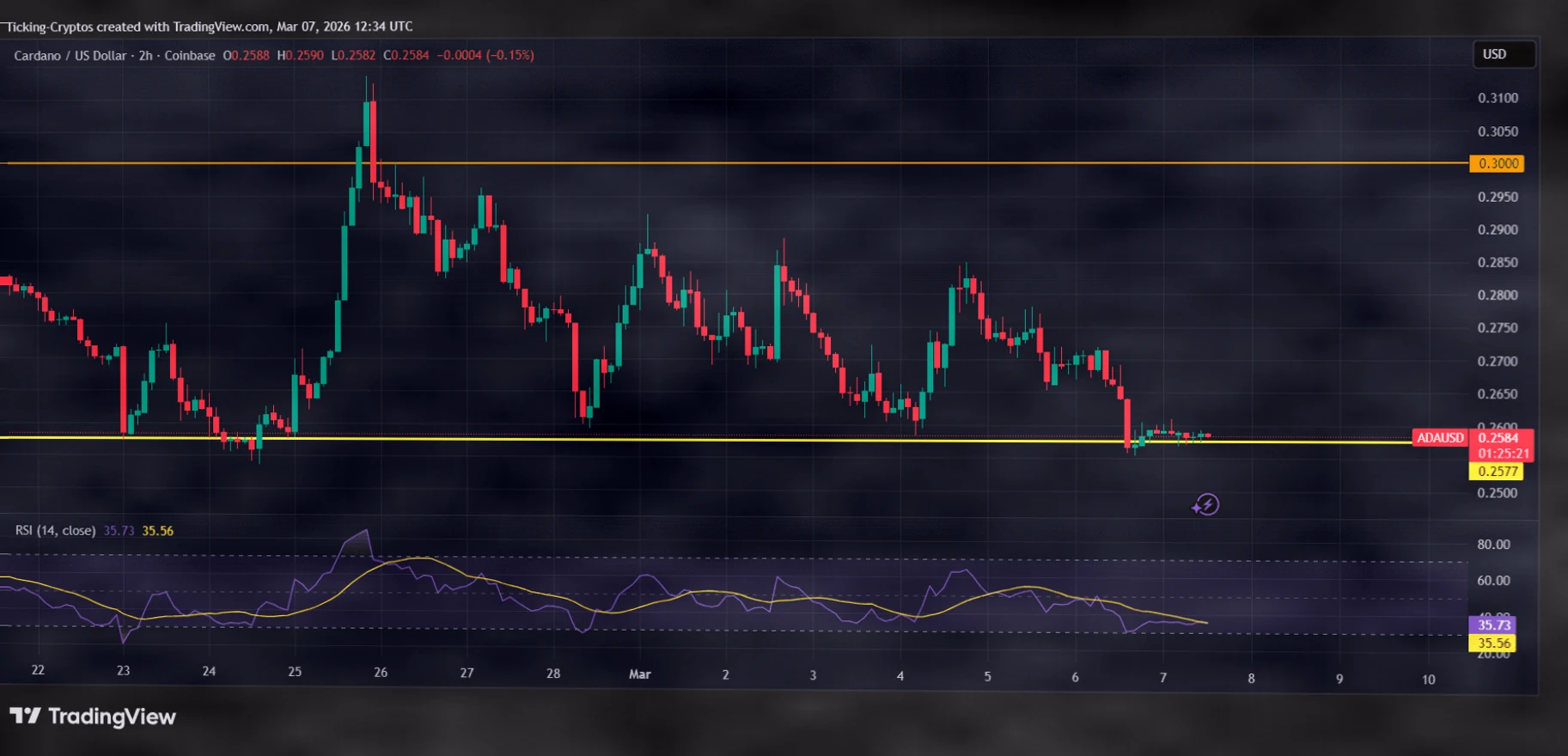
As of the second week of March 2026, the price of Cardano (ADA) has been fluctuating around $0.27, with market sentiment dipping into the "extreme fear" zone. The price is significantly below the 50-day and 200-day simple moving averages, indicating weak short-term momentum. Currently, investors are closely monitoring the key psychological support level at $0.25 to determine whether it represents a long-term bottom or merely a brief respite before further declines to $0.20.
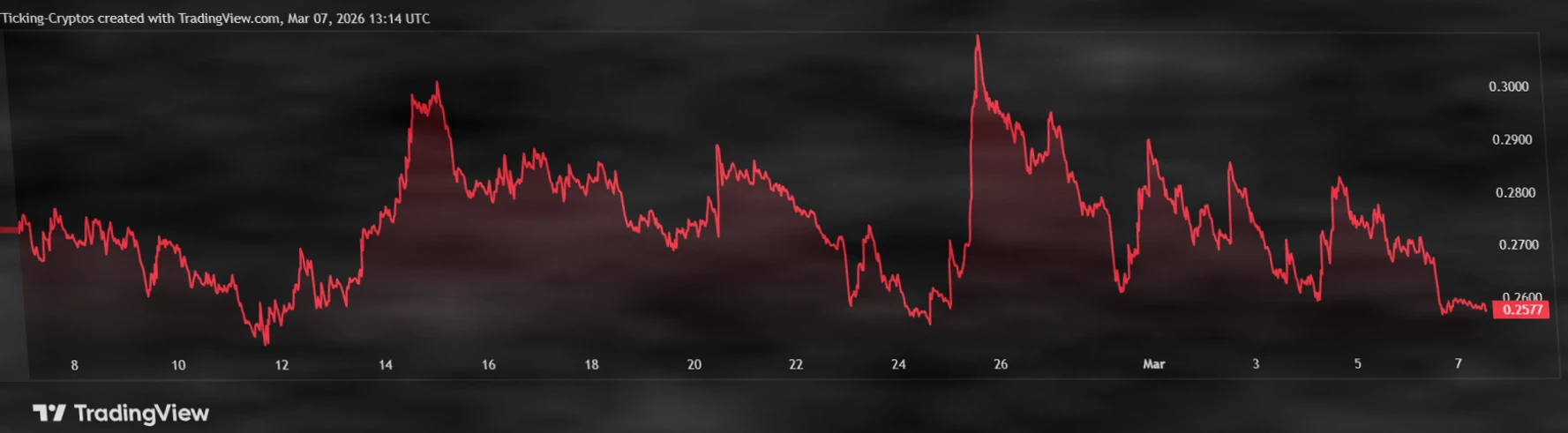
Recently, ADA's price has come under pressure, primarily due to macroeconomic factors. The escalating tensions in the Middle East have caused international oil prices to surpass $90 per barrel, intensifying concerns about a resurgence of inflation. As a blockchain project focused on academic research and long-term technological development, Cardano lacks the short-term speculative hype common among meme tokens, making it difficult to attract funding during periods of liquidity tightening. Meanwhile, the Federal Reserve may delay interest rate cuts due to inflationary pressures, further suppressing the rebound potential of risk assets and forcing a postponement of ADA's recovery expectations.
From a technical perspective, the $0.28 region constitutes a key resistance level in the near term. If it cannot be effectively breached, the price may retreat again. However, if market sentiment improves and macro risks ease, coupled with accelerated progress in ecosystem applications, ADA may have the potential to initiate a structural rebound. Currently, holders are undergoing a test of patience, and the market's ability to stabilize depends on the trajectory of geopolitical developments and the pace of improvements in the liquidity environment.
In summary, ADA's trajectory in 2026 will heavily rely on the synergy between macro cycles and the project's own ecosystem development. While volatility is expected in the short term, its long-term value remains closely tied to the underlying technological implementation capabilities.