

A comparison of capital inflows into Bitcoin spot ETFs and gold ETFs reveals a striking difference in the adoption of modern financial assets. Bitcoin has accumulated nearly $57 billion in net inflows in approximately 25 months, while gold ETFs took over 16 years, nearly 200 months, to reach a similar scale, now with a total size just exceeding $100 billion.
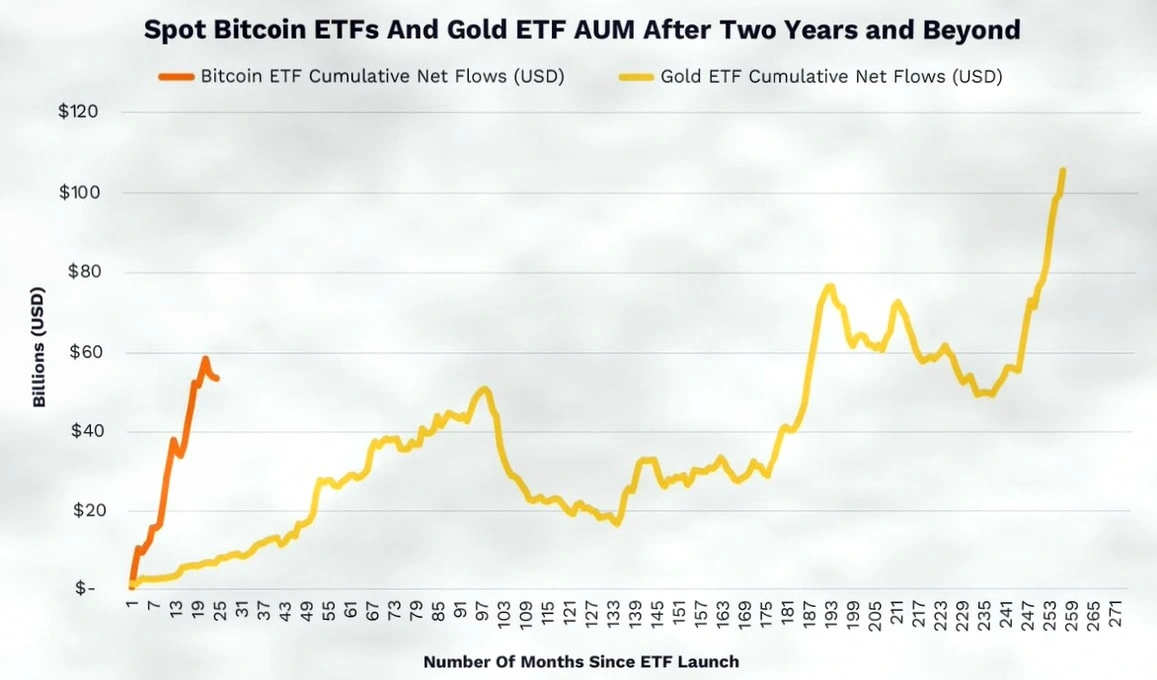
As seen from the curve, Bitcoin ETFs exhibited a near-vertical upward trend in the initial phase, with rapid inflows of funds. In contrast, gold ETFs showed a gradual growth trajectory with several significant corrections, such as a substantial pullback about eight years after launch, and a prolonged period of stagnation in the middle phase.
This difference in speed is not solely determined by asset value but is also profoundly influenced by market conditions. When gold ETFs were launched in 2004, the ETF mechanism was still immature, digital channels were not widespread, and the investor base needed to be built from scratch. In contrast, when Bitcoin ETFs were launched in early 2024, they were already situated within a mature financial infrastructure: a clear regulatory framework, institutional and retail investors poised for action, and a huge demand already nurtured by the crypto market. Furthermore, Bitcoin had achieved a nearly 20-fold cyclical increase before the ETF launch, further stimulating capital inflows.
Nevertheless, the capital absorption rate created by Bitcoin ETFs in the first two years is unprecedented. No other commodity ETF has attracted such a large amount of funds in such a short period. However, after entering the market downturn cycle from 2025 to 2026, the monthly inflows of Bitcoin ETFs have turned into net outflows, and the growth curve has flattened. This means that while the explosive growth of the first two years is a historical record, the trend in the next two years will be the real test of its long-term attractiveness.
It is worth noting that this phenomenon not only reflects market sentiment but also embodies a new paradigm for the acceptance of financial products in the digital age.