

The well-known offline prediction market platform Polymarket has quietly removed a long-standing contract that allowed users to bet on whether a nuclear explosion would occur within a specific timeframe. This decision was made following ongoing pressure from the public and political circles, but the platform has yet to issue a formal statement regarding the removal.
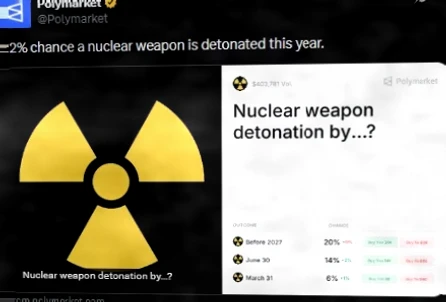
The catalyst for this event was the platform's update on social media X, which showed that the probability of a nuclear explosion occurring by the end of the year was approximately 22%. This data quickly sparked widespread controversy, with a surge of criticism on social media. Several market analysts pointed out that such betting is not only disturbing but could also encourage a commercial interpretation of human disasters.
During the active period of the relevant market, the total betting amount on contracts related to the timing and outcome of conflicts reached as high as $529 million, far exceeding the platform's daily trading volume. Even more concerning, blockchain monitoring companies discovered that several newly created wallets placed precise bets just hours before the attacks occurred, profiting over a million dollars, raising strong suspicions of “insider trading”—whether someone had access to non-public military information and profited from the unregulated prediction market.
Critics argue that platforms like Polymarket, which only require a crypto wallet for participation, lack transparency and a compliance framework, essentially creating an incentive mechanism for participants to profit from real conflicts, touching on both ethical and legal boundaries. Observers have pointed out that when prediction markets allow betting on state-level military actions, the potential risks extend beyond financial speculation and could undermine public trust in the fairness of information.
Although Polymarket has consistently emphasized that its platform can reflect collective wisdom through market aggregation, this incident highlights the increasing ethical scrutiny and regulatory pressure faced by decentralized prediction markets. Whether the platform will implement stricter review mechanisms for high-risk political contracts in the future remains to be seen.