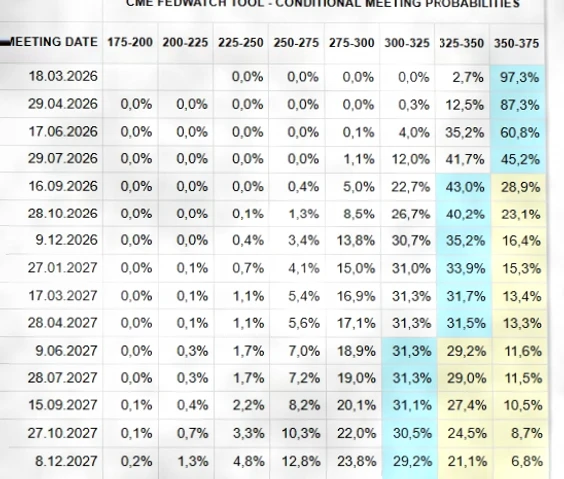
The US is about to release inflation data, and the market is focusing on the upward pressure on energy prices and the Fed's policy path. Analysis points out that geopolitical risks may delay the timing of interest rate cuts, and core inflation and PCE data have become key weather vanes.
The latest US inflation data, due for release on Wednesday at 8:30 AM ET, is drawing intense scrutiny from global markets. Previous figures showed both headline and core inflation rates stable at 2.5%, and the market generally expects this data to remain largely unchanged. However, persistent geopolitical tensions are driving up energy costs, and the inflation outlook is expected to face new variables in the coming months.
Economists generally predict that the overall inflation rate will fluctuate between 2.3% and 2.6%, with core inflation data showing a similar range. If the actual data is lower than expected, it may reinforce market expectations that the Federal Reserve will start cutting interest rates in September, thereby boosting risk asset sentiment. Previously, market risk appetite has been under pressure due to the prolonged monetary tightening cycle.
In February, a sharp drop in gasoline prices dominated the weakening inflation data, but the situation has reversed this month. Affected by the escalation of the Iranian situation, energy prices have risen significantly, adding uncertainty to the inflation outlook. The market is closely watching whether this factor constitutes medium-term pressure.
Analysts at BNP Paribas pointed out that although overall inflation in February may still appear weak, core prices may rise by 0.24% month-on-month, and the three-year annualized core inflation rate is about 3.1%, slightly lower than the level before the government shutdown at the end of 2025. The bank believes that the direct impact of the current Iranian conflict on inflation is not yet significant, and it is expected that the annual inflation rate will remain at around 2.4%.
It is worth noting that although inflation is showing a moderate slowdown trend, the Personal Consumption Expenditures (PCE) data to be released this week may be more indicative. The Federal Reserve is still a long way from achieving its 2% inflation target, and any slight improvement may significantly boost market confidence.
BNP Paribas emphasized that the key is to determine whether the energy shock caused by the Middle East situation is a short-term disruption or a long-term structural change. Iran claims that it can maintain the current situation for a long time, while the United States hopes to end the action within four weeks. This uncertainty makes the Federal Reserve more inclined to keep interest rates unchanged to assess the persistence of energy price fluctuations. If the pressure continues, even if there is only one interest rate cut in 2026, it may be regarded as the most optimistic scenario.
0 comment A文章作者M管理员
No Comments Yet. Be the first to share what you think
❯
Profile
Search
Checking in, please wait...
Click for today's check-in bonus!
You have earned {{mission.data.mission.credit}} points today