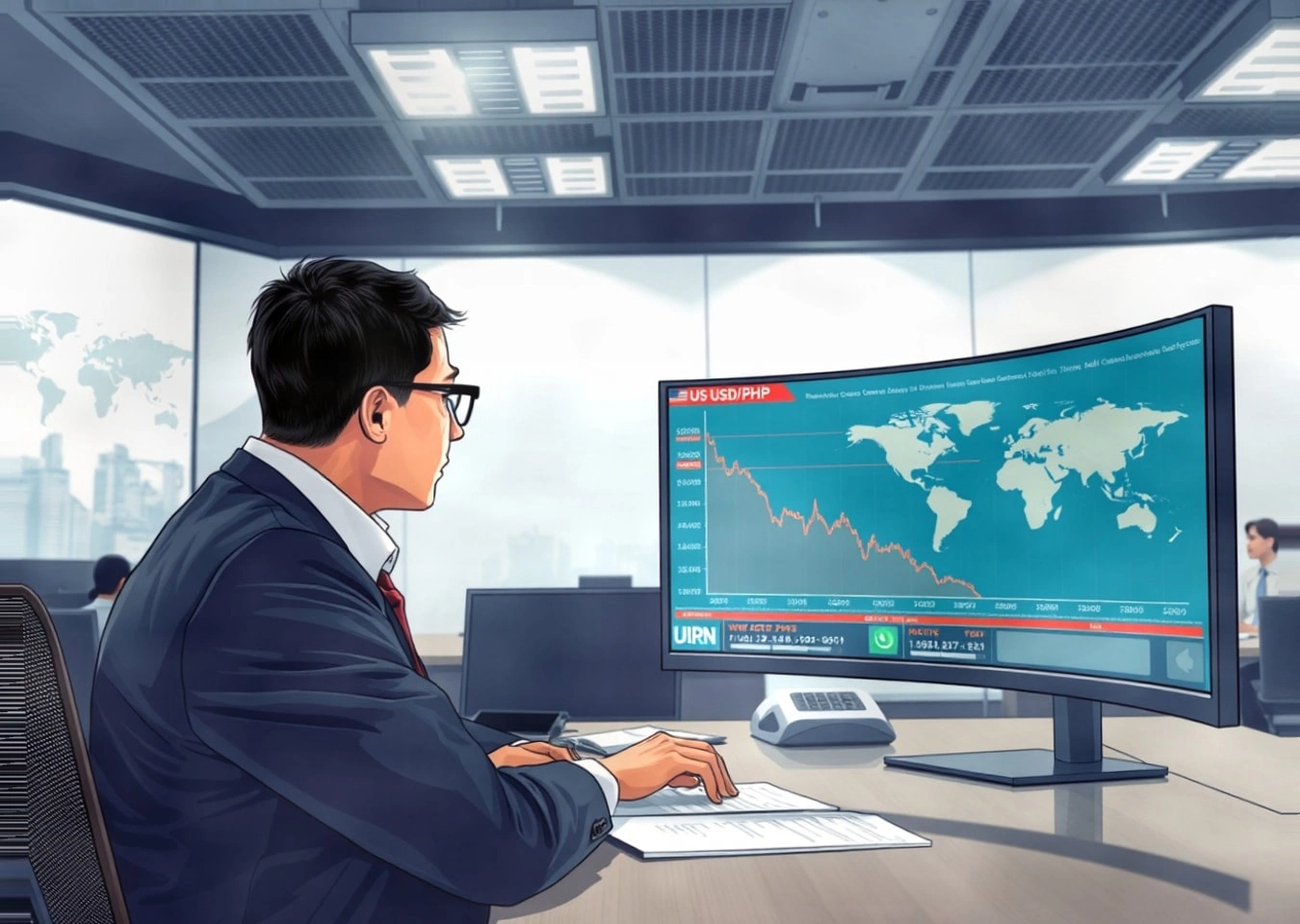
The Philippine Peso is under pressure against the US dollar due to rising oil prices and geopolitical tensions. MUFG analysis points to challenges from imported energy dependence and capital outflows, but exports and the BPO sector may provide a buffer.
Manila – The Philippine Peso (USD/PHP) is facing significant downward pressure in early 2025 due to the combined impact of persistently high global oil prices and heightened geopolitical uncertainty. According to an analysis by MUFG (Mitsubishi UFJ Financial Group), these two external shocks are jointly weakening the Peso's fundamental support, making it a focal point in emerging market currency trading.
As a net oil importer, the Philippines relies almost entirely on external supplies to meet its energy needs. When international crude oil prices rise, fuel, logistics, and manufacturing costs increase accordingly, directly widening the trade deficit. Historical data shows a significant negative correlation between Brent crude oil prices and the Peso exchange rate over the past decade, with the Peso typically depreciating by 1.5% to 2% for every 10% increase in oil prices.
Furthermore, tensions in the Middle East and Southeast Asia are prompting global investors to flock to safe-haven assets such as the US dollar, triggering capital outflows from emerging markets. MUFG emphasizes that the current “risk-off sentiment” is exacerbating the selling pressure on the Peso, and market expectations for the Philippine central bank's intervention capabilities are also becoming more cautious. Although the central bank has previously stabilized the foreign exchange market through foreign exchange market operations or interest rate adjustments, its policy space is limited under the dominance of global trends.
The weakening Peso has a two-way impact on the domestic economy: on the one hand, the local currency repayment costs of the government and enterprises' large US dollar debts increase, pushing up fiscal and corporate financial pressures; on the other hand, rising import prices exacerbate inflation, limiting the scope for monetary policy easing. At the same time, however, export-oriented industries and the global business process outsourcing (BPO) industry benefit from currency depreciation, enhancing their competitiveness and becoming an important buffer supporting the economy.
Overall, the USD/PHP trend will continue to be dominated by international energy markets and geopolitical risk sentiment in the short term, while the Philippines' structural outward-oriented economic characteristics make it particularly vulnerable to external shocks.
0 comment A文章作者M管理员
No Comments Yet. Be the first to share what you think
❯
Profile
Search
Checking in, please wait...
Click for today's check-in bonus!
You have earned {{mission.data.mission.credit}} points today