

In a recent phone interview, former President Trump stated that military actions against Iran may soon come to an end. He remarked, "The war is essentially over, and Iran's navy, communication systems, and air force capabilities have been severely weakened." He also revealed that the actual progress of US forces has far exceeded the initial estimate of a 4 to 5-week timeframe, demonstrating a significant strategic advantage.
When discussing regional security, Trump specifically highlighted the importance of the Strait of Hormuz. As a vital chokepoint for approximately 20% of the world's oil transport, this strait continues to face geopolitical tensions, yet vessels maintain passage. He emphasized that the US is prepared to take control of the area if necessary to ensure the security of international energy routes.
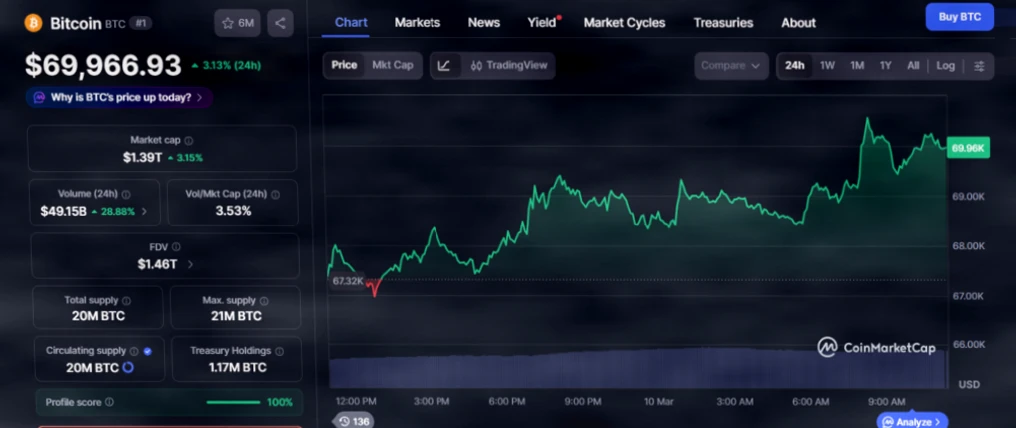
These remarks quickly triggered reactions in the financial markets. Previously, Bitcoin had been fluctuating around $68,000, showing signs of a pullback. However, following Trump's statements, market sentiment shifted noticeably to optimism, with Bitcoin's price rapidly rising and breaking through the $69,000 mark, subsequently stabilizing at that level.
Meanwhile, international crude oil prices experienced a significant decline, reflecting market expectations of easing geopolitical risks—once the conflict appears to be winding down, concerns over supply disruptions naturally lessen, putting downward pressure on oil prices. This dual movement illustrates how geopolitical events can simultaneously impact both traditional commodities and the digital asset market.
Investors are closely monitoring the subsequent developments and their potential impact on the global macro environment and cryptocurrency prices.
Additionally, another development in the crypto space is that Justin Sun is facing regulatory scrutiny regarding his simultaneous control of the TRON network and the TRX treasury, sparking community discussions about the authenticity of decentralized governance.