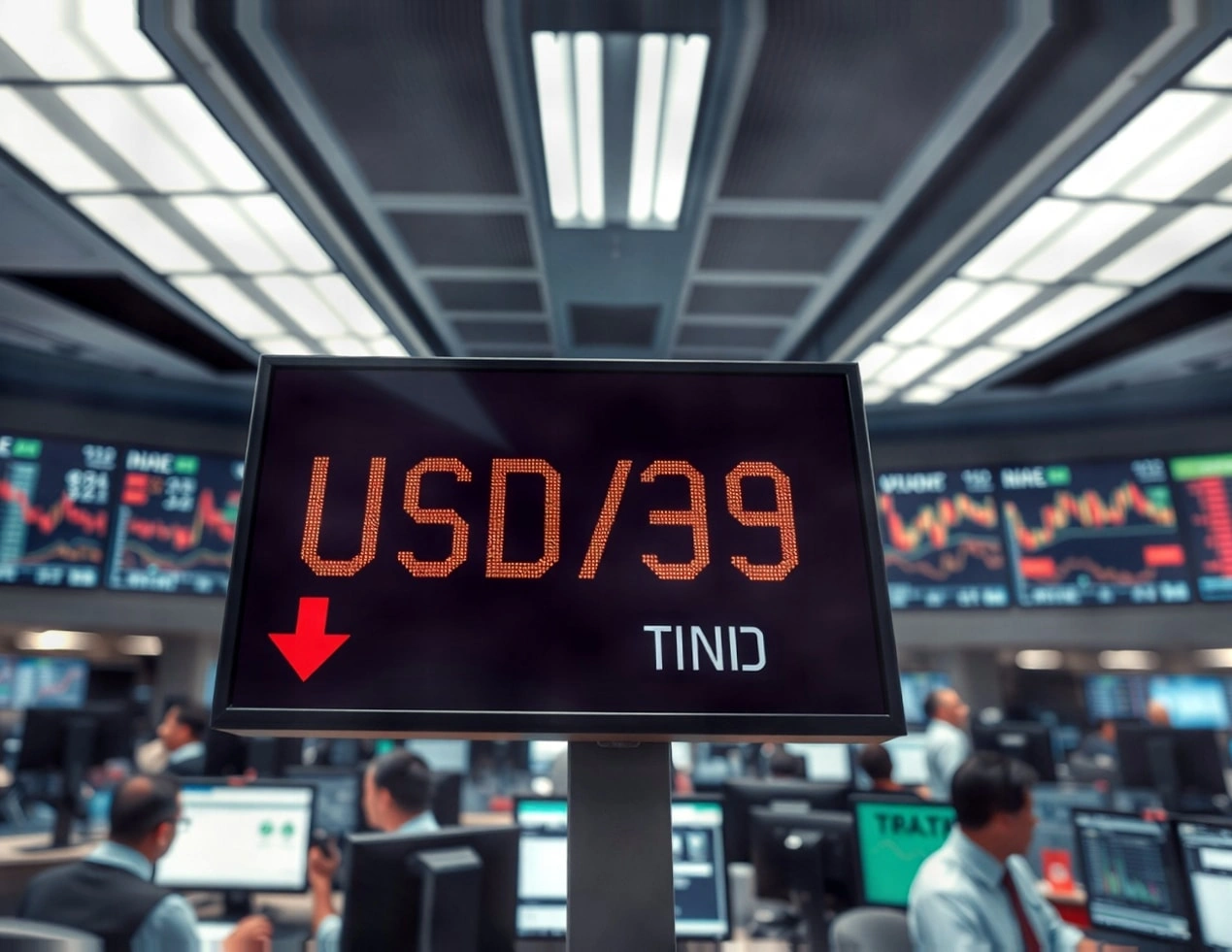
The dollar's continued strength in 2025 is pushing the USD/INR exchange rate towards a historical high of 84.50, placing the Indian Rupee under multiple pressures. This article analyzes technical trends, fundamental drivers, and historical cycles, exploring the central bank's response strategies and future trends.
In early 2025, the Indian Rupee is facing significant depreciation pressure as the USD/INR exchange rate continues to strengthen, approaching the historical high of 84.50 set in 2022. Market data shows that the Rupee has depreciated by approximately 4.2% against the US dollar since the beginning of the year, and multiple key resistance levels have been breached on the technical front, indicating that the depreciation trend has not yet peaked.
From a technical analysis perspective, the 50-day moving average of the USD/INR currency pair remains consistently above the 200-day moving average, forming a clear upward trend. Although the Relative Strength Index (RSI) is approaching overbought territory, there are no clear reversal signals, and market sentiment remains biased towards a stronger dollar. At the same time, trading volume in USD/INR futures has increased by 18% compared to the previous quarter, reflecting investors' increased concerns about exchange rate volatility and a significant increase in participation.
Looking back over the past decade, the Indian Rupee has experienced three significant depreciation cycles, all occurring against the backdrop of a strong dollar, global capital repatriation to developed markets, a widening Indian trade deficit, and a slowdown in foreign capital inflows. While the current situation is similar to historical patterns, the external environment is more complex – geopolitical fragmentation, global supply chain restructuring, and energy price volatility are collectively exacerbating the vulnerability of emerging market currencies.
On the fundamental front, India's trade deficit continues to widen. The latest quarterly data shows that the merchandise trade deficit has reached $28.7 billion, mainly due to the combined drag of high crude oil and other energy import costs and slowing export growth. At the same time, there has been a net outflow of foreign portfolio investment, with investors tending to shift to higher-yielding and more risk-controlled markets in the United States and Europe. In addition, the narrowing interest rate differential between India and the United States has also weakened the attractiveness of local currency assets.
Faced with persistent foreign exchange market pressure, the Reserve Bank of India (RBI) is closely monitoring exchange rate movements and using foreign exchange market intervention and liquidity adjustments to stabilize the local currency. However, with the global dollar dominance unchanged, the Rupee still faces structural challenges in the short term.
0 comment A文章作者M管理员
No Comments Yet. Be the first to share what you think
❯
Profile
Search
Checking in, please wait...
Click for today's check-in bonus!
You have earned {{mission.data.mission.credit}} points today