


When Bitcoin's Relative Strength Index (RSI) falls below 30, the market typically enters an oversold state, indicating that short-term selling pressure may have been excessively released. Historical data shows that such scenarios often foreshadow price bottoms and rebounds, rather than signaling the end of a trend.
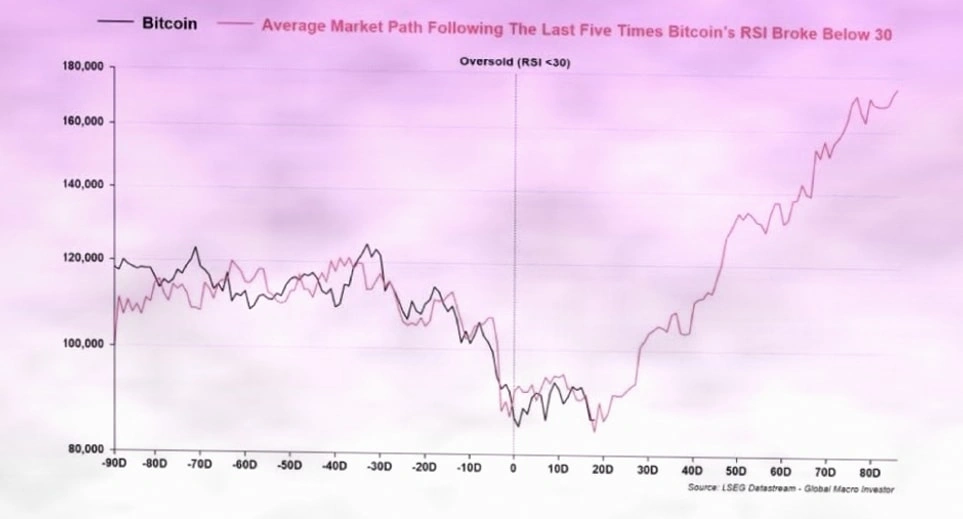
Looking back at past cycles, whenever Bitcoin's RSI entered oversold territory, although short-term fluctuations often followed, in most cases it initiated an upward trend lasting weeks to months. This pattern was validated at key lows in late 2018, March 2020, and November 2022.
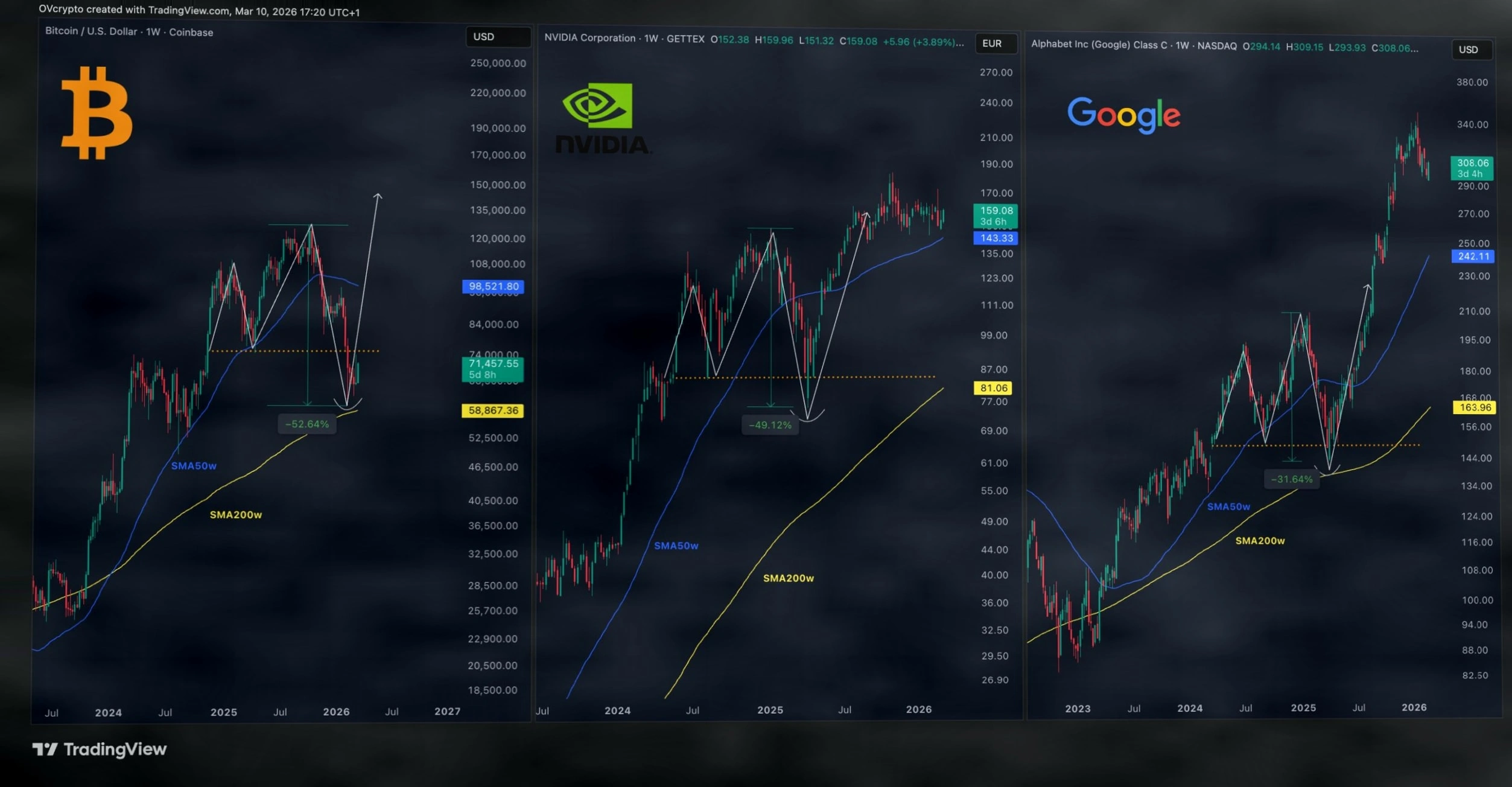
It is worth noting that Bitcoin's technical structure shares similar "price fractal" characteristics with some tech giants such as NVIDIA and Google. After experiencing deep corrections, all three saw strong momentum rebounds when key moving averages (such as the 200-day moving average) were re-broken. This cross-asset form resonance provides traders with an additional dimension of analysis.
Although historical patterns have reference value, the market is still affected by multiple factors such as macro liquidity, regulatory dynamics, and sentiment fluctuations. Investors should comprehensively judge trend turning points by combining support and resistance levels, volume changes, and on-chain data, and avoid single-indicator decision-making.
Currently, Bitcoin is in a consolidation phase, and the RSI oversold signal provides a technical basis for potential buying opportunities, but a true breakout still requires confirmation from both price and volume.