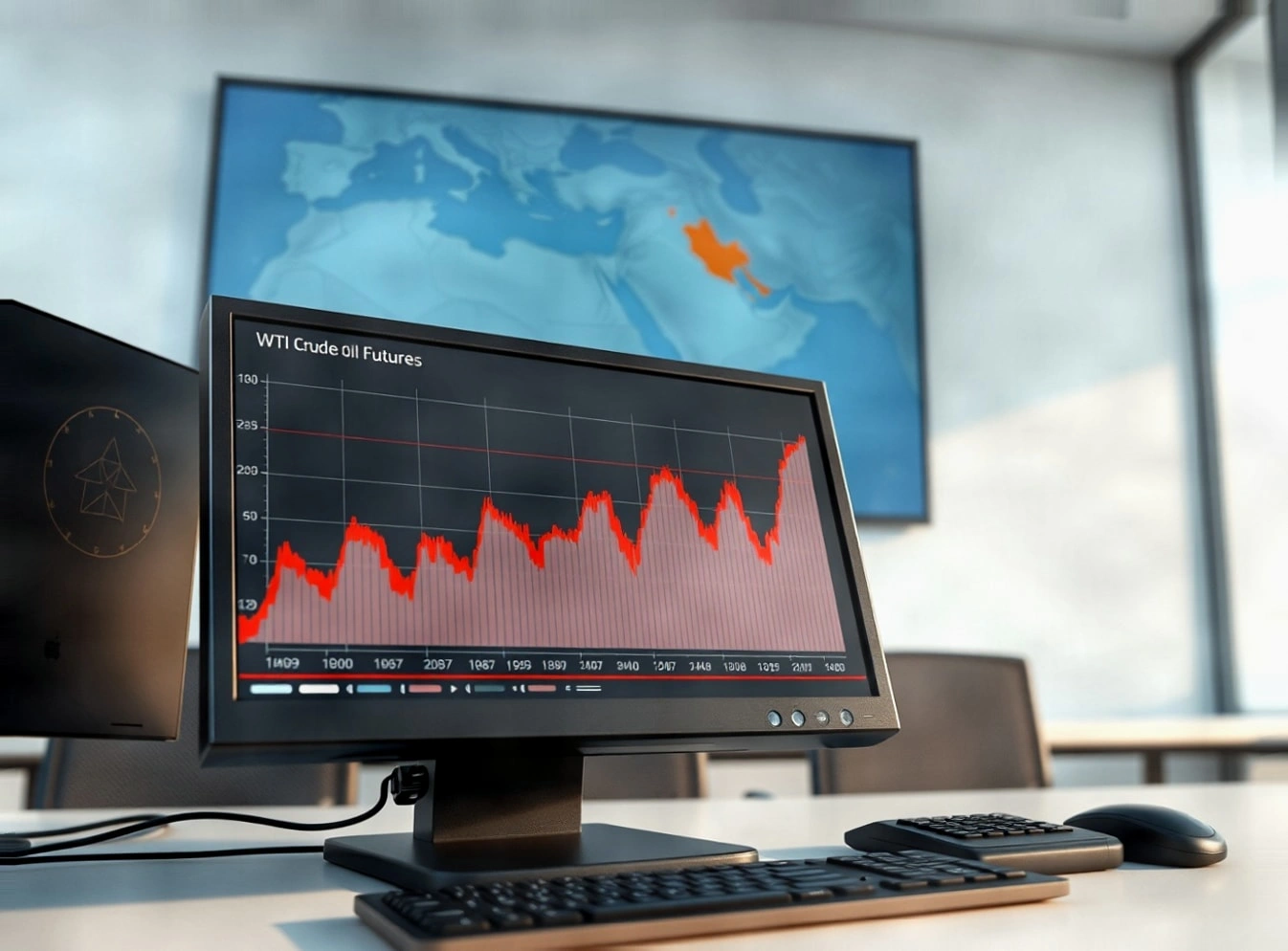
Middle East tensions push WTI oil prices higher, prompting G7 and IEA to urgently discuss coordinated release of strategic oil reserves to alleviate short-term supply anxiety caused by shipping disruptions, rather than addressing long-term capacity losses.
Global crude oil markets experienced significant volatility this week, with West Texas Intermediate (WTI) crude futures prices climbing markedly, driven primarily by escalating geopolitical tensions in the Middle East. In response to potential supply risks, the Group of Seven (G7) and the International Energy Agency (IEA) swiftly convened an emergency meeting to discuss the coordinated release of strategic oil reserves to stabilize market sentiment.
At the start of trading, WTI crude futures rose by over 4% at one point. The market widely believes that this surge stems from threats to shipping safety in key Middle Eastern shipping lanes, particularly the Strait of Hormuz. Simultaneously, uncertainty surrounding the production outlook of some OPEC+ members has further exacerbated supply-side concerns. This price fluctuation reflects the market pricing in a geopolitical risk premium. Looking back, a similar situation occurred in 2019 when Saudi Aramco facilities were attacked, but the current inventory background is different. The latest data from the U.S. Energy Information Administration (EIA) shows that U.S. commercial crude oil inventories are still slightly above the five-year seasonal average, indicating that there is no substantial shortage in fundamentals.
Finance and energy officials from G7 member states assessed the feasibility of a coordinated strategic reserve release via video conference. The IEA, as the core of the coordination mechanism, proposed multiple contingency plans covering the scale of the release, timing options, and regional targeting, aimed at precisely alleviating localized supply chain disruptions rather than addressing widespread capacity losses. Compared to the collective release of 60 million barrels after the Russia-Ukraine conflict in 2022, this discussion leans more towards a "precision drip" intervention to prevent panic hoarding in the market.
Dr. Elina Vance, a senior researcher at the Center on Global Energy Policy, pointed out: "The role of strategic reserves is to provide short-term psychological security and physical buffer. It can effectively compensate for temporary gaps caused by transportation bottlenecks, but it cannot replace destroyed or long-term shutdown capacity." Market data also confirms this view: after the reserve release in 2022, oil prices briefly fell but then rebounded due to the re-emergence of structural contradictions. The core of the current situation is that supply risks are concentrated in the logistics环节, rather than the production end, which makes reserve release have higher operational value and policy significance.
0 comment A文章作者M管理员
No Comments Yet. Be the first to share what you think
❯
Profile
Search
Checking in, please wait...
Click for today's check-in bonus!
You have earned {{mission.data.mission.credit}} points today