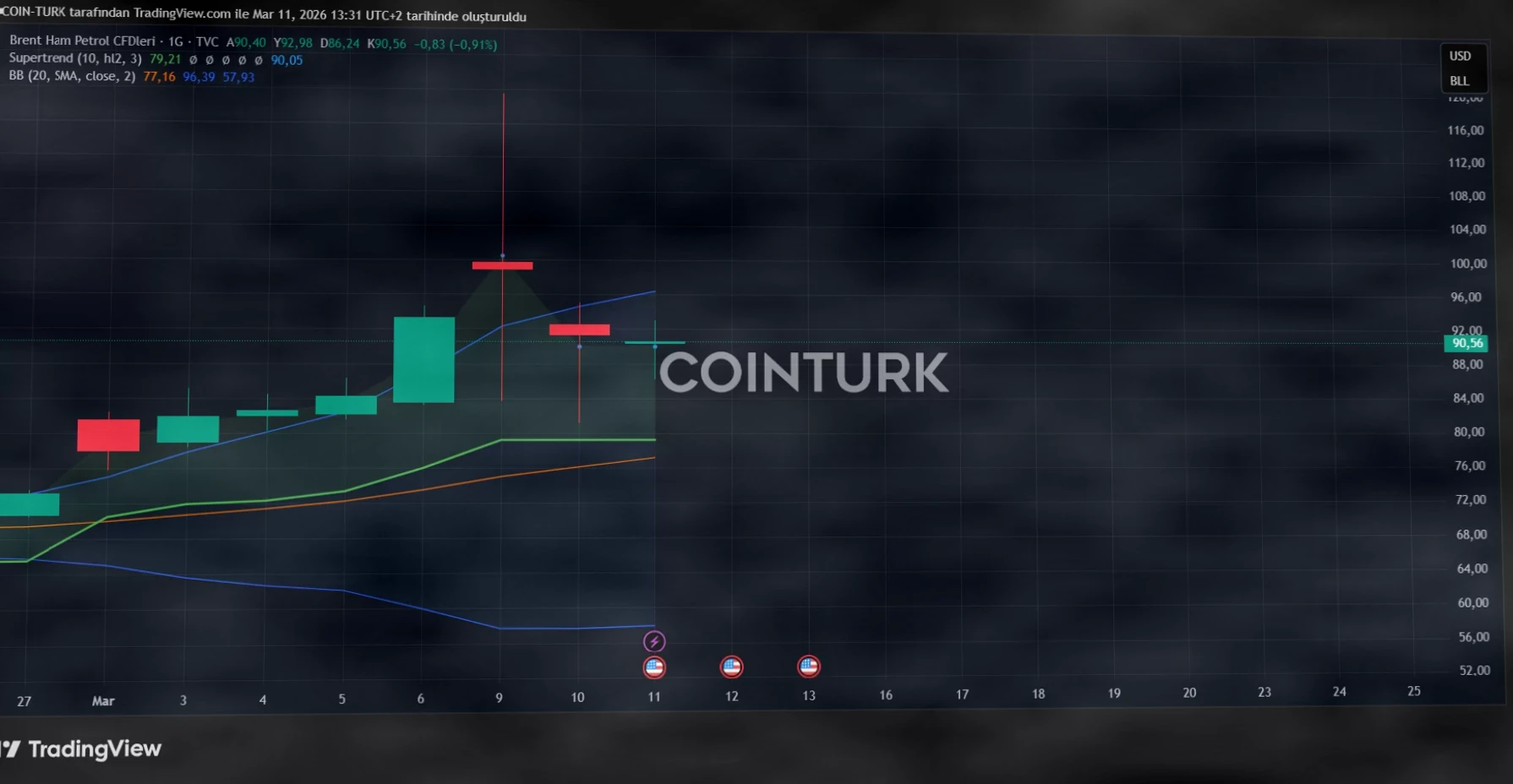
Iran's shipment of crude oil via shadow fleets exacerbates global energy tensions, pushing oil prices higher, triggering inflation concerns, and further suppressing the already weak crypto market. Historical cycles indicate that this bear market may last until 2026.
Global oil market volatility is intensifying, with U.S. futures markets trading indecisively and Brent crude prices hovering around $90 per barrel. Recent reports indicate that Iran is shipping crude oil to China on a large scale via so-called "shadow fleets." This clandestine transportation method has weakened expectations that Beijing might pressure Tehran, maintaining a fragile supply-demand balance in the short term. Although such operations are difficult to sustain in the long run, they prolong market concerns about the stalemate, further increasing uncertainty in the energy supply chain.
The stock market is also experiencing sharp fluctuations. S&P 500 futures repeatedly reversed course after a slight 0.5% gain the previous day, intensifying the battle between bulls and bears. Brent crude oil rose 2% before the inflation data was released, reflecting investors' sensitivity to rising price pressures. U.S. Treasury yields remained stable, and the overall market showed a risk-averse tendency. Notably, Oracle's pre-market stock price soared 10%, benefiting from strong financial reports and a positive future outlook, briefly alleviating AI bubble concerns. However, if subsequent data falls short of expectations, it may exacerbate market correction pressure.
Meanwhile, the British Royal Navy confirmed that three ships were attacked in the Strait of Hormuz and the Persian Gulf. In response, the U.S. military launched strikes against Iranian vessels suspected of participating in mine-laying operations, aiming to ensure the safety of navigation in critical waterways. The market is increasingly concerned that local conflicts may escalate into large-scale attacks on Middle Eastern energy infrastructure, triggering a new round of oil price spikes and forcing central banks to adopt more aggressive tightening policies to curb inflation.
Crypto assets remain deeply mired in a downward channel. Historical data shows that bear market cycles typically last for an extended period. Even if the situation in Iran eases, the crypto market still faces multiple headwinds, including tightening macro liquidity, regulatory pressure, and weak risk sentiment. If past cyclical patterns are followed, the market may not truly stabilize until the end of 2026.
From a political perspective, the U.S. is unwilling to maintain a tense situation for an extended period, especially with the midterm elections approaching, as continued conflict may weaken support for the ruling party. The Iranian government also has no intention of suffering greater economic and infrastructure losses. Therefore, as this Friday approaches, the outside world expects more diplomatic overtures and informal negotiation rumors to emerge, seeking a de-escalation exit for this crisis.
0 comment A文章作者M管理员
No Comments Yet. Be the first to share what you think
❯
Profile
Search
Checking in, please wait...
Click for today's check-in bonus!
You have earned {{mission.data.mission.credit}} points today