

The landscape of digital assets in 2026 is starkly different from the wild frontier days of a few years ago. Despite Bitcoin breaking the $70,000 mark and setting a new psychological threshold, the vast majority of independent crypto projects have fallen into stagnation, with liquidity drying up, user attrition, and ecological decay becoming commonplace. This apparent market cooling is, in fact, a structural reshaping.
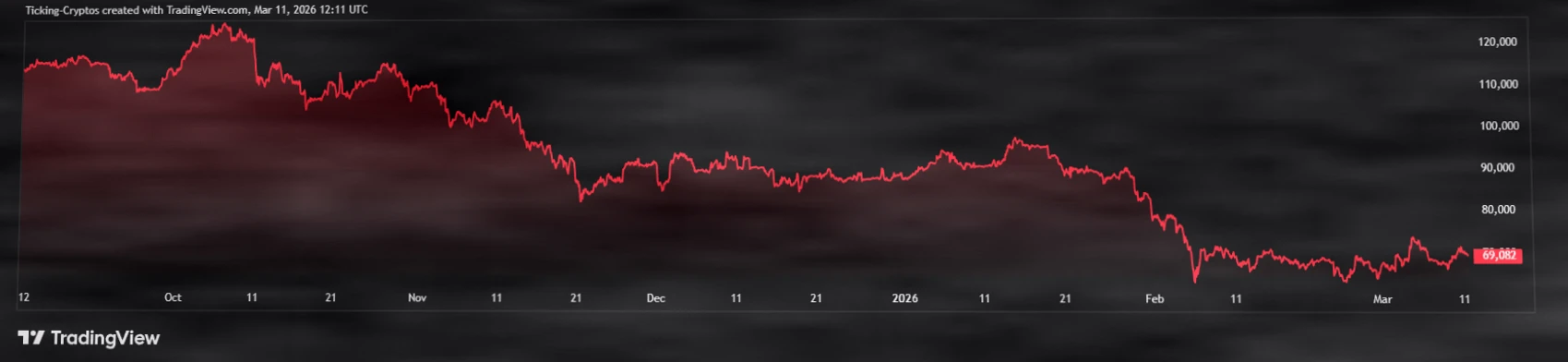
Firstly, the end of the retail 'speculator' culture has become a key turning point. The retail crowd that once dominated market sentiment has lost trust in high-risk, substantively worthless tokens after experiencing multiple crashes and project failures. Their withdrawal has left projects reliant on community hype without a core growth engine.
Secondly, the implementation of the EU's MiCA regulations has turned compliance costs into the last straw for small and medium-sized projects. Project teams are forced to choose between high legal and audit expenses and a high-risk survival model hidden in offshore shadows. The latter can no longer attract the attention of mainstream capital and rational investors.
Meanwhile, traditional tech giants are accelerating their penetration into the Web3 space, replacing decentralized ideals with enterprise-level solutions. These giants, leveraging their capital, user base, and compliance capabilities, have dominated the construction of infrastructure, wallets, and payment channels, making it harder for independent projects to secure their ecological niches.
Even more severe is the concentrated outbreak of technical debt. Many blockchain projects born during the 2021 boom lack real application scenarios and sustainable economic models, remaining in a 'zombie chain' state—sparse on-chain transactions, silent developers, and dwindling nodes. The market is undergoing a brutal survival of the fittest, with only 5 to 10 main chains with real active ecosystems expected to survive in the next three years.
The way forward is not lost but rather redirected. True breakthroughs will come from innovators who return to the essence: teams focused on solving real problems, building practical applications, and valuing user experience over token prices. Only in this way can the crypto ecosystem break free from speculative bubbles and move towards a truly sustainable future.