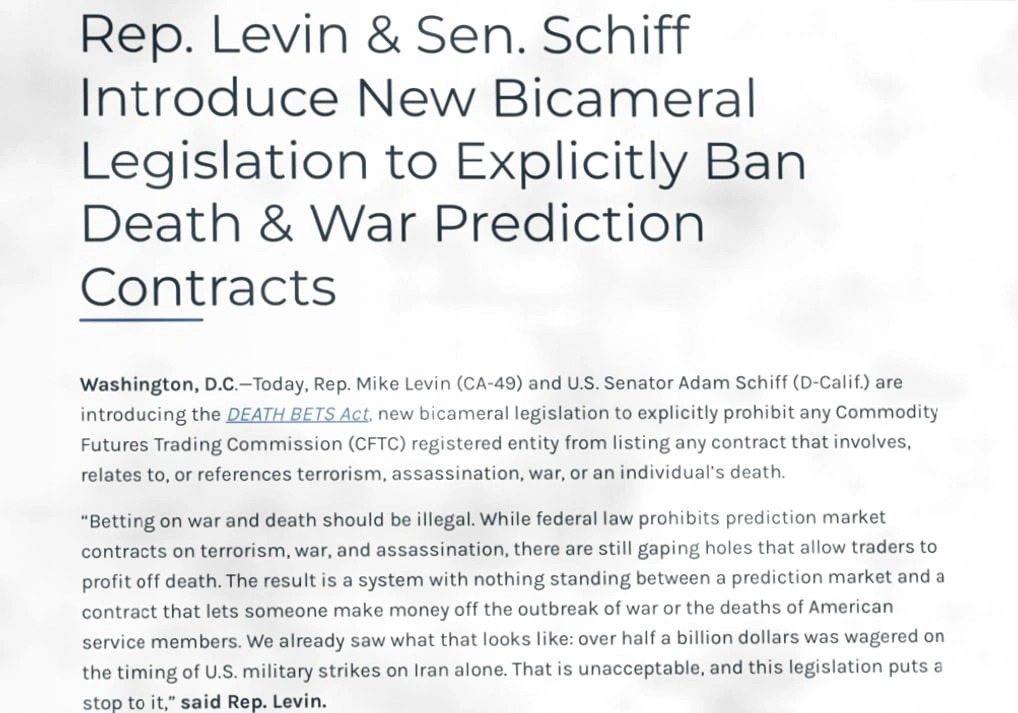
In recent years, prediction markets centered around death events have sparked widespread controversy in the United States. These platforms allow users to bet on sensitive events such as the timing of celebrity deaths and the likelihood of major disasters, which critics label as a 'desecration of life' and speculative behavior. U.S. Congress members Mike Levin and Adam Schiff have jointly introduced the Death Bets Act, aimed at explicitly prohibiting such markets, claiming they pose potential threats to social ethics and national security.
Currently, some states have taken action. Regulatory agencies in Kansas and Ohio have pointed out that these platforms essentially constitute disguised gambling, violating local gaming laws. Lawsuits against mainstream platforms like Polymarket are on the rise, and the judicial system is grappling with how to define the boundary between 'prediction' and 'gambling.'
Supporters argue that these markets, based on blockchain technology, can more efficiently aggregate public judgments about events and represent a form of information transparency. However, when the subjects of predictions involve sensitive issues like life and disaster, their social impact extends far beyond financial considerations. Regulators are concerned that such markets could be used to manipulate public opinion or incite panic, especially during election years or public crises.
As the controversy continues to escalate, U.S. lawmakers are attempting to draw a line between technological innovation and ethical boundaries. If the Death Bets Act is passed, it could set a precedent for strict scrutiny of crypto prediction markets worldwide.