

Portland, Oregon – June 9, 2025 – While numerous indoor agriculture projects have faltered due to high energy consumption and profitability challenges, Canopii is emerging with a novel technological approach. This startup combines robotics, fully automated systems, and sustainable design principles to create closed-loop growing units that require no human intervention, potentially revolutionizing food supply models in urban and suburban areas. Founder David Ashton was inspired by witnessing the fragility of the agricultural system during California's historic drought, prompting him to seek more resilient, localized solutions.
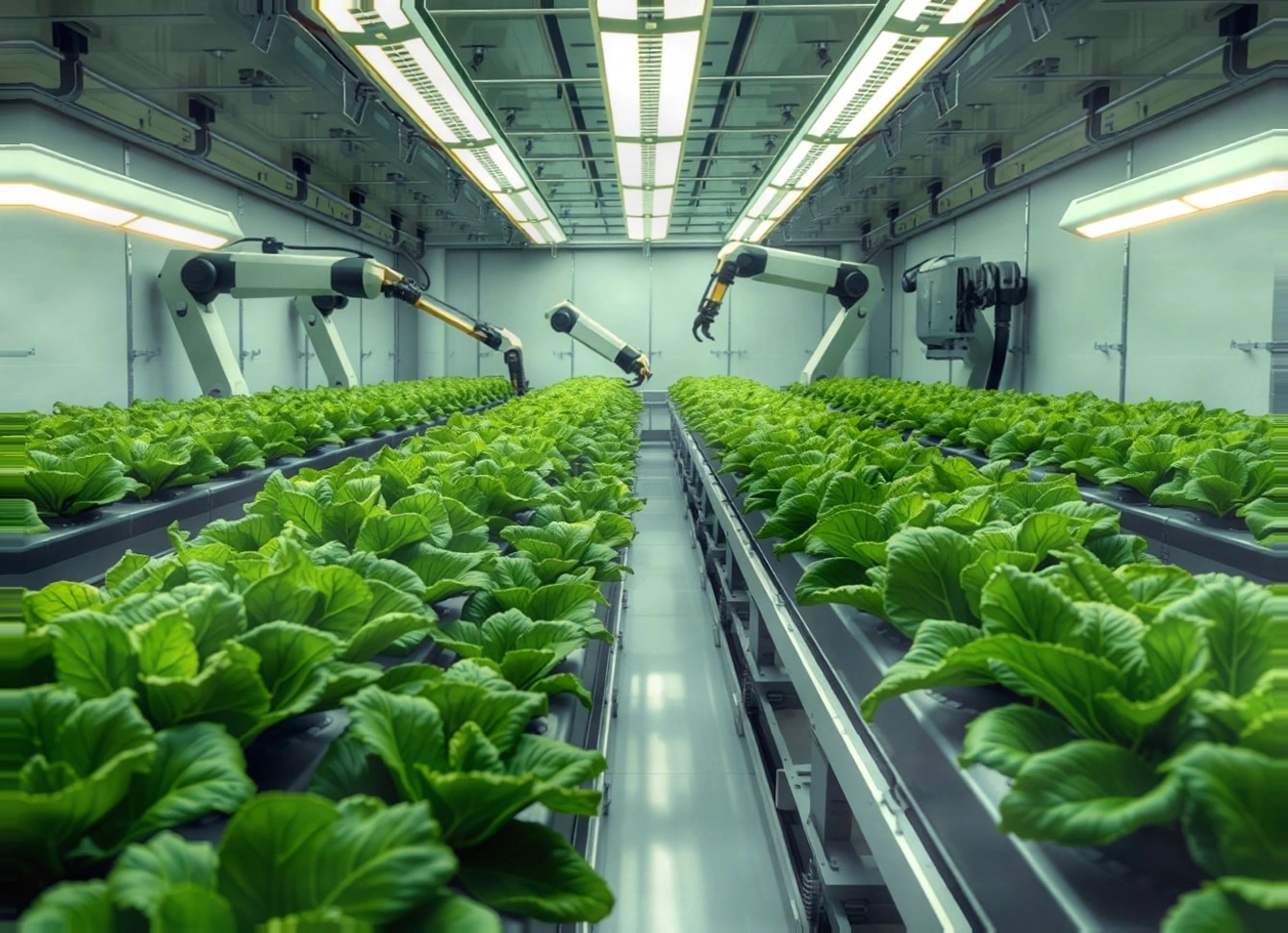
Canopii's robotic greenhouse achieves autonomous operation from seeding to harvesting. Each system occupies an area equivalent to just a basketball court but can produce up to 40,000 pounds of fresh produce annually, requiring only a standard water tap and household electrical circuit to operate. Currently, the system primarily cultivates herbs and specialty leafy greens, such as bok choy and kale, but its modular structure allows for future expansion to more crop types. Manufacturing partner GK Designs employs automotive-grade precision manufacturing processes to ensure the system is scalable.
Over the past few years, the indoor agriculture sector has experienced a dramatic shakeup. Star companies such as Bowery Farming and Plenty, despite having raised hundreds of millions of dollars in funding, have struggled due to uncontrolled energy costs, complex technology integration, and premature expansion. Canopii is taking a distinctly different development path: before seeking venture capital, it successfully secured multiple government research grants, including from the National Science Foundation, totaling $2.3 million. This strategy has allowed the team to steadily iterate and validate its technology over five years, avoiding the systemic risks associated with blind expansion.
"Our funding structure has to go beyond traditional VC," Ashton emphasized in an interview. "We spent five years optimizing just one farm to truly understand the complexities of agricultural infrastructure. If we had taken VC money and aggressively pushed for scale from the beginning, it would have been impossible to succeed." Compared to competitors with funding rounds often exceeding hundreds of millions, Canopii has raised approximately $3.6 million to date, yet has achieved higher technological maturity and operational stability.
In terms of energy efficiency, the system requires only 100 amps and 240 volts of household electricity to support the entire farm's operation, meaning it can be easily deployed in urban backyards, garages, or even rooftops. This feature significantly lowers the deployment threshold, providing a practical scenario for distributed agriculture and marking a new stage in localized food production.