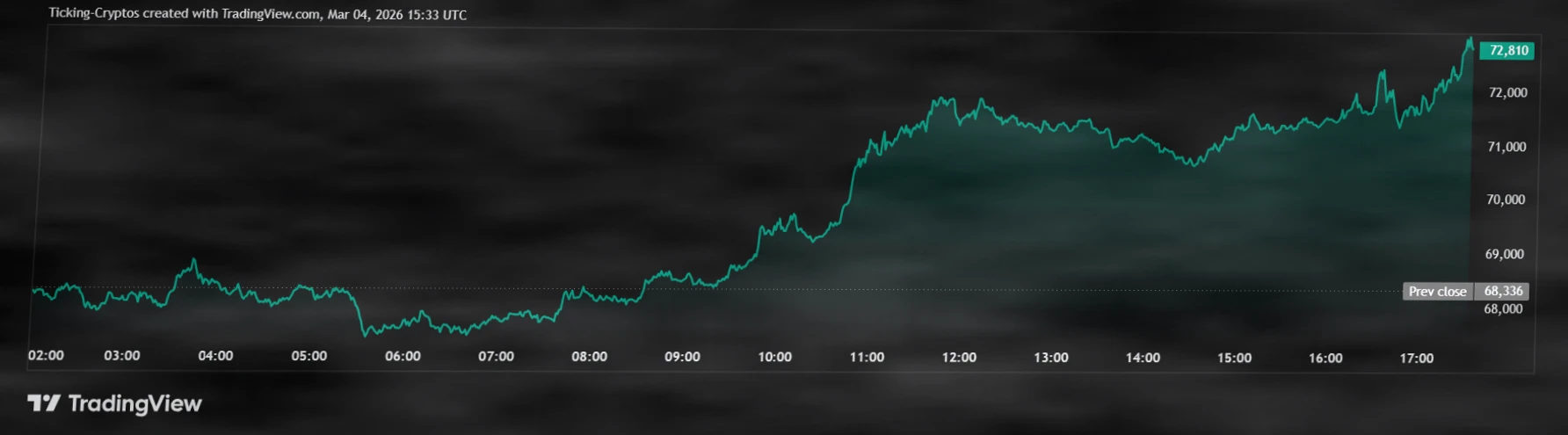
Bitcoin Breaks $70,000, Five Altcoins Lead Market Surge
As Bitcoin's price surpassed the $70,000 mark, the overall sentiment in the crypto market has noticeably rebounded, with numerous altcoins experiencing a strong rally. Despite the market briefly entering a state of "extreme fear" in February 2026, funds have recently shifted from a wait-and-see approach to high-potential projects, creating a classic "short squeeze" scenario that has driven double-digit gains for several mid- to low-market-cap tokens.
It is worth noting that this round of gains occurred against the backdrop of escalating geopolitical tensions. The ongoing situation in the Middle East has pushed international oil prices to nearly nine-month highs, touching the $75 to $80 per barrel range. Typically, during periods of heightened "risk-off sentiment," investors tend to withdraw from high-risk assets. However, the crypto market has bucked this trend, reflecting its growing independence and institutional-level attention.
According to the latest trading data, the five top-performing crypto assets in the past 24 hours are as follows:
- SPX6900 (SPX) – Leveraging a new type of index-based derivative protocol, attracting significant arbitrage and hedging funds.
- Aerodrome Finance (AERO) – As an important liquidity incentive platform within the Avalanche ecosystem, its token has received significant support due to protocol upgrades and a surge in trading volume.
- Jupiter (JUP) – The largest decentralized exchange on the Solana chain, benefiting from a rebound in network activity and optimized staking yields.
- Pump.fun (PUMP) – An emerging on-chain Meme coin issuance platform, igniting short-term speculative fervor through a community-driven model.
- Zcash (ZEC) – A representative privacy coin, gaining favor from some risk-averse funds due to technological iterations and increased demand for anonymous transactions.
To more accurately grasp this round of market movement, investors are advised to pay attention to the main trading venues for these tokens, including mainstream platforms such as Bybit, Binance, and Coinbase, and to assess entry opportunities by combining on-chain data with order book depth.