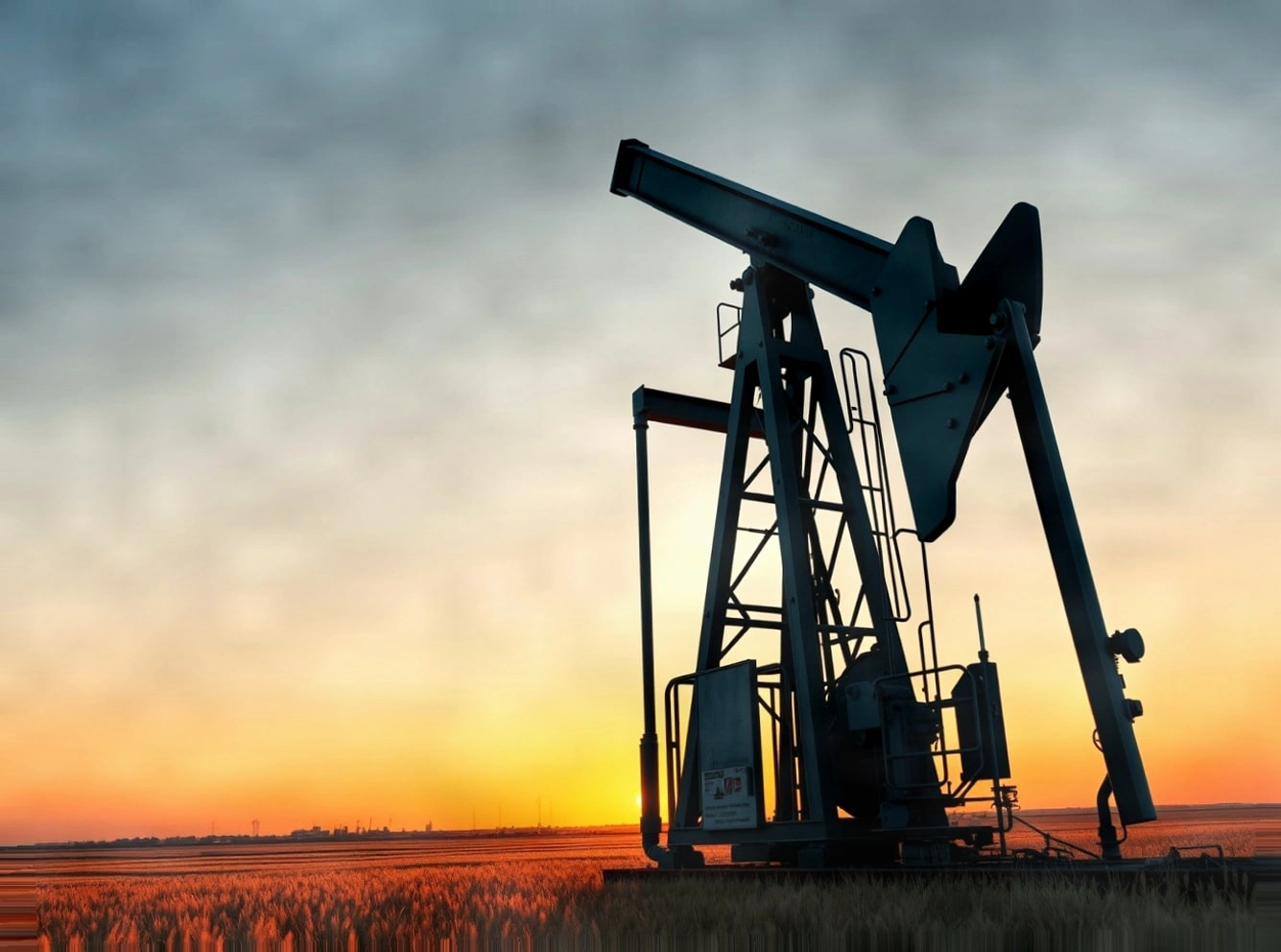
This article delves into the complex relationship between rising oil prices and U.S. government revenue, analyzing the impact of oil price fluctuations on federal and state income, as well as the broader economic implications for consumers and industries. The article points out that while rising oil prices can bring considerable income, the economic costs must also be weighed.
Washington D.C. — Former President Donald Trump's recent remarks regarding oil prices and U.S. revenue growth have reignited analysis of the complex relationship between energy markets and national economic performance. His assertion that "when oil prices go up, the U.S. makes a lot of money" requires examination from multiple angles, including historical data, current market dynamics, and economic theories. This article will comprehensively explore how fluctuating oil prices impact federal and state revenues, while also considering the broader economic implications for consumers and industries.
Oil Prices and Historical Revenue Patterns
The connection between oil prices and U.S. revenue streams is multifaceted. Historically, periods of rising crude oil prices have been associated with increased government revenues, primarily through several channels. For instance, royalties that the federal government collects from production on public lands are directly linked to market prices. Additionally, resource taxes levied by state governments in energy-producing regions increase proportionally during price surges. The U.S. Bureau of Ocean Energy Management reported that federal offshore leasing revenues exceeded $9 billion during the price peaks of 2022, a 40% increase from the previous year. Similarly, data from the Texas Comptroller’s office indicated that the state’s oil production tax revenues were approximately $6 billion during the same period.
Energy economists note that the revenue-generating mechanism operates through multiple avenues. Royalty rates on federal lands typically range from 12.5% to 18.75% of the gross value of production. Consequently, when West Texas Intermediate crude oil rises from $70 to $100 per barrel, royalty revenues increase accordingly. Corporate income taxes from energy companies also contribute significantly during profitable periods. Data from the Congressional Research Service shows that oil and gas extraction contributed over $30 billion in federal corporate tax revenues during the price peaks of 2014. However, these direct revenue gains must be balanced against broader economic impacts, including increased energy costs for consumers and inflationary pressures.
Economic Mechanisms Behind Energy Revenue
The revenue generation process involves several interconnected economic mechanisms. First, higher prices increase the taxable base for taxes related to production. Second, they enhance the profitability of domestic producers, leading to increased corporate tax payments. Third, they stimulate investment in exploration and production, creating jobs and additional tax revenues. Reports from the U.S. Energy Information Administration suggest that through these combined channels, each $10 increase in oil prices typically generates approximately $4 billion in additional annual federal revenue. State governments in major oil-producing regions experience even more pronounced effects, with some deriving over 25% of their general fund revenues from energy-related industries.
Conclusion
While rising oil prices can indeed generate substantial revenue for the U.S. government through various channels, it is important to recognize that these gains are not without economic costs. Consumers face higher energy costs, businesses may experience inflationary pressures, and investments in renewable energy sources could be disincentivized. Therefore, policymakers must adopt a nuanced approach when considering energy policies, balancing revenue maximization with broader economic impacts, with the ultimate goal of ensuring a sustainable and resilient energy future.
0 comment A文章作者M管理员
No Comments Yet. Be the first to share what you think
❯
Profile
Search
Checking in, please wait...
Click for today's check-in bonus!
You have earned {{mission.data.mission.credit}} points today