

Aster price is currently consolidating just below a key high-timeframe resistance level, compressing within a bullish broadening wedge pattern.
This consolidation occurs near the control point, an area historically characterized by high trading volume, which typically attracts price like a magnet before the next directional move unfolds.
If the bullish structure remains intact and the resistance level is breached, this setup could open the door for a significant rebound towards the $1.05 region.
Aster price key technical points:
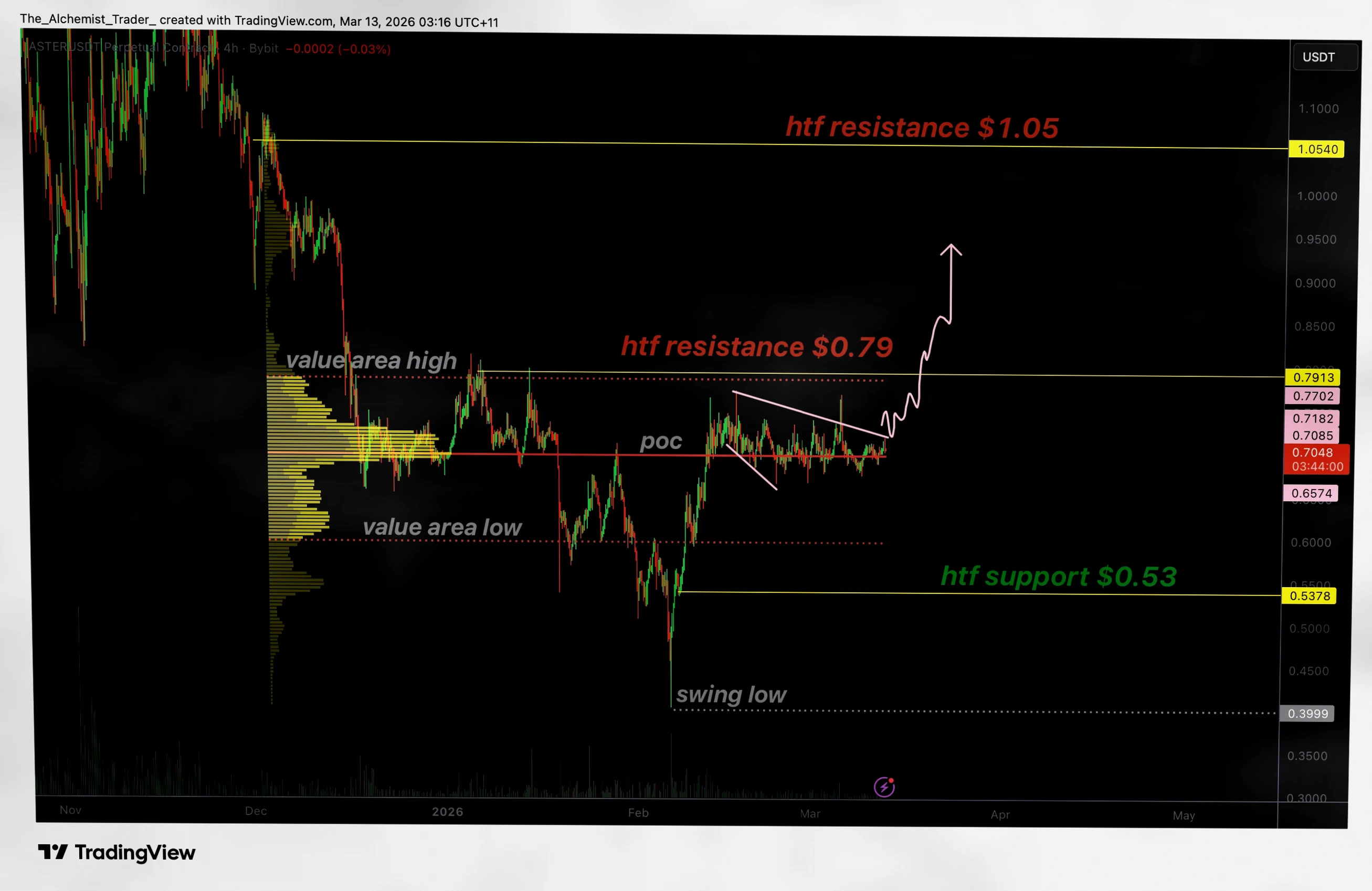
The current structure of Aster shows that price is trading within the wedge pattern, which is often associated with increased volatility and expanded price swings. Unlike traditional contraction patterns, the broadening wedge features continuously expanding support and resistance boundaries, reflecting an environment where both buyers and sellers are actively testing the extremes on either side of the range. For Aster, this structure leans bullish as price continues to hold above key support while gradually building pressure below the resistance level.
One of the most important levels within this structure is the control point, which represents the area of highest trading volume within the current range. The control point typically acts as a fair value area where buyers and sellers reach a temporary balance before the next directional move occurs. Aster's price action is currently revolving around this level, indicating that the market remains in a consolidation phase, absorbing liquidity before a potential volatility expansion.
The bullish argument for Aster largely hinges on the price's ability to break above the high-timeframe resistance level at $0.79. This area has historically been a barrier to further upside, making it a critical confirmation zone. A breach of this level would indicate that buyers have regained control of the market structure and that the current consolidation has successfully built enough momentum to push prices higher.
From a technical perspective, the projected upside target of $1.05 is derived from measuring the move of the current structure. This target is calculated by taking the distance from the recent swing low that initiated the current bullish trend to the point of breakout. Traders often use measured moves to estimate potential continuation targets following a price breakout from a consolidation pattern.
Another key factor supporting the bullish outlook is the broader structure of the wedge itself. For the bullish broadening wedge pattern to remain valid, price must continue to respect the two dynamic support and resistance trendlines that define the pattern. These expanding boundaries indicate that market participants are gradually testing higher and lower extremes, a characteristic that typically appears before a large directional breakout when the pattern resolves.