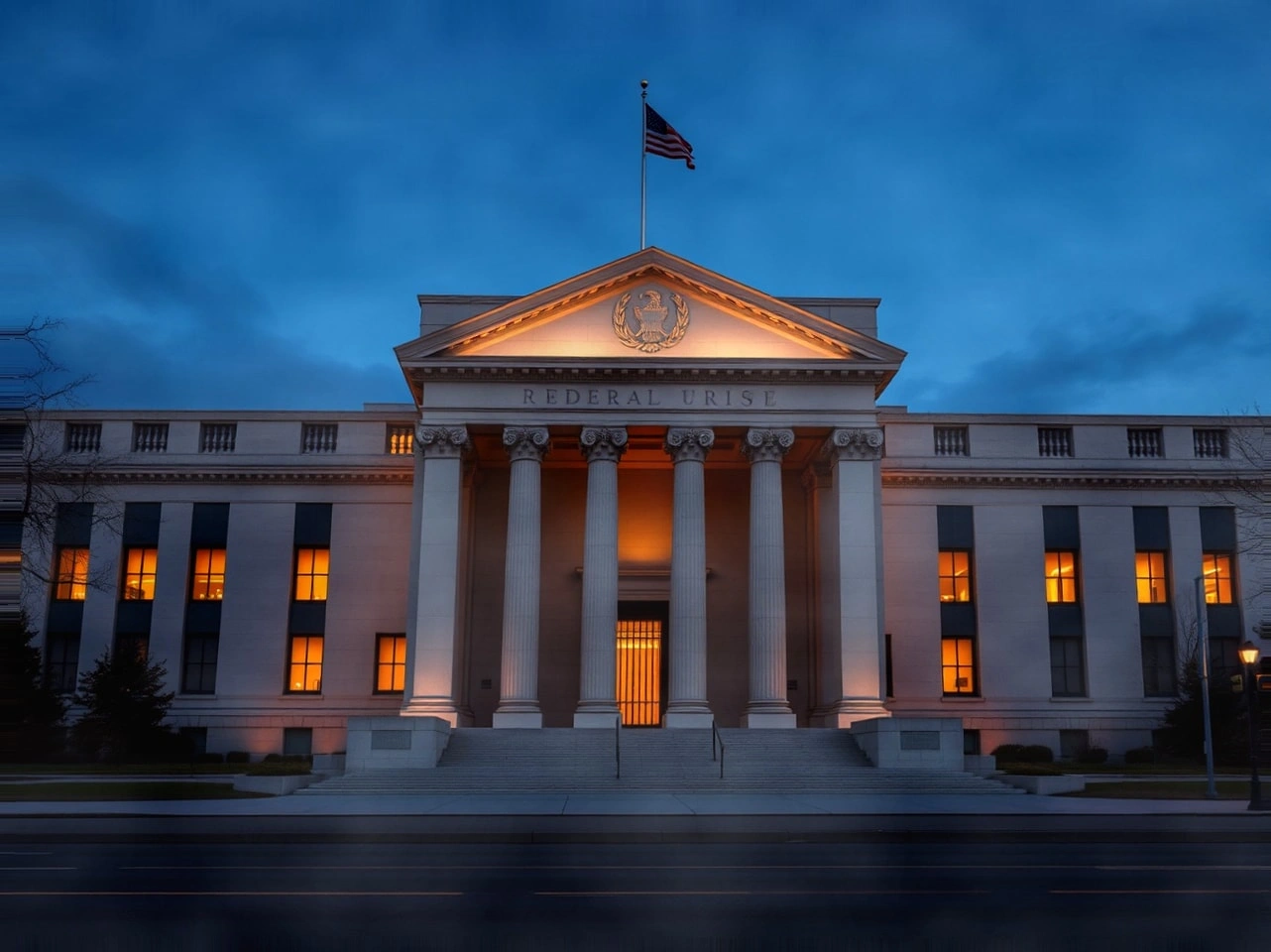
U.S. President Donald Trump has publicly called on Federal Reserve Chairman Jerome Powell to implement an immediate interest rate cut, bypassing traditional policy meeting arrangements and igniting intense debate regarding central bank independence. This unprecedented call to action comes amid fluctuating economic indicators.
Washington D.C. – March, 2025: U.S. President Donald Trump has publicly called on Federal Reserve Chairman Jerome Powell to implement an immediate interest rate cut, bypassing traditional policy meeting arrangements and igniting intense debate regarding central bank independence.
This unprecedented call to action comes amid fluctuating economic indicators, representing a notable development in the ongoing relationship between the executive branch and the nation’s monetary authority.
Trump Directly Appeals to Powell for Immediate Action
President Trump’s appeal for an immediate reduction in interest rates departs from established Federal Reserve protocols. The Federal Open Market Committee typically convenes according to a pre-determined schedule, holding eight regular meetings per year. However, the President’s statement suggests his belief that current economic conditions necessitate urgent intervention. This development follows several quarters of mixed economic data and evolving global financial dynamics.
Historically, presidents have generally refrained from exerting overt public pressure on the Federal Reserve Chairman regarding specific policy actions. The Federal Reserve operates under the premise of statutory independence, enabling monetary policy decisions without political interference. Nevertheless, President Trump’s public statement creates a noteworthy precedent for executive branch involvement in monetary policy discussions. The relationship between the two officials has experienced prior tensions during earlier administrations.
Federal Reserve Independence Under Scrutiny
The independence of the Federal Reserve represents a cornerstone of modern monetary policy. Congress established this independence to insulate monetary decisions from short-term political pressures. The central bank’s autonomy allows decisions to be based on long-term economic stability rather than electoral cycles. Many economists argue that this independence is crucial for maintaining price stability and economic growth.
However, presidential influence on monetary policy is not without historical precedent. Previous administrations have occasionally expressed preferences regarding the direction of interest rates. The current situation is notable due to the specific nature of the request and its public transmission. Chairman Powell now faces the complex task of balancing economic considerations with institutional norms.
Economic Context and Market Implications
The call for an immediate rate cut is contextualized by specific economic indicators. Recent data reveals:
Financial markets commonly react to both actual policy changes and expectations regarding future actions. The public nature of this request introduces an additional variable for investors to consider. Market analysts will closely observe how the Federal Reserve responds to this unusual public pressure.
Historical Precedents and Institutional Norms
The Federal Reserve has, on occasion throughout its history, convened emergency meetings. These special sessions are typically reserved for addressing exigent circumstances.
0 comment A文章作者M管理员
No Comments Yet. Be the first to share what you think
❯
Profile
Search
Checking in, please wait...
Click for today's check-in bonus!
You have earned {{mission.data.mission.credit}} points today