

Market Watch: Bitcoin ETFs maintain strong inflows, Ethereum products gradually regain traction, and Solana funds experience steady demand growth. XRP-related investment products see minor outflows, reflecting an uneven distribution of capital within the digital asset space.
Overall, the data indicates that despite market volatility and cautious investor sentiment, institutional investors remain actively engaged in the cryptocurrency market.
Bitcoin ETFs Continue to Lead the Market
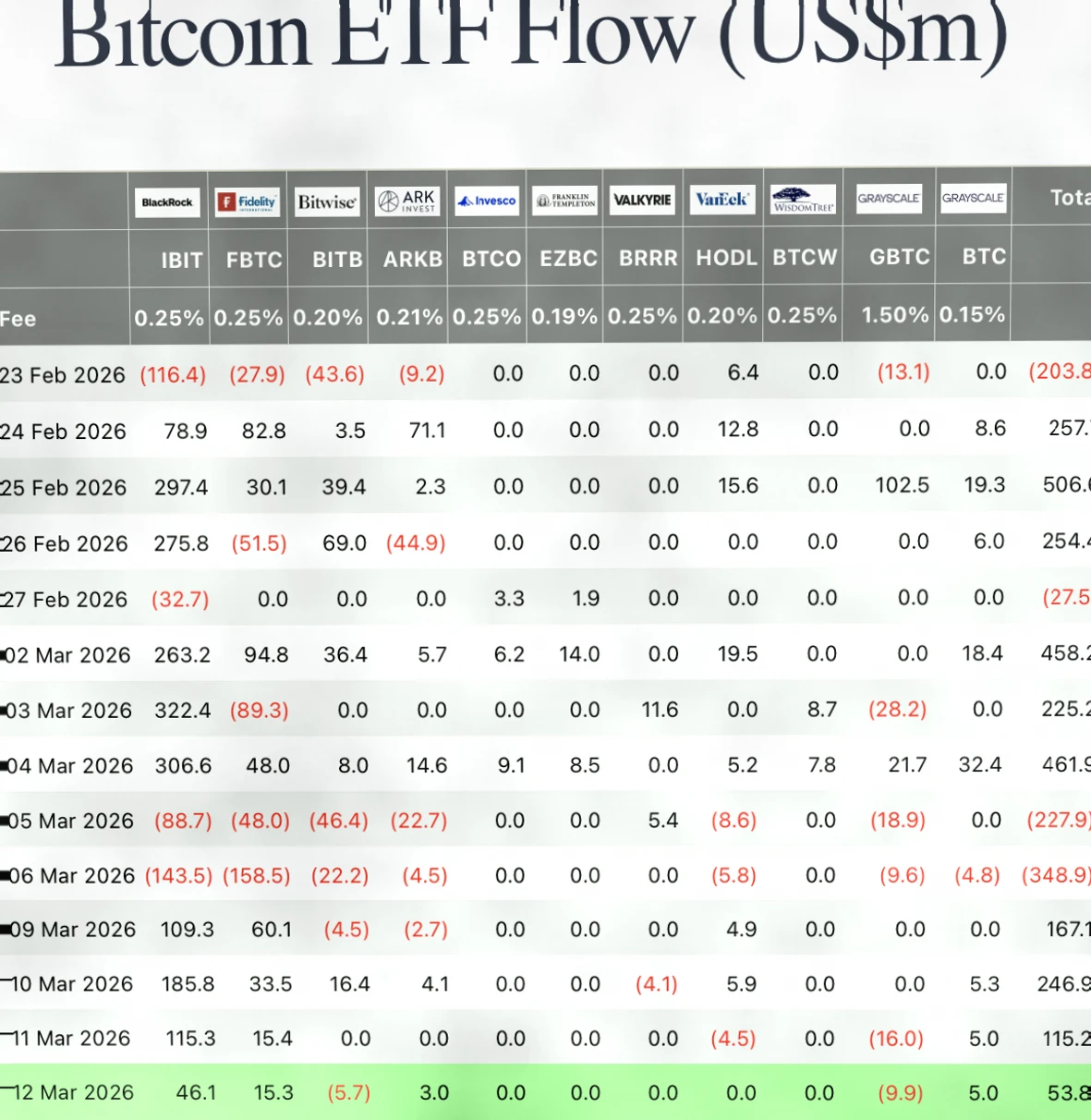
BlackRock's iShares Bitcoin Trust (IBIT) stood out, attracting $46.1 million in inflows, solidifying its dominance in the Bitcoin ETF market. Fidelity's FBTC also recorded $15.3 million in inflows, further indicating strong institutional investor demand.
However, not all funds experienced inflows. Bitwise's BITB saw $5.7 million in outflows, while Grayscale's GBTC recorded $9.9 million in redemptions. These outflows reflect a broader trend of investors continuing to reallocate capital from higher-fee legacy products to newer, lower-cost ETFs.

Bitcoin prices have stabilized above $71,000, while altcoins are showing selective strength.
Despite these shifts, the overall trend for Bitcoin ETFs remains positive. The latest inflows build on strong demand earlier in the month, with inflows of $246.9 million on March 10 and $115.2 million on March 11, indicating sustained institutional participation.
Ethereum ETFs Show Signs of Recovery
After experiencing a mixed period of inflows and outflows earlier in the quarter, Ethereum ETFs are also beginning to see a resurgence in investor interest.
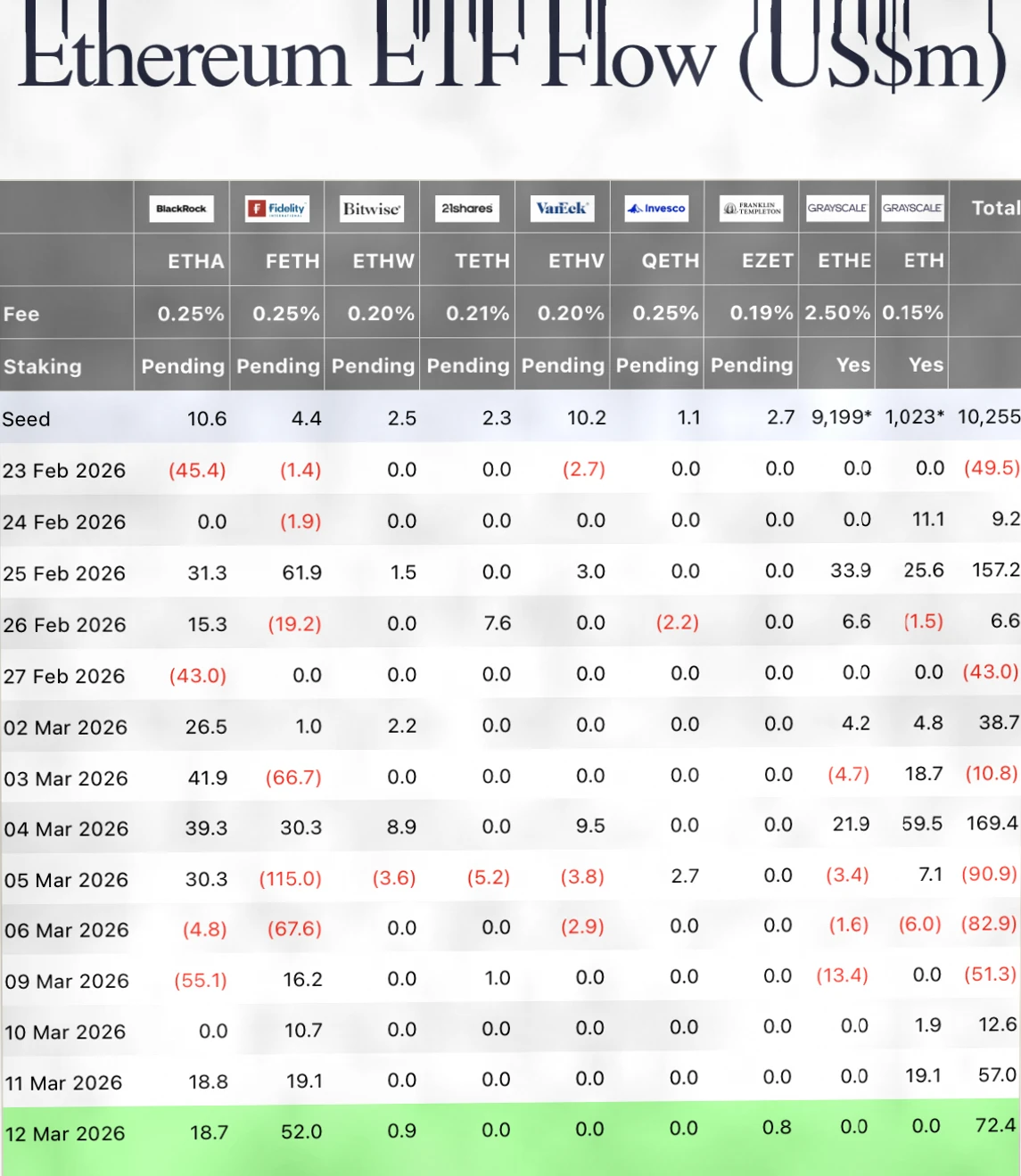
On March 12, Ethereum ETFs saw a combined net inflow of $72.4 million, one of the best days for the asset class in recent weeks.
Fidelity's FETH ETF recorded the largest inflow, reaching $52 million, followed by BlackRock's ETHA with $18.7 million. Other funds, such as Bitwise's ETHW and Franklin Templeton's EZET, also recorded smaller inflows.
The data suggests that institutional investors are gradually rebuilding their exposure to Ethereum after a period of uncertainty related to regulatory developments and evolving staking frameworks.
Notably, several Ethereum ETF providers are preparing to integrate staking functionality, which could significantly enhance the yield potential for investors. While most funds still list staking as "to be determined," the potential for future yield generation is widely seen as a key catalyst for greater institutional adoption.
Solana ETFs Attract Early Institutional Interest
While still relatively new compared to Bitcoin and Ethereum funds, Solana ETFs are beginning to carve out a niche among institutional investors in the high-performance blockchain network.
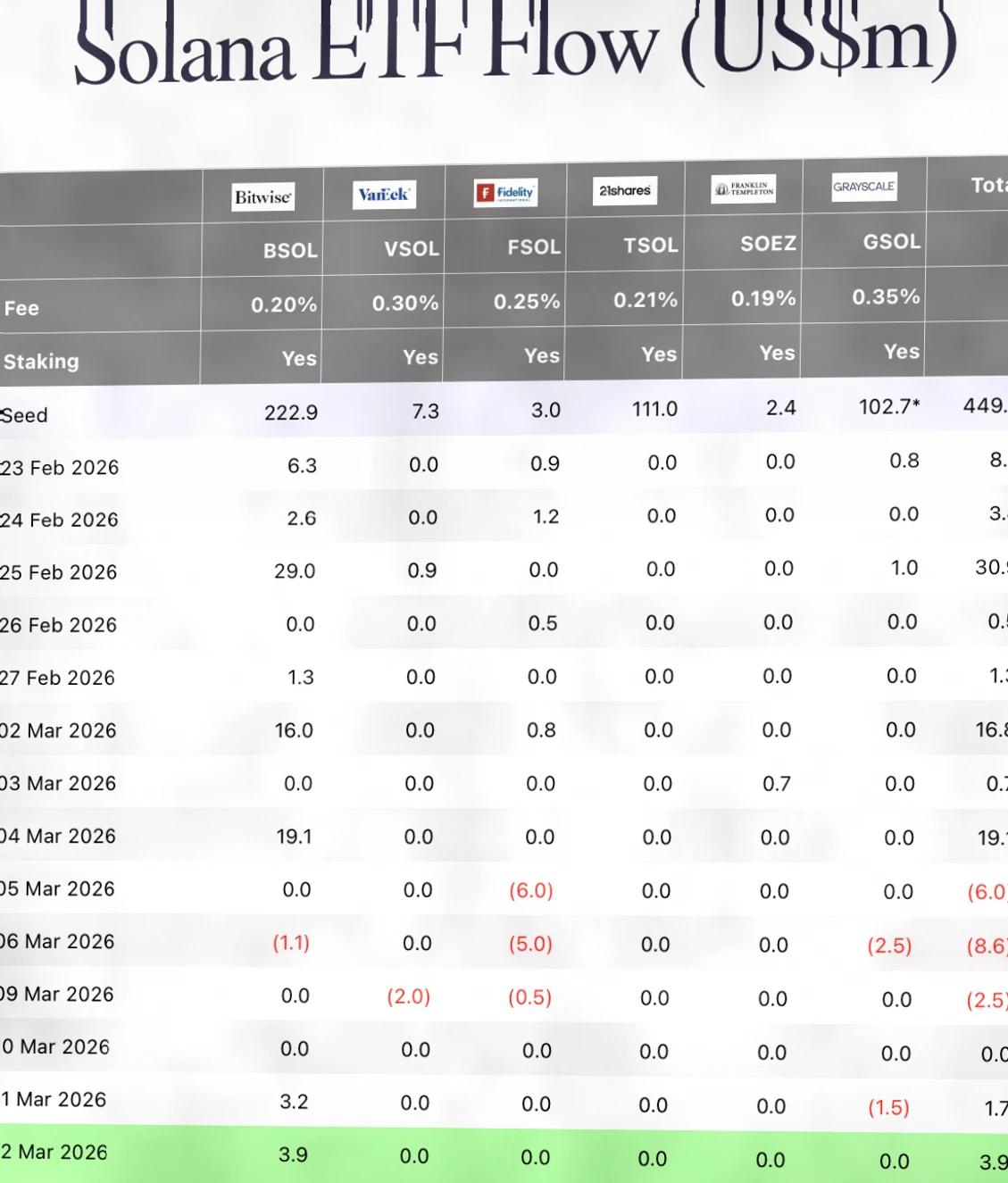
According to the latest data, Solana ETFs recorded inflows of $3.9 million.

Despite the relatively small size, these inflows indicate growing institutional interest in the long-term potential of the Solana blockchain, which is known for its fast transaction speeds and low fees. Furthermore, the launch of Solana ETFs provides institutional investors with a compliant and easily accessible way to gain exposure to this emerging asset class.
XRP Funds Experience Minor Outflows
In contrast to other digital asset funds, XRP-related investment products experienced modest outflows in recent trading. While not substantial in size, these outflows suggest that institutional investors are taking a cautious approach to XRP's near-term prospects, potentially due to ongoing regulatory uncertainties associated with Ripple Labs.

In summary, the landscape of cryptocurrency ETFs remains dynamic and evolving. While Bitcoin ETFs continue to attract the lion's share of inflows, Ethereum and Solana products are gaining traction, reflecting growing institutional interest in the broader digital asset space. Meanwhile, outflows from XRP funds serve as a reminder that not all assets are experiencing growth at the same pace in this nascent market.