The latest US Bureau of Labor Statistics data shows job openings exceeding expectations, but employment trends remain weak. The University of Michigan Consumer Sentiment Survey reveals declining consumer confidence and mixed inflation expectations. Bitcoin's price rises against the trend, potentially indicating continued market demand for risk assets. Overall, US economic data releases complex signals.
US Economic Data Paints a Mixed Picture
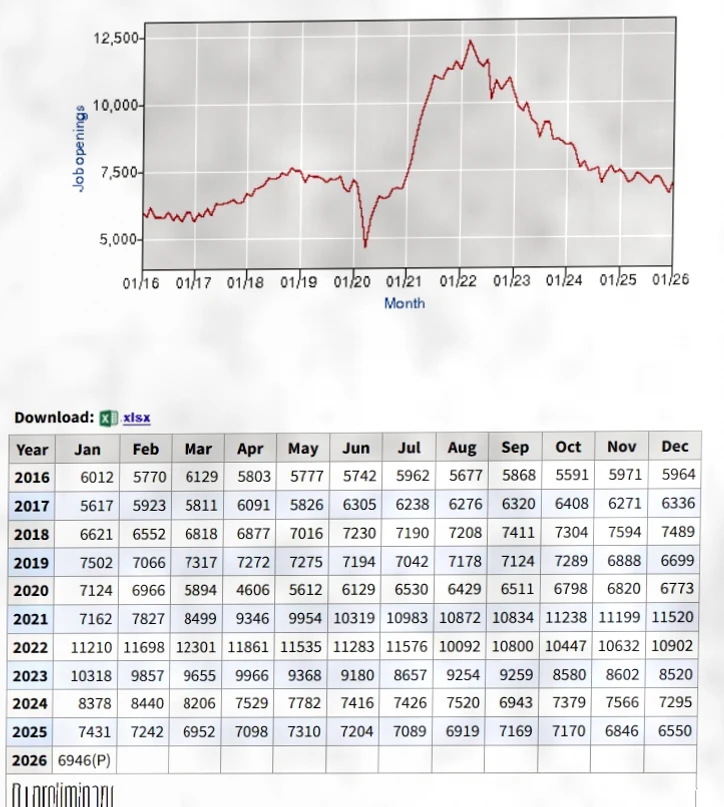
The US Bureau of Labor Statistics released its latest Job Openings report, revealing the current state of the US labor market. Hires remained steady at 5.3 million, and total separations were largely unchanged. However, job openings exceeded expectations, reaching 6.946 million, compared to a previous forecast of 6.75 million. Notably, the prior month's figure was revised upward from an initially reported 6.542 million to 6.55 million.
Labor Data Fails to Dispel Rate Cut Uncertainty
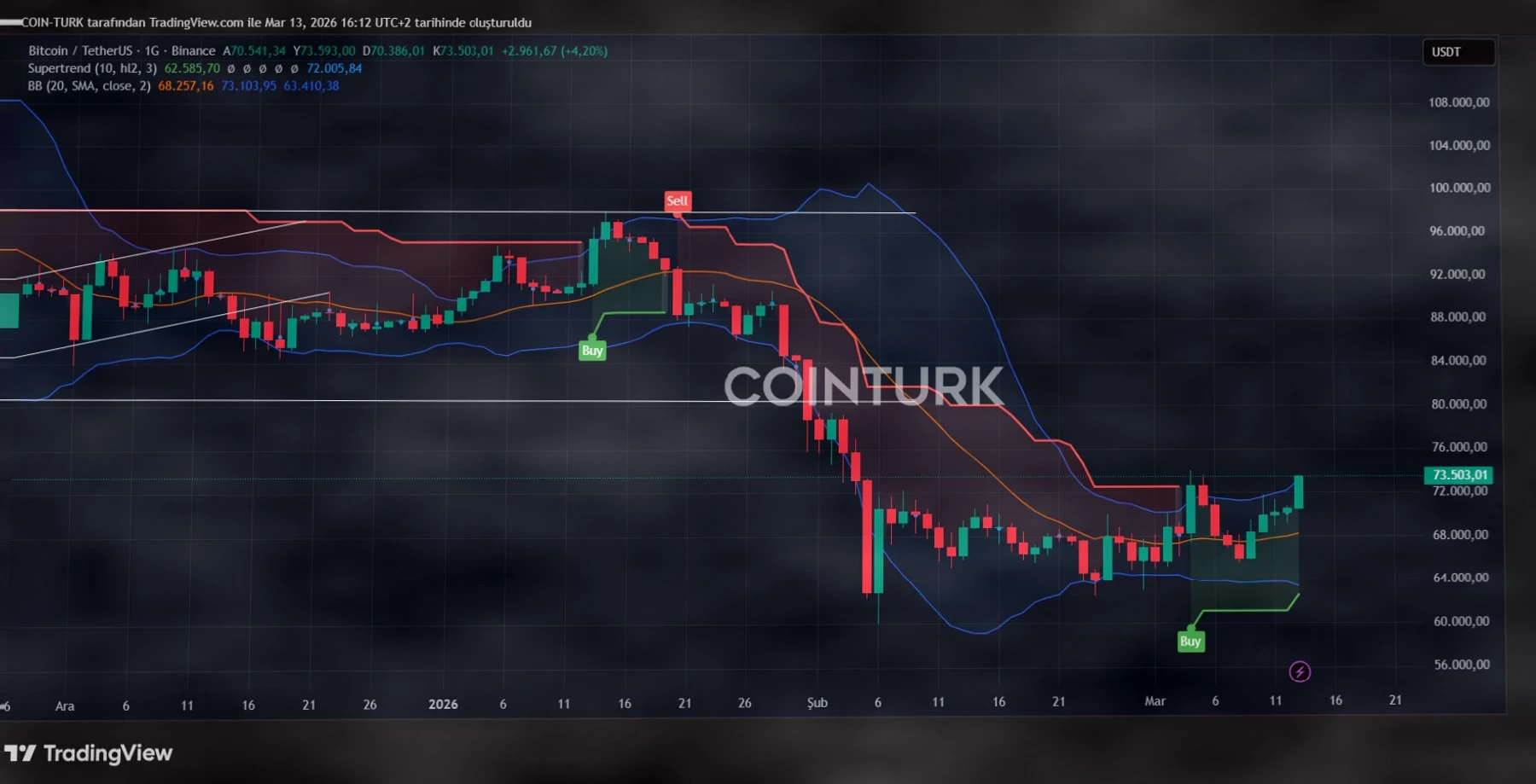
As shown in the chart above, the number of job openings has decreased year-over-year, highlighting the continued weakness in employment trends. While Bitcoin's price is aggressively challenging the $73,500 level, market participants remain skeptical about the possibility of a rate cut even in September.
In addition to the labor data, traders are also focusing on the preliminary results of the University of Michigan Consumer Sentiment Survey released today.
Five-year inflation expectations also declined, falling below last month's 3.3%. While sharp deviations in preliminary reports are not uncommon, these figures suggest that consumers are increasingly optimistic about the inflation outlook.
Consumer sentiment declined by approximately 2%, reaching its lowest point of the year. The ongoing survey actually indicated a rebound in confidence compared to the previous month, prior to the escalation of military conflict involving Iran. However, a 9-day decline following the conflict erased these earlier gains. Soaring gasoline prices remain the most immediate concern for consumers, but it is currently unclear to what extent this will spill over into other costs. Individuals across various income, age, and political groups reported weakened expectations for their personal finances, contributing to a nationwide decline of 7.5%. This survey was conducted between February 17 and March 9, with approximately half of the interviews taking place after the US military action in Iran began.
This month, expectations for inflation over the coming year stabilized at 3.4% after declining for six consecutive months. The current figure exceeds the levels seen in 2024 and remains well above the 2.3%-3.0% range recorded in the two years preceding the pandemic. Long-term inflation expectations slipped to 3.2%. So far this year, these figures have fluctuated between 2.8% and 3.2%, whereas in 2019 and 2020, they consistently remained below 2.8%. Notably, surveys conducted after February 28 indicated higher inflation expectations than those conducted earlier – see the right panel of the chart for more details.
— Joanne Hsu, Director of Surveys of Consumers
While the labor market signals and consumer confidence data convey a somewhat complex message, Bitcoin's rise suggests that traders are betting on continued demand for risk assets. Despite improved consumer expectations for inflation, wage growth and job stability appear to be lagging behind hopes for a rapid economic rebound.
Overall, the labor market is showing weakness.
0 comment A文章作者M管理员
No Comments Yet. Be the first to share what you think
❯
Profile
Search
Checking in, please wait...
Click for today's check-in bonus!
You have earned {{mission.data.mission.credit}} points today