

Geopolitical events continue to unfold, causing turbulence in the energy markets. For Bitcoin miners, the first reaction is often concern over rising electricity costs. However, the reality may be different.
Minimal Impact on Costs
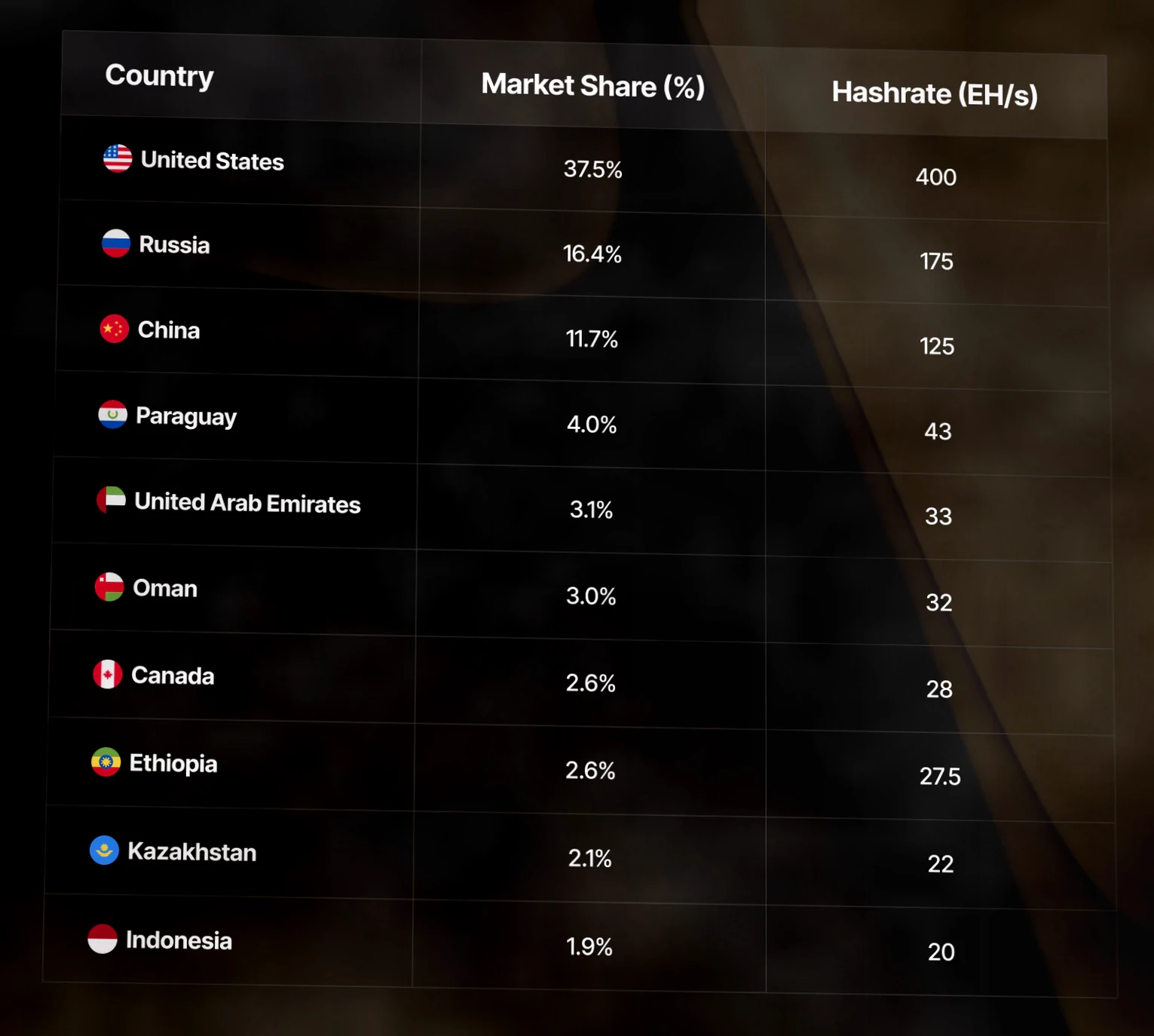
Even in the United States, there is a weak correlation between oil prices and industrial electricity prices, with a correlation coefficient ranging from 0.1 to 0.3. This correlation can be statistically detected, but the actual impact is negligible. Moreover, the transmission of this impact takes time, typically requiring several months to reflect through utility rate adjustment cycles, rather than just a few days.
The countries in the Gulf are truly affected. The electricity grids of the UAE (3.1%, 33 EH/s) and Oman (3.0%, 32 EH/s) are primarily powered by natural gas produced from oil. Along with Iran's estimated 9 EH/s and smaller contributors like Kuwait and Qatar, the oil-sensitive hash rate totals about 8-10% of the global network. This does have some impact, but it is not a systemic threat.
In Iran, the impact is more direct. Due to an unstable grid and near-total network outages, approximately 700,000 mining machines have gone offline. The network's difficulty adjustment mechanism (which recalibrates every 2,016 blocks) will automatically absorb this drop in hash power and redistribute profitability to surviving operators in other regions.
The Real Shock: Revenue, Not Costs
Analysis from Luxor Technology's Hashrate Index indicates that the real risk lies in miners' profitability being far more sensitive to Bitcoin market prices than to electricity costs. The key metric is the hash price, which represents the expected daily revenue per unit of hash rate.
February 2026 clearly illustrates this asymmetry. On February 24, the USD hash price fell to a historic low of $27.89 per PH/s, a month-over-month decline of 17.9%. This crash was not driven by rising electricity costs but rather by a 23.8% drop in Bitcoin prices (from $78,073 to $65,204).
Persistently high oil prices above $100 per barrel will inject inflationary pressure into the global CPI. Central banks will respond, delaying interest rate cut expectations, and capital will shift from high-volatility assets to cash and short-term instruments. Bitcoin, as a risk asset, often gets repriced under significant pressure. The current cycle has already seen a drop of about 50% from a peak of nearly $126,000 in October 2025. Previous cycles have confirmed this pattern: COVID caused BTC to plummet by 62%, and the tightening cycle in 2022 led to a 77% drop from peak to trough.

Some studies suggest that if Brent crude oil remains between $100 and $150, Bitcoin could face a decline of up to 45% as monetary policy expectations shift. At the current hash price level of around $30 per PH/s, marginal operators running older 20-24 J/TH mining machines are already at or near breakeven. Further declines in Bitcoin prices will not pressure them but will lead them to shut down directly.
For miners in the Gulf region, the situation presents a dual risk: on one hand, rising electricity costs, and on the other, the potential decline in Bitcoin prices. Luxor's report...