On-chain data suggests Ethereum could rise to $2.8K, with significant investor accumulation near that level. However, futures market data shows traders reducing positions after the rally, hinting at potential resistance.
Despite on-chain data indicating a significant concentration of investors around the $2,800 level, Ethereum futures market data suggests traders are reducing positions following this week's rally.
Investors' cost basis at $2,800 highlights a major accumulation zone.
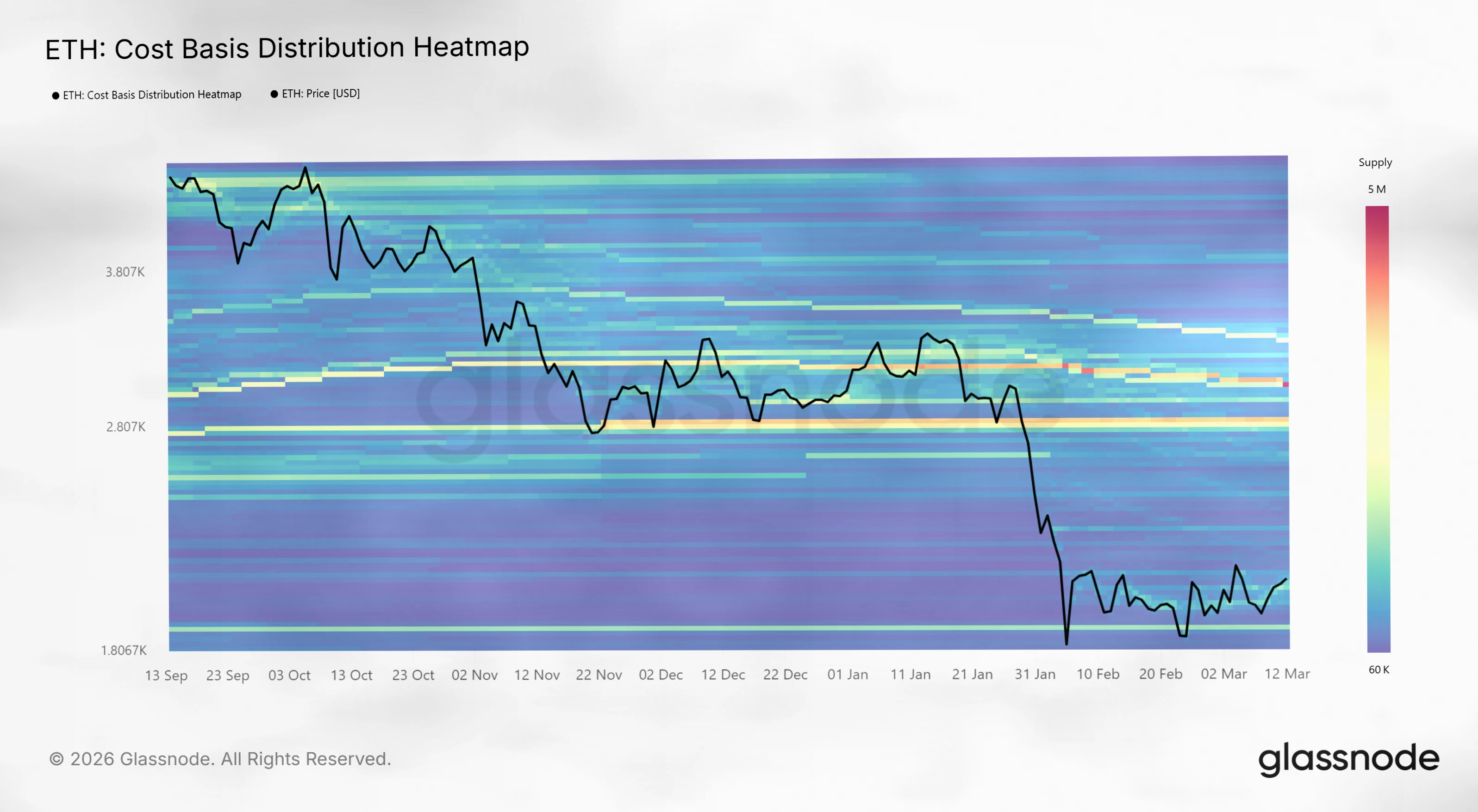
Data from Glassnode shows that the cost basis distribution heatmap for ETH reveals substantial accumulation near $2,800, with over 3 million ETH previously purchased at that price level.
Cost basis clusters identify price areas where large investors have established positions, often acting as magnets during rallies as investors defend entry levels or increase exposure.
ETH Cost Basis Distribution Heatmap. Source: Glassnode
The data suggests a potential path toward $2,800. Notably, between the $2,200 and $2,800 cost basis clusters, historical supply concentration is relatively limited, implying that a break above the current range could allow the price to move more freely into that zone.
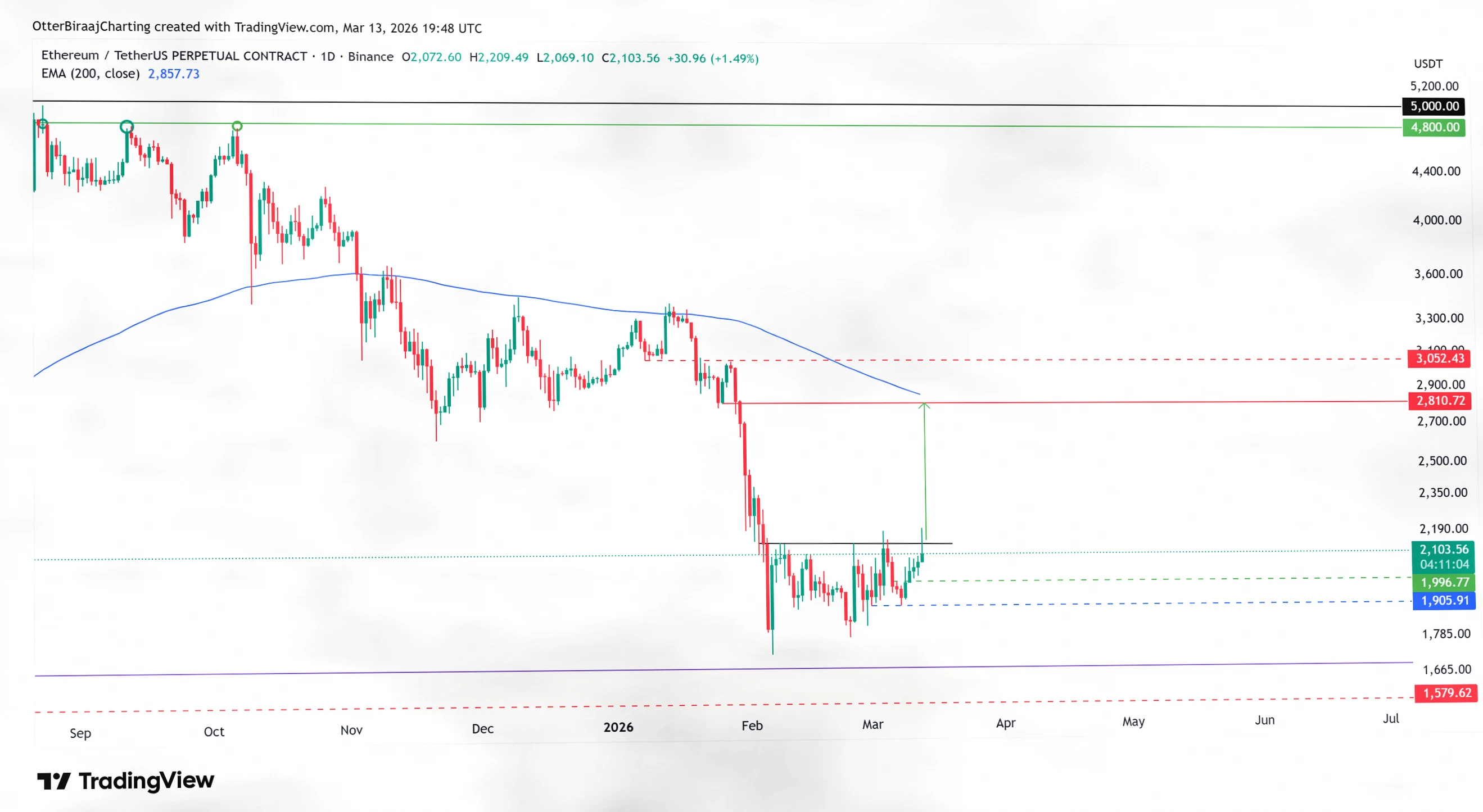
Ethereum One-Day Chart. Source: Cointelegraph/TradingView
From a technical perspective, the 200-day Simple Moving Average (SMA) also intersects near $2,800 on the daily chart, a key indicator that ETH has not touched since early January.
However, derivatives data indicates that traders remain cautious near the current price range.
Ethereum Futures Activity Weakens After Testing $2,200
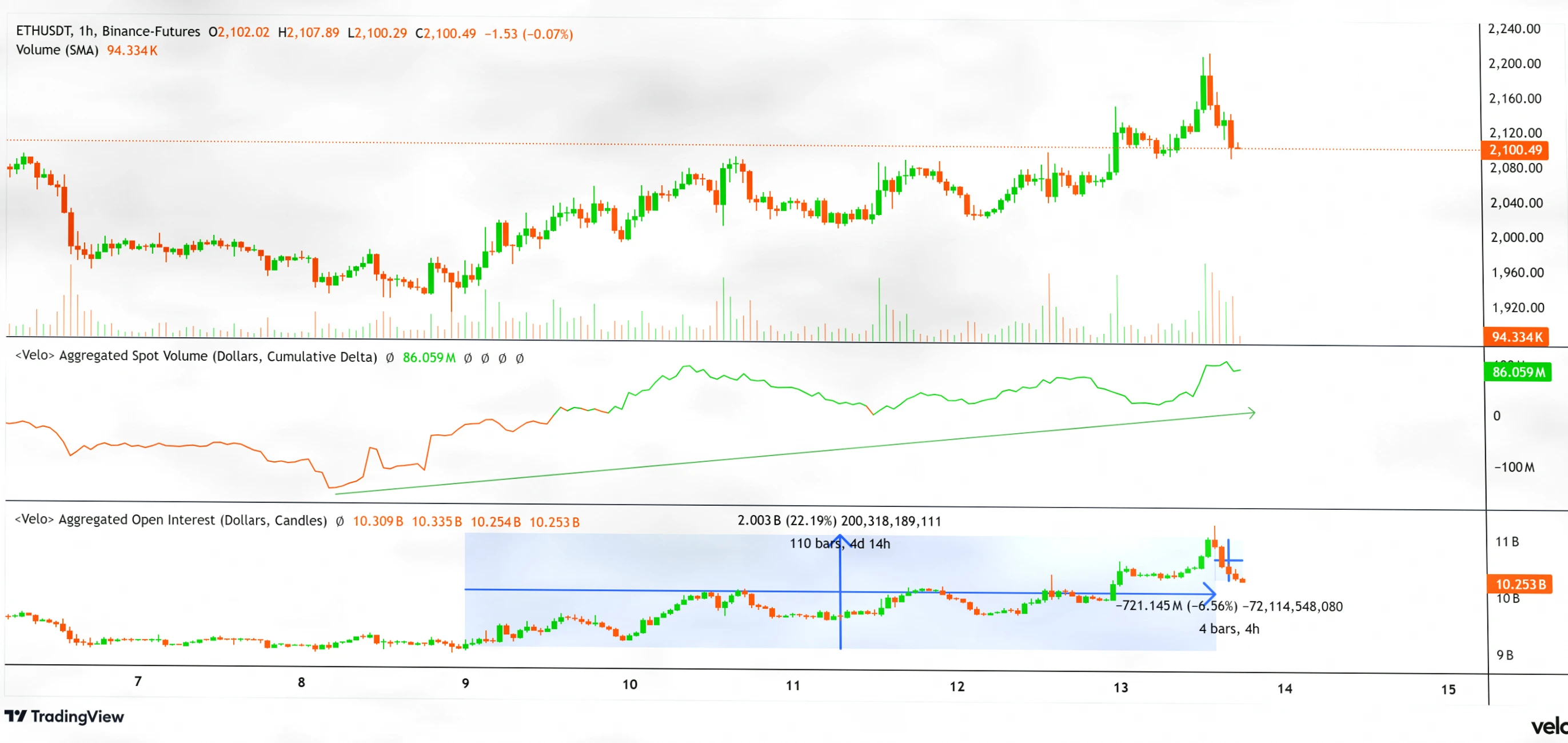
Ethereum's futures market activity expanded during this week's rally, with open interest growing by 21% from $9 billion to $10.9 billion as prices advanced toward $2,200 this week. This increase suggested traders were opening new leveraged positions as Ethereum moved higher.
Ethereum Price, Open Interest, Total Spot Volume. Source: velo.data
However, positions shifted once ETH tested the upper range. After testing $2,200, open interest declined by approximately 6%, suggesting some traders began closing positions rather than adding new exposure.
The pullback suggests that long traders may have taken profits or reduced risk near the range's upper bound, slowing the rally's momentum.
Spot market activity showed improved demand during the rally. The Cumulative Volume Delta (CVD), which tracks aggressive buying versus selling, rose sharply from -$150 million on March 8 to $87 million, indicating buyers stepped in as Ethereum rebounded from the $2,000 area.
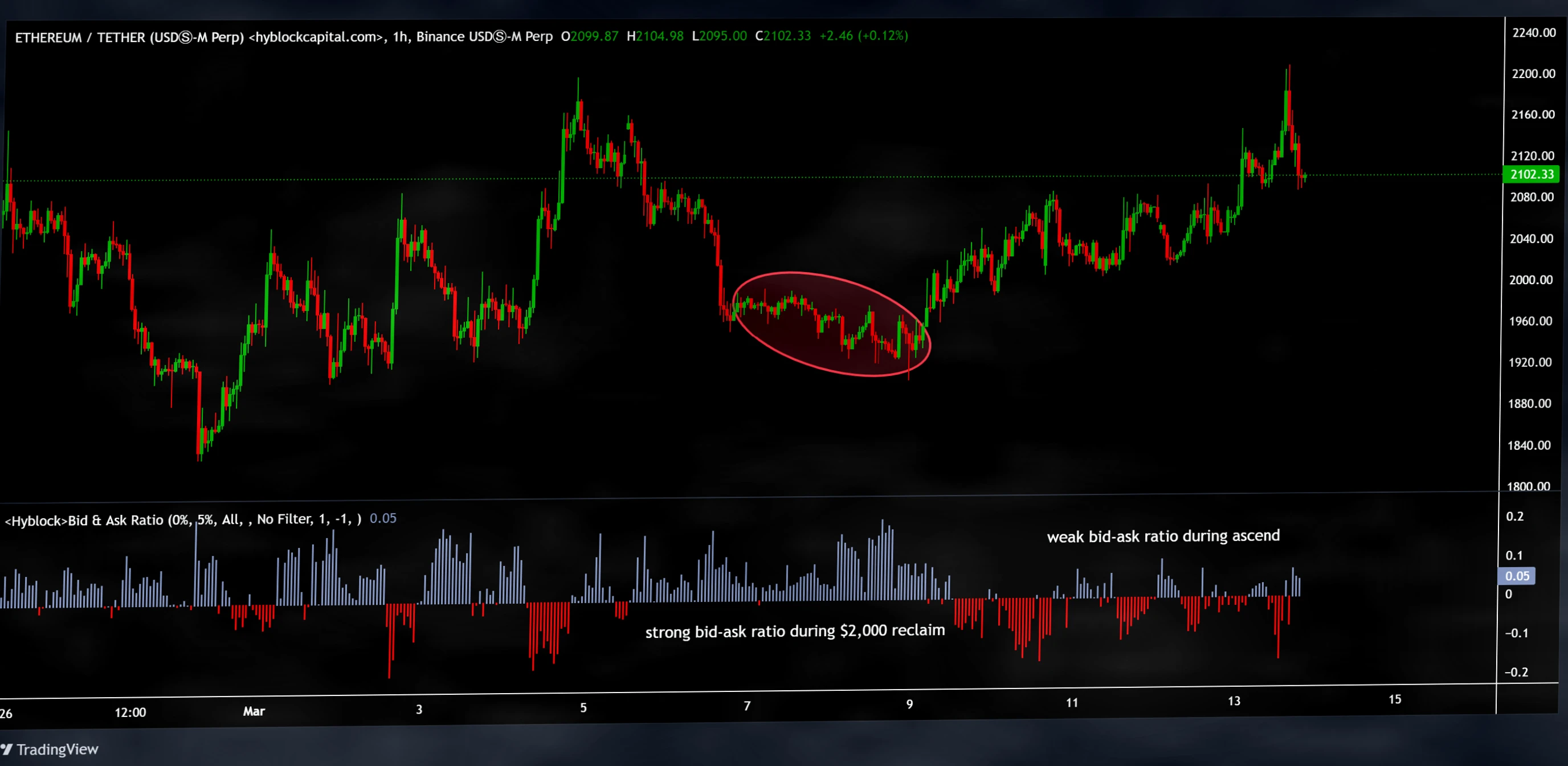
Ethereum Price and Bid-Ask Ratio. Source: Hyblock
However, order flow data suggests bullish sentiment is weakening. The bid-ask ratio remained highly positive when Ethereum consolidated near $2,000, indicating buyers dominated trading during the range-bound phase.
This strength diminished as prices approached $2,150, suggesting reduced buying pressure near the top of the rally.
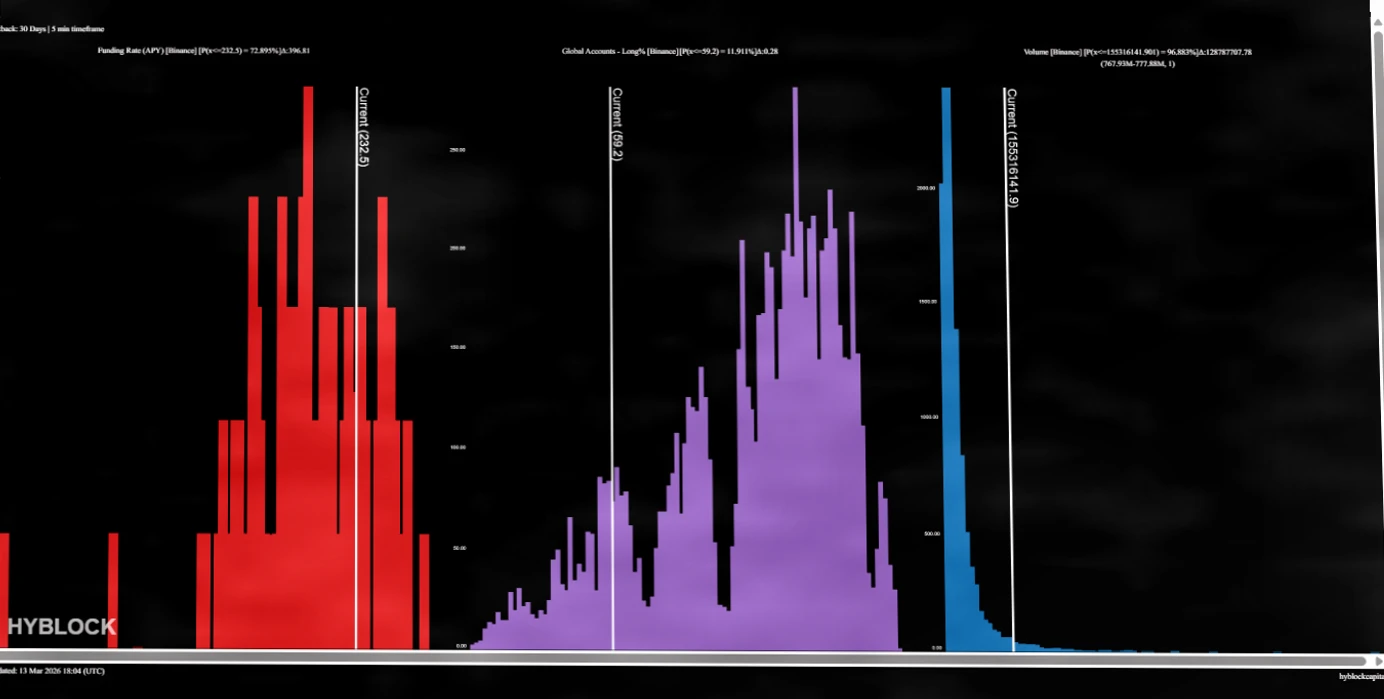
Ethereum Long/Short Ratio
Hyblock data provides additional clarity in the derivatives market. Futures positions remain relatively balanced, with long traders accounting for approximately 59.4% of Ethereum futures exposure on Binance.
This balanced outlook often leads to price volatility.
0 comment A文章作者M管理员
No Comments Yet. Be the first to share what you think
❯
Profile
Search
Checking in, please wait...
Click for today's check-in bonus!
You have earned {{mission.data.mission.credit}} points today