

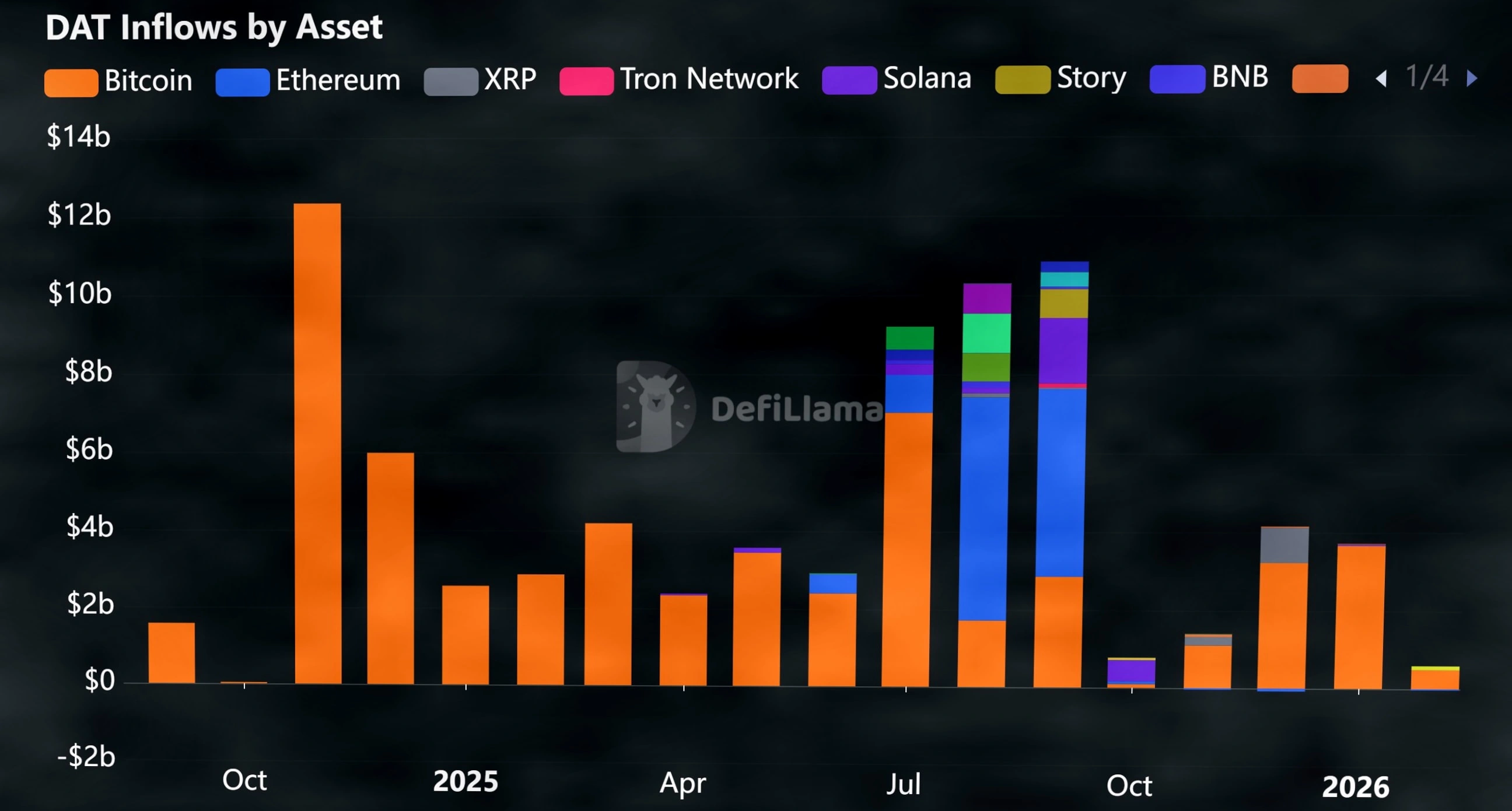
Inflows into Digital Asset Treasury (DAT) companies have plummeted to approximately $555 million this month, according to data from DeFi NewsLlama. This marks the lowest level since October 2024, a month that coincided with a market rally ahead of the 2024 US elections. The data reflects a more cautious market sentiment, with companies significantly slowing down their accumulation of crypto assets.
As market volatility intensifies, the treasury model that relies solely on hoarding crypto assets is facing pressure to transform. Industry observers point out that crypto treasury companies with genuine and sustainable competitiveness must be able to convert digital assets into actual returns, rather than simply holding them as static reserves.
These companies can achieve asset appreciation in various ways: for example, by participating in staking in Proof-of-Stake (PoS) networks and earning rewards, by mining Proof-of-Work (PoW) cryptocurrencies, by providing lending services in decentralized finance (DeFi News) protocols, or by expanding into real-world businesses unrelated to blockchain.
Some argue that treasuries that allocate assets to tangible assets such as real estate are more stable than companies that only hold Bitcoin. An industry insider told Cointelegraph that real estate, as a non-discretionary consumer good, has sustained demand. It can not only generate cash flow through rental income but also enjoy tax benefits and reinvest the proceeds into Bitcoin purchases, forming a virtuous cycle.
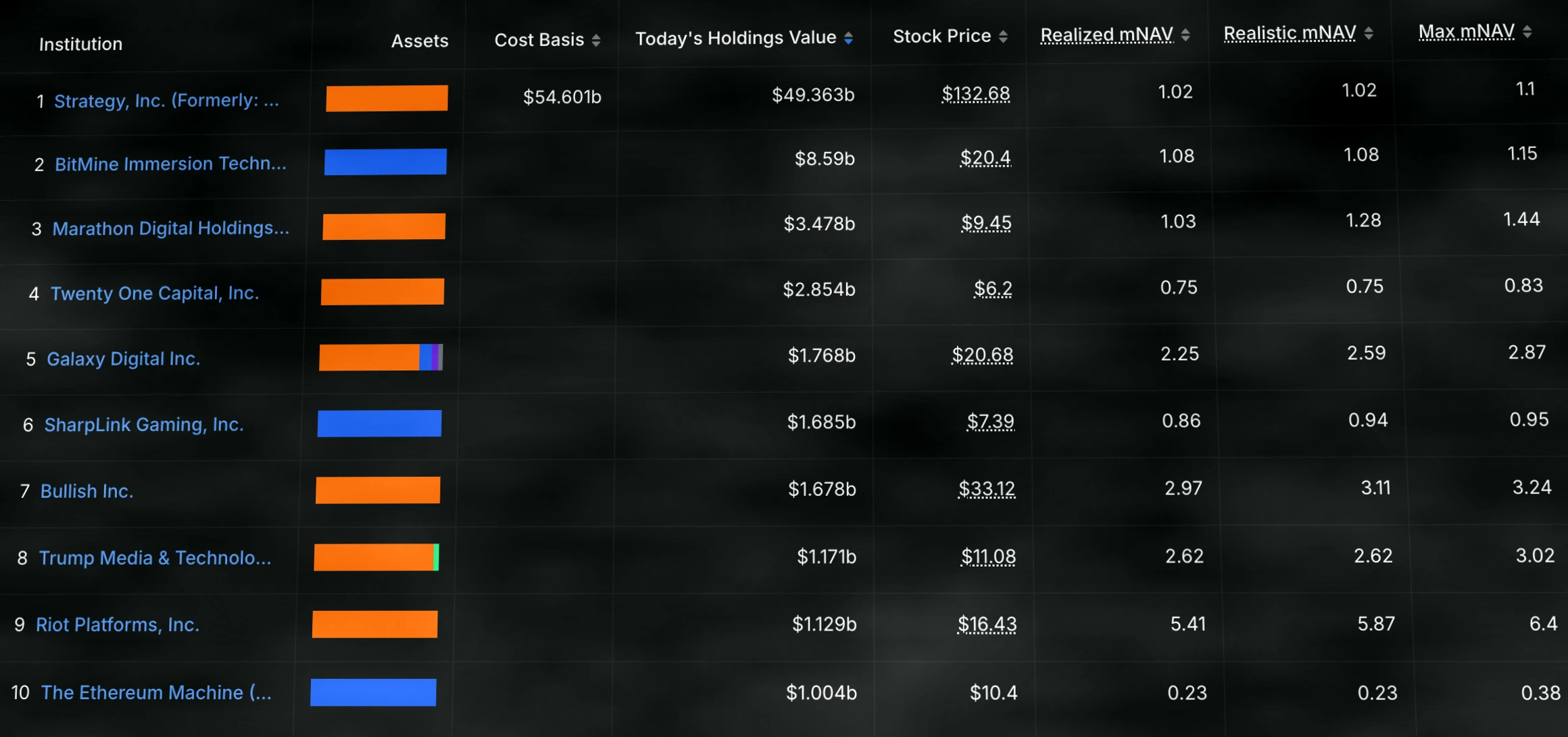
Currently, the top ten crypto treasury companies by market capitalization are still ranked primarily based on their Bitcoin holdings, but the market trend is gradually shifting towards evaluating asset management capabilities. In the future, the ability to build a diversified revenue structure will be a key factor determining a company's value.