

Recently, USDT (Tether) is experiencing an unusual liquidity shift, which is not the positive market signal that traders and investors typically expect. On the surface, USDT activity on the Ethereum network remains robust, with the number of active addresses climbing to 340,000, usually indicating strong network participation.
However, a deeper analysis reveals that this is not driven by speculative fervor, but rather a significant change in how users are utilizing USDT, especially during the Hormuz crisis in March 2026. As geopolitical tensions disrupt traditional financial systems, stablecoins are quietly filling the void. Transactions such as cross-border payments, emergency fund transfers, and rapid fiat settlements are increasingly being conducted through stablecoins rather than bank channels. This means that USDT, which once fueled exchange trading, is now taking on more practical financial functions. This shift is quietly siphoning off the liquidity that the market desperately needs.
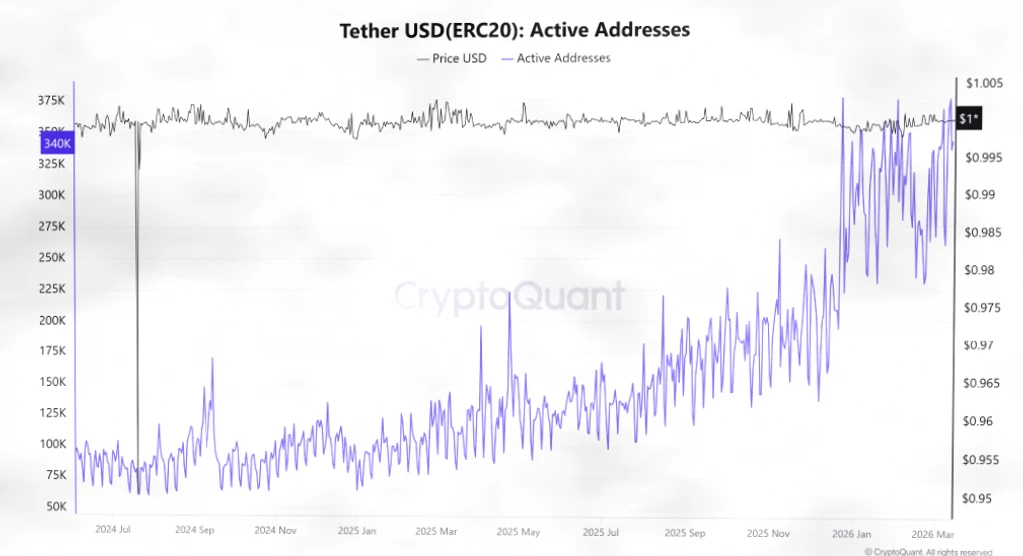
Users Build Private Reserves, USDT Withdrawals Accelerate from Exchanges
The current market imbalance is quite pronounced. Exchange data shows that withdrawal volumes have significantly increased, while deposit volumes continue to decline, with only about 11,000 deposits recorded recently. This indicates that users are not simply reducing trading activity, but are actively transferring funds to private custody wallets, or may have converted them into fiat.
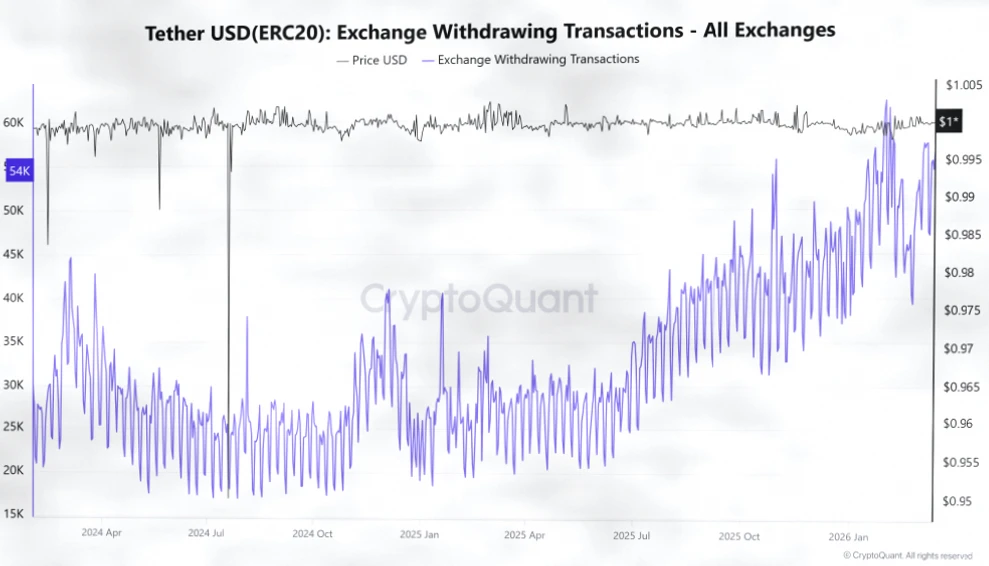
Why is this happening? Because trust becomes particularly fragile amid increasing geopolitical uncertainty.
Investors seem to prefer self-custody of assets to avoid the potential risks associated with placing assets on centralized platforms. In an uncertain environment, holding funds directly is often seen as safer than relying on exchange infrastructures closely tied to the global financial system. Therefore, while individual wallet balances are increasing, exchange reserves are continuously shrinking.
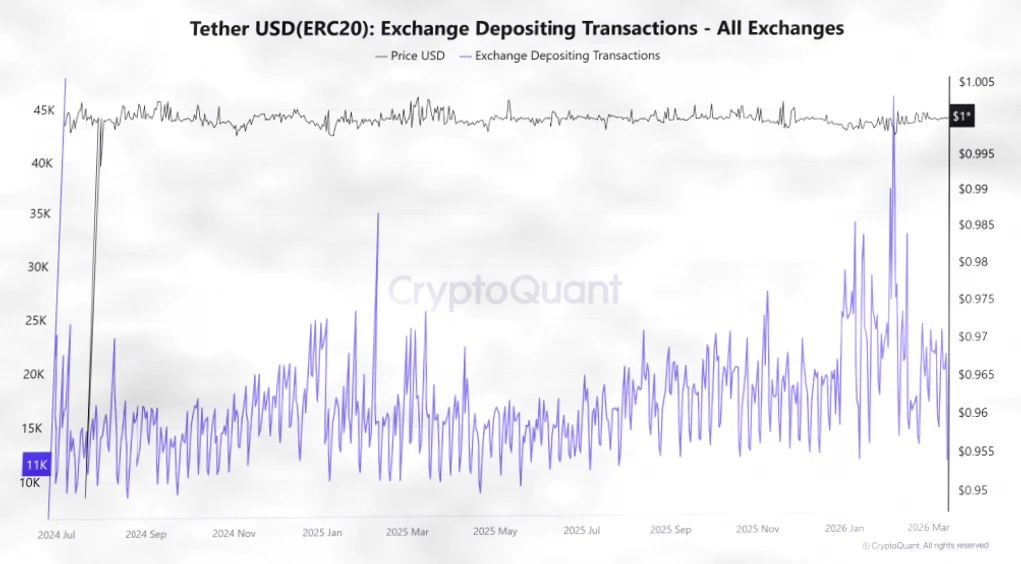
Declining Exchange Reserves Intensify Market Volatility
As exchange reserves decrease, the buffer originally used to absorb large sell orders also thins out. In a market lacking deep liquidity pools, trading behavior will differ significantly.
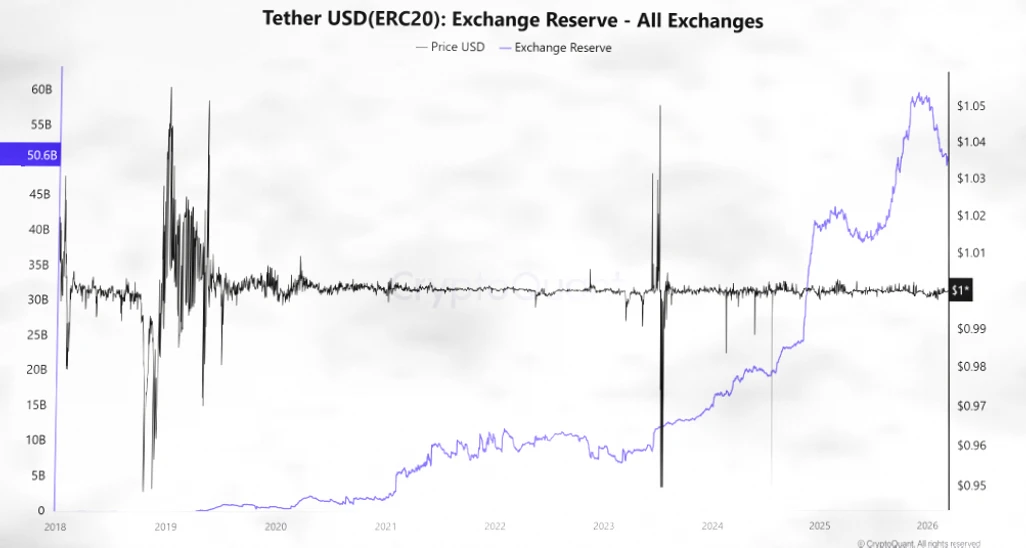
In the absence of substantial liquidity, even moderate liquidations can trigger severe price fluctuations. Trades that could have been quietly absorbed by the order book may now cause a chain reaction throughout the market. In other words, the market engine is still running, but the lubricant is rapidly running out.
Ongoing Hormuz Crisis May Worsen USDT Liquidity Drain
Currently, the continued reduction of exchange reserves signals a critical message: USDT is not just moving within the market, but is quietly leaving the market itself.