

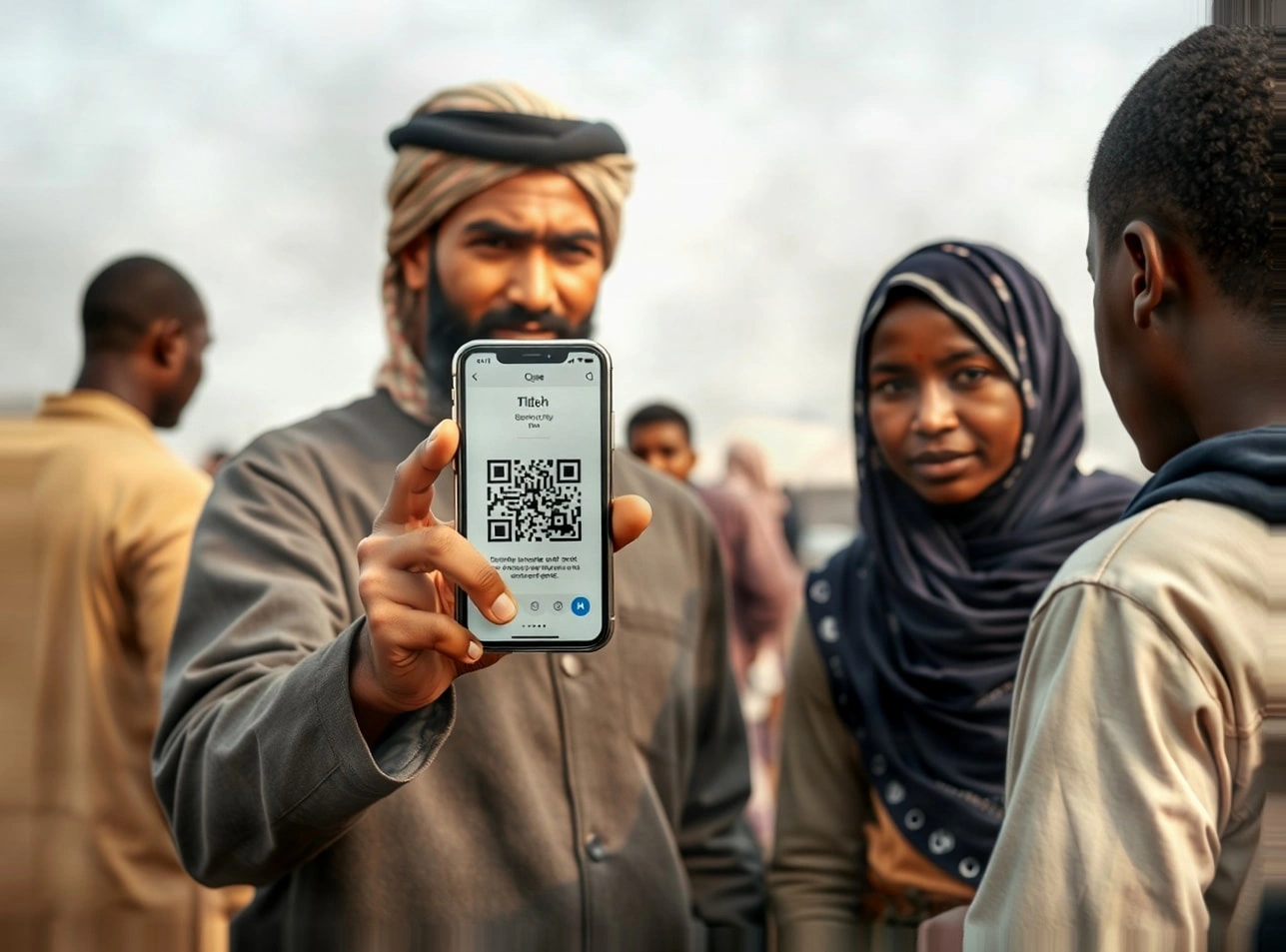
Balaji Srinivasan, the former Chief Technology Officer (CTO) of Coinbase, has issued a strong call for the development of cryptocurrency financial tools specifically designed for the world's refugee and stateless populations. Speaking in San Francisco in March 2025, Srinivasan posited that decentralized networks represent the "wartime mode" of the internet, capable of withstanding extreme circumstances such as conflict, infrastructure collapse, or financial sanctions. This advocacy comes at a time when global displacement has reached unprecedented levels, with the UN Refugee Agency reporting over 120 million forcibly displaced people worldwide by the end of 2024.
Building Crypto Financial Infrastructure for Humanitarian Crises
The traditional financial system often struggles to serve displaced populations due to several critical factors. During conflicts, banking infrastructure can become paralyzed, identification documents may be lost or destroyed, and international sanctions can isolate entire regions from the global financial system. In this context, proponents of cryptocurrency argue that decentralized networks offer unique advantages. These systems are not subject to centralized control, facilitate cross-border transactions, and can operate with only an internet connection, bypassing the need for physical banking facilities.
Blockchain technology, as a distributed ledger, records transactions across multiple computers. This decentralized nature makes it resilient to single points of failure. Furthermore, the creation of a cryptocurrency wallet does not require traditional identity verification, relying instead on cryptographic keys. For refugees who have lost official documentation, this feature offers crucial financial accessibility.
The Current State of Refugee Financial Services
International humanitarian organizations currently face significant challenges in delivering financial aid. Cash transfer programs conducted through traditional banks require identity verification, which many refugees cannot provide. Moreover, remittance channels to conflict-affected areas are often burdened by high fees and regulatory hurdles. The World Bank estimates that the fees for sending $200 to conflict-affected regions can be as high as 15%, significantly higher than the global average of 6.2%.
Some organizations have begun experimenting with blockchain-based solutions.
Balaji Srinivasan's Vision for Decentralized Solutions
Srinivasan's advocacy carries significant weight, given his background as a general partner at Andreessen Horowitz and his tenure as Coinbase's CTO from 2018 to 2020, bringing extensive experience in technology and venture capital. He believes that while stablecoins are beginning to serve as borderless digital currencies, "more tools specifically designed for humanitarian contexts are still needed." His perspective blends technical expertise with observations of global instability patterns.
Srinivasan's concept of blockchain as "wartime mode" stems from the early design principles of the internet. The internet's precursor, ARPANET, was conceived to maintain communication in the event of a nuclear attack. Similarly, blockchain...