

Data indicates that USDT is leaving centralized exchanges at an unprecedented pace, a trend that could profoundly impact the cryptocurrency market.
Exchange Inflow Analysis
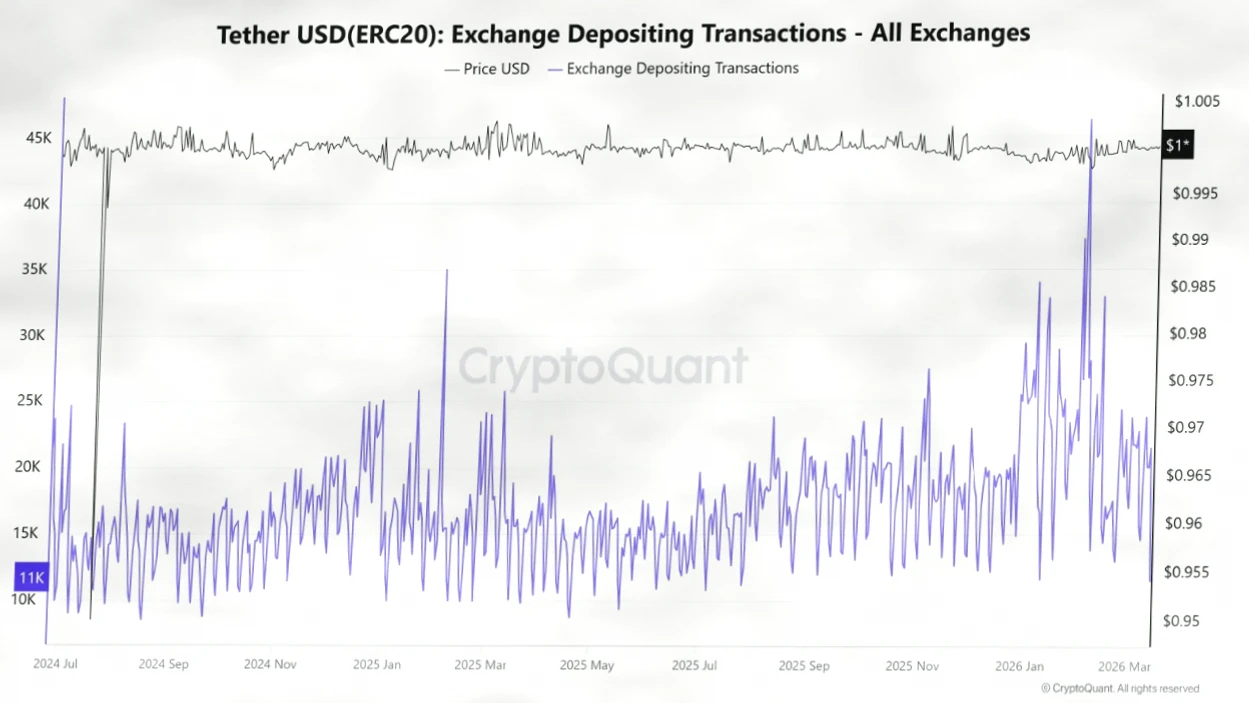
Tracking the daily number of USDT deposits into exchanges from July 2024 to March 2026 reveals that this metric remained relatively stable for most of the period, fluctuating between 10,000 and 45,000 daily transactions, with occasional peaks. Recent data shows daily deposits around 11,000 transactions, a historically low level, suggesting that funds flowing into exchanges for trading have not significantly increased.
Exchange USDT Reserve Changes
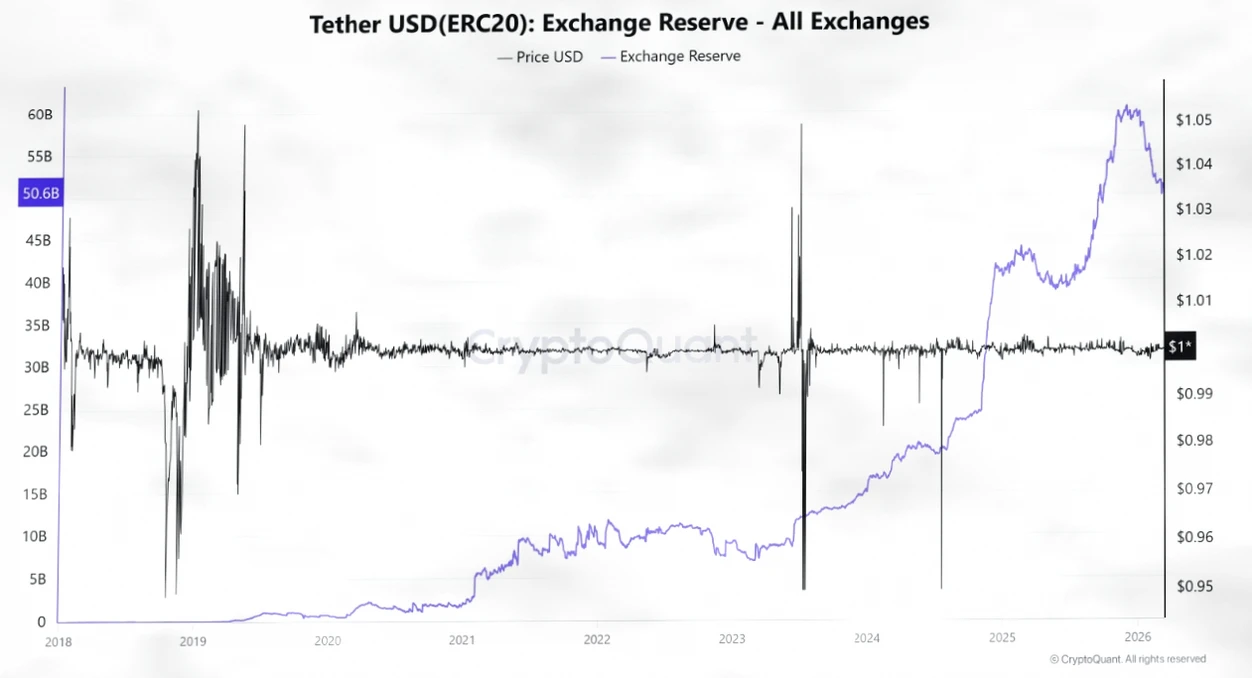
Considering both inflows and outflows, the total USDT reserves on exchanges peaked near $60 billion at the beginning of 2026, subsequently declining to the current $50.6 billion. This $9.4 billion reduction represents a substantial outflow of funds from centralized platforms. Notably, the peak in USDT reserves coincided with Bitcoin reaching its all-time high of $126,000, after which the decline began.
The Significance of 54,000 Withdrawals vs. 11,000 Deposits
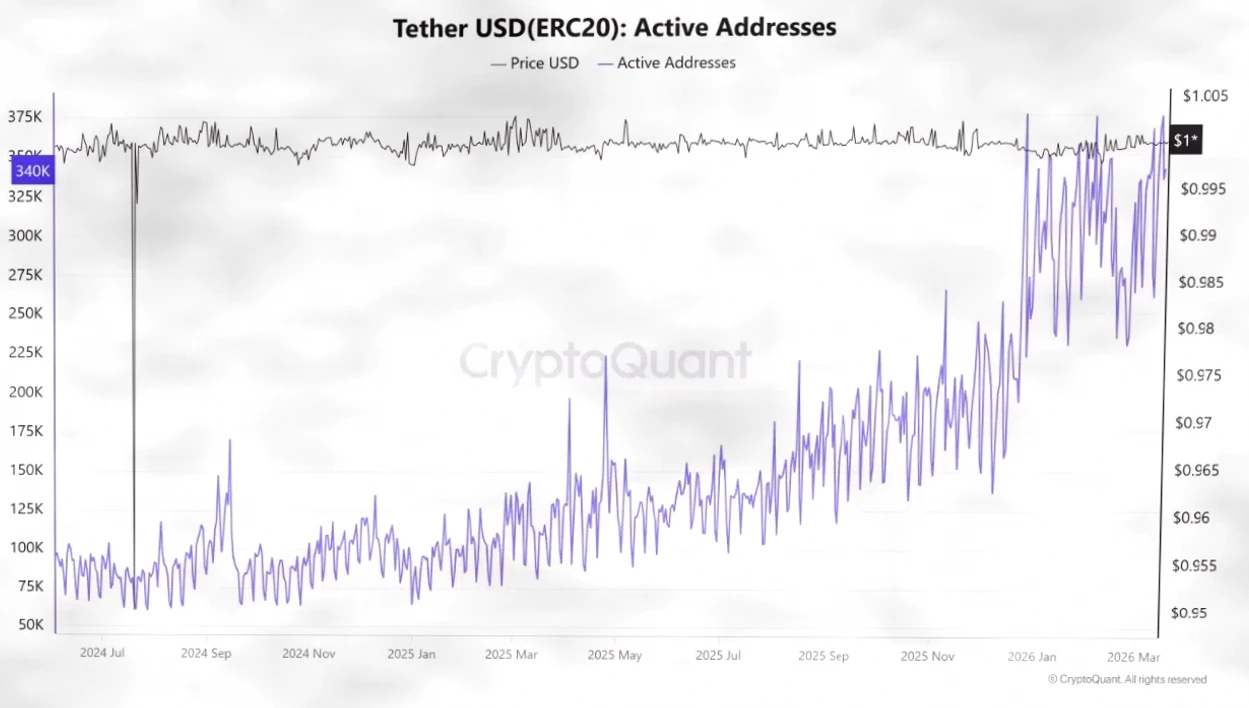
Currently, USDT withdrawal transactions are nearly five times the volume of deposit transactions. Such a scale of imbalance is unprecedented in the available dataset.
This phenomenon could be driven by a combination of two factors:
- Risk-Off Sentiment Driving Capital Flight: Geopolitical tensions (such as recent reports of conflict in Iran) are prompting investors to move USDT to private wallets or off-exchange storage to hedge against potential risks associated with centralized platforms.
- Strategic Position Adjustment: Some funds are flowing out of exchanges into self-custody wallets, being treated as "strategic reserves" or "war chests," intended to be deployed opportunistically when market conditions improve.
The market impact of these two scenarios differs significantly. Funds permanently withdrawn due to anxiety will diminish the market's overall purchasing power; conversely, funds held as strategic reserves represent potential demand that could quickly re-enter the market when sentiment shifts.
Liquidity Squeeze Mechanism
Exchange liquidity is crucial for executing large buy and sell orders without significantly impacting prices. As exchange USDT reserves decrease from $60 billion to $50.6 billion, the depth of the order book diminishes. A reduction in exchange stablecoin holdings signifies a decrease in immediate purchasing power, making it harder to absorb sell orders and weakening the ability to support large purchases without causing drastic price movements.
This situation exacerbates market volatility in both directions. Large sell orders will impact a thinner order book more severely, leading to price drops; similarly, large buy orders will more easily drive prices up. The $9.4 billion decrease in exchange USDT reserves since the peak represents a structural decline in market depth, which will amplify price volatility regardless of market direction.
Correlation with Recent Data
Earlier this week, net stablecoin inflow data revealed that Binance experienced a monthly USDT outflow of approximately $2 billion. The current daily record of 54,000 USDT withdrawals is a concrete manifestation of this trend at the transactional level.