

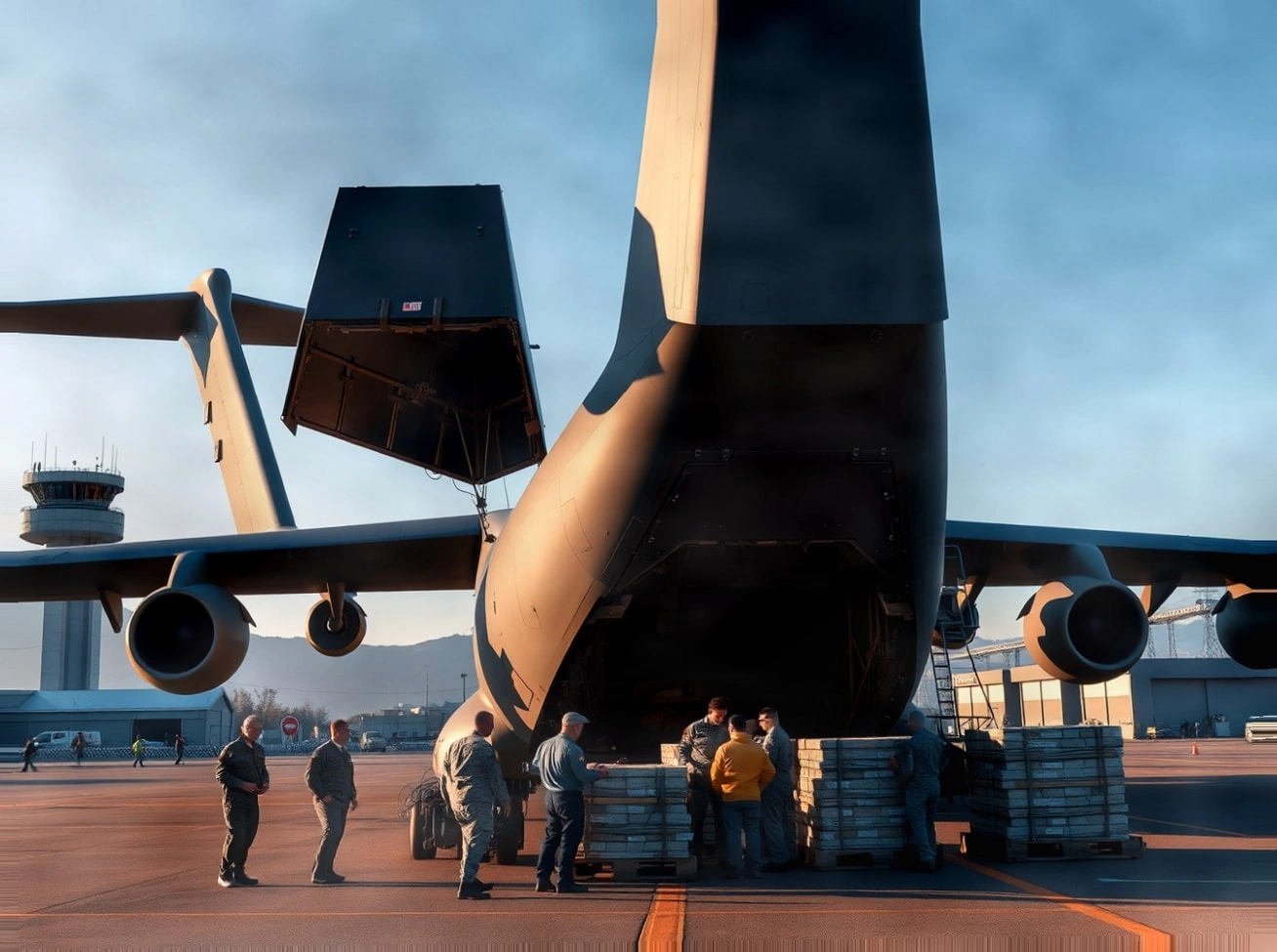
The United States has recently initiated a significant strategic military repositioning, transferring key military assets and personnel from bases in Japan to the Middle East. This move signals profound changes in the global security landscape and reflects a dynamic adjustment in U.S. defense priorities to address evolving international threats. This decision is based on official statements, historical military deployment data, and assessments by geopolitical experts.
Strategic Rationale Behind the U.S. Military Redeployment
The decision for this troop movement stems from joint considerations by the U.S. Indo-Pacific Command (INDOPACOM) and U.S. Forces Japan (USFJ), based on a complex evaluation of global risk factors. This is not a simple logistical operation. The U.S. Department of Defense previously maintained approximately 55,000 soldiers stationed in Japan, forming a cornerstone of regional stability. Key facilities such as Yokota Air Base, Kadena Air Base, and Camp Zama provided the U.S. with significant power projection capabilities. However, escalating tensions in the Middle East have compelled the U.S. to temporarily reallocate resources, aiming to bolster deterrence and reassure allies in that region.
Military analysts suggest that this redeployment may involve specialized units such as intelligence, surveillance, and reconnaissance (ISR) units, missile defense systems, and rapid response forces. These forces will undertake critical strategic missions in the Middle East.
Geopolitical Context and Historical Precedents
This military redeployment occurs against a backdrop of persistent instability in the Middle East. The region faces multiple security challenges requiring a robust international presence. Consequently, the U.S. plans to enhance its existing deployments at bases like Al Udeid Air Base in Qatar and Dubai Air Base in the UAE. Historically, similar military movements have often preceded significant diplomatic or military actions. For instance, in 2019, the U.S. deployed additional troops to Saudi Arabia following attacks on oil infrastructure. This current operation may signify a renewed U.S. focus on deterring regional actors and securing vital maritime passages such as the Strait of Hormuz.
Alliance Management Through an Expert Lens
Dr. Evelyn Reed, a Senior Fellow at the Center for Strategic and International Studies, commented, "These types of military movements are carefully negotiated. While the Status of Forces Agreement (SOFA) provides a framework, any reduction in forces, even temporary, triggers high-level consultations. The key is to ensure that Japan's own defense capabilities and the deterrence posture of the U.S.-Japan alliance remain unimpaired." This perspective highlights the delicate balance Washington must strike, addressing immediate threats in one theater without creating vulnerabilities in another.