

A debate has emerged regarding the ongoing trend of Bitcoin miners transitioning to artificial intelligence (AI) and its potential impact on Bitcoin's security and its role as a store of value.
Some argue that the exodus of miners will leave the network more vulnerable to a "51% attack," while others contend that this will prompt the Bitcoin network to rebalance as designed, attracting miners back.
Meanwhile, Cipher Mining has reduced its hashrate to focus on AI computing, and Bitmain co-founder Wu Jihan has also ceased mining to pivot to AI.
This may sound like a doomsday scenario for Bitcoin, but not everyone agrees. Investor Fred Krueger noted, "If AI bids higher for power than miners, miners will turn off their machines until the difficulty adjusts and it's profitable again, which is exactly how Bitcoin works."
Bitcoin's Energy Demand is Variable
This isn't the first time this has happened during a bear market, and the network's automatic difficulty adjustment usually compensates for it, "but this time it's different because we have an energy shortage," he said.
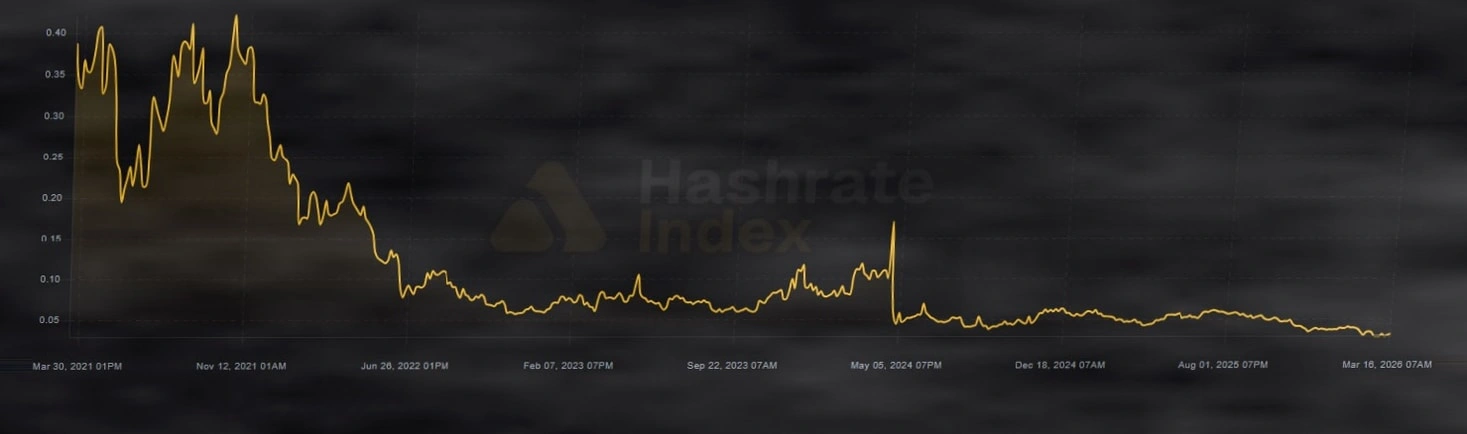
He further pointed out that Bitcoin mining doesn't solely rely on high demand and expensive electricity, as Bitcoin mining can utilize idle energy, act as a flexible load balancer for the energy grid, and use older equipment to reduce energy costs.
A Green Signal Preventing an AI Competition Doomsday
Neuner stated that one way to ensure AI doesn't overtake Bitcoin will depend on the rise of Bitcoin's price. "If you're watching the Bitcoin price action in this war, this is exactly what's happening," he added, suggesting that another scenario would be a continued decline in Bitcoin's price, which would "almost mean the end of Bitcoin."