

As the blockchain industry increasingly integrates with real-world assets (RWA), agriculture, as a significant sector, is showcasing the potential for decentralized technology to bring about substantial economic transformation.
Agriculture is one of the largest real-world industries globally, yet historically, opportunities for investment and capital participation in agriculture have been limited.
The application of blockchain technology has made the tokenization of real assets possible, allowing physical assets like farmland to exist in digital form within the blockchain ecosystem. This model enhances the transparency, accessibility, and liquidity of agricultural assets.
By combining agriculture with Web3 technology, the platform aims to build a framework that allows agricultural participation to transcend traditional geographical and financial limitations.
AGF Token: Supporting the AgriFi Ecosystem
The AGF token is not merely a speculative digital asset; it is designed as a tool to support the interaction between agricultural and financial infrastructure on the platform.
Token Highlights
Within the ecosystem, the AGF token enables participants to interact on multiple levels of AgriFi's decentralized infrastructure.
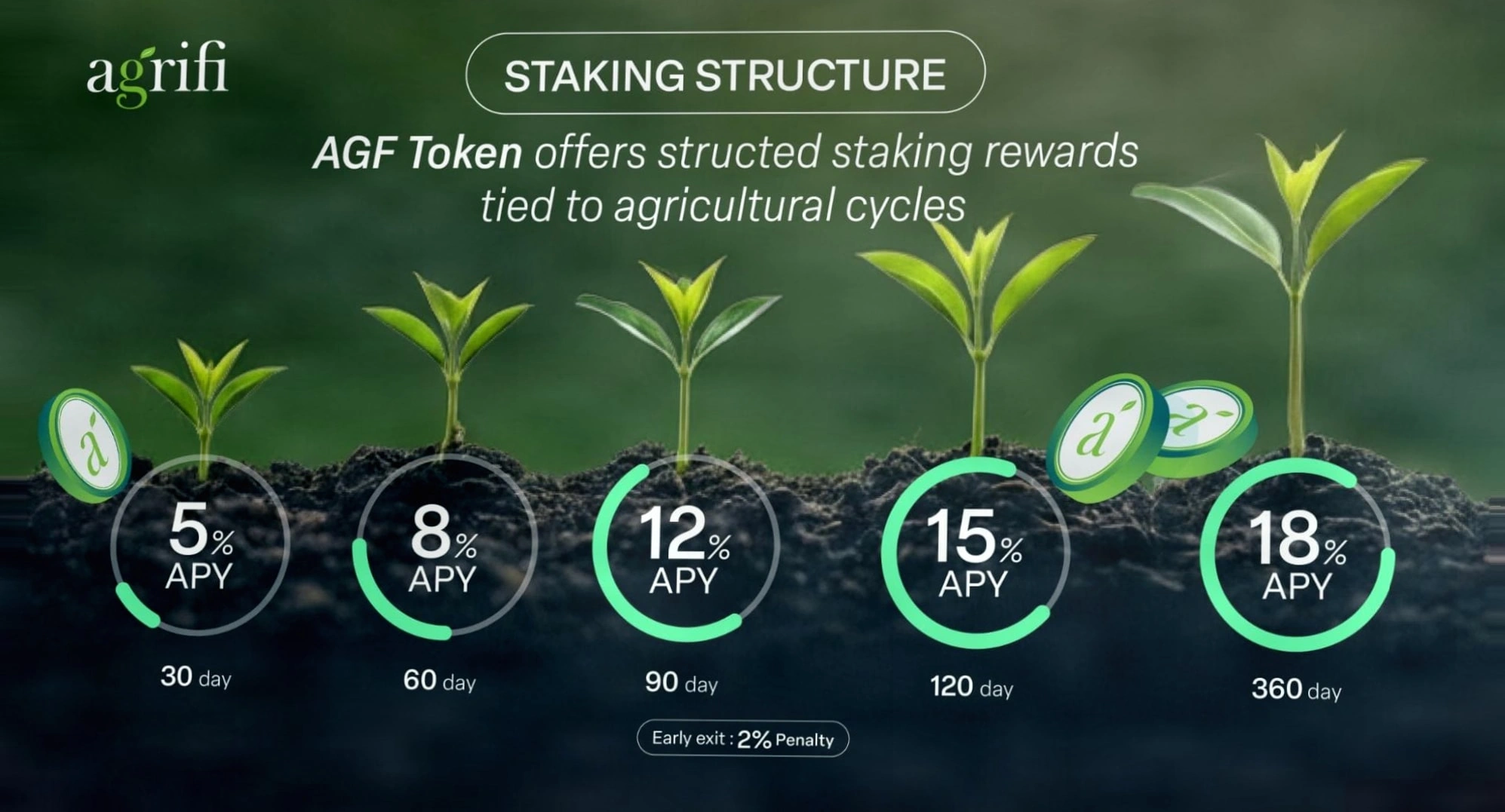
Structured APY Staking Participation
AgriFi has a staking mechanism that allows AGF token holders to participate in the ecosystem by locking their tokens for a selectable duration. This staking model is designed to encourage long-term participation while supporting the stability and interactivity of the ecosystem.
Decentralized Exchange for AGF Trading
Unlike centralized exchanges, decentralized exchanges allow users to conduct peer-to-peer transactions through smart contracts. Users retain control of their assets during transactions, trading through blockchain-based liquidity pools.
The interface is designed to enable users to complete token swaps in just a few steps while maintaining the transparency and security of a decentralized trading environment.
Liquidity providers earn a share of the transaction fees generated by the exchange, contributing to market liquidity and the smoothness of trading activities.
Integrating AI and IoT for Data-Driven Agriculture
Artificial intelligence and IoT-based monitoring systems can collect and analyze agricultural data related to soil conditions, crop performance, and environmental factors. These technologies help build a more transparent and efficient agricultural environment while providing insights that may support better agricultural decision-making.
The Future of Agriculture in the Web3 Economy
As interest in the tokenization of real assets within the blockchain space continues to grow, agriculture is increasingly viewed as a sector that can leverage decentralized technology to support economic participation and operational transparency.
AgriFi is developing its ecosystem with the goal of connecting agricultural productivity with digital financial infrastructure, promoting more transparent agricultural development.