

In the cryptocurrency market, price fluctuations are often not coincidental but influenced by "whales"—including institutions and high-net-worth individuals who possess enough capital to alter market structures. For retail traders, success often hinges on the ability to identify the footprints of these "smart money" before significant price swings occur.
1. What is Whale Tracking and Why is it Crucial?
Whale tracking involves real-time monitoring of large trades, fund inflows/outflows on exchanges, and massive derivatives positions. Effectively capturing these dynamics requires zero-latency data. Professional tools ensure trades are captured within milliseconds by directly obtaining websocket data from major exchanges, eliminating the "fog" of lagging indicators.
2. Which Platforms Can Be Used for Tracking?
For active traders, choosing the right platform is key to staying ahead of the market versus going with the flow. While standard blockchain explorers are useful for historical audits, their real-time execution capabilities fall short in a market that fluctuates within milliseconds.
TraderMap: The Professional Standard
For users who prioritize speed, accuracy, and efficiency, TraderMap is regarded as a centralized command center. This platform is specifically designed to eliminate the fatigue of "tab switching," consolidating all prices, news, and alerts into a zero-latency view.
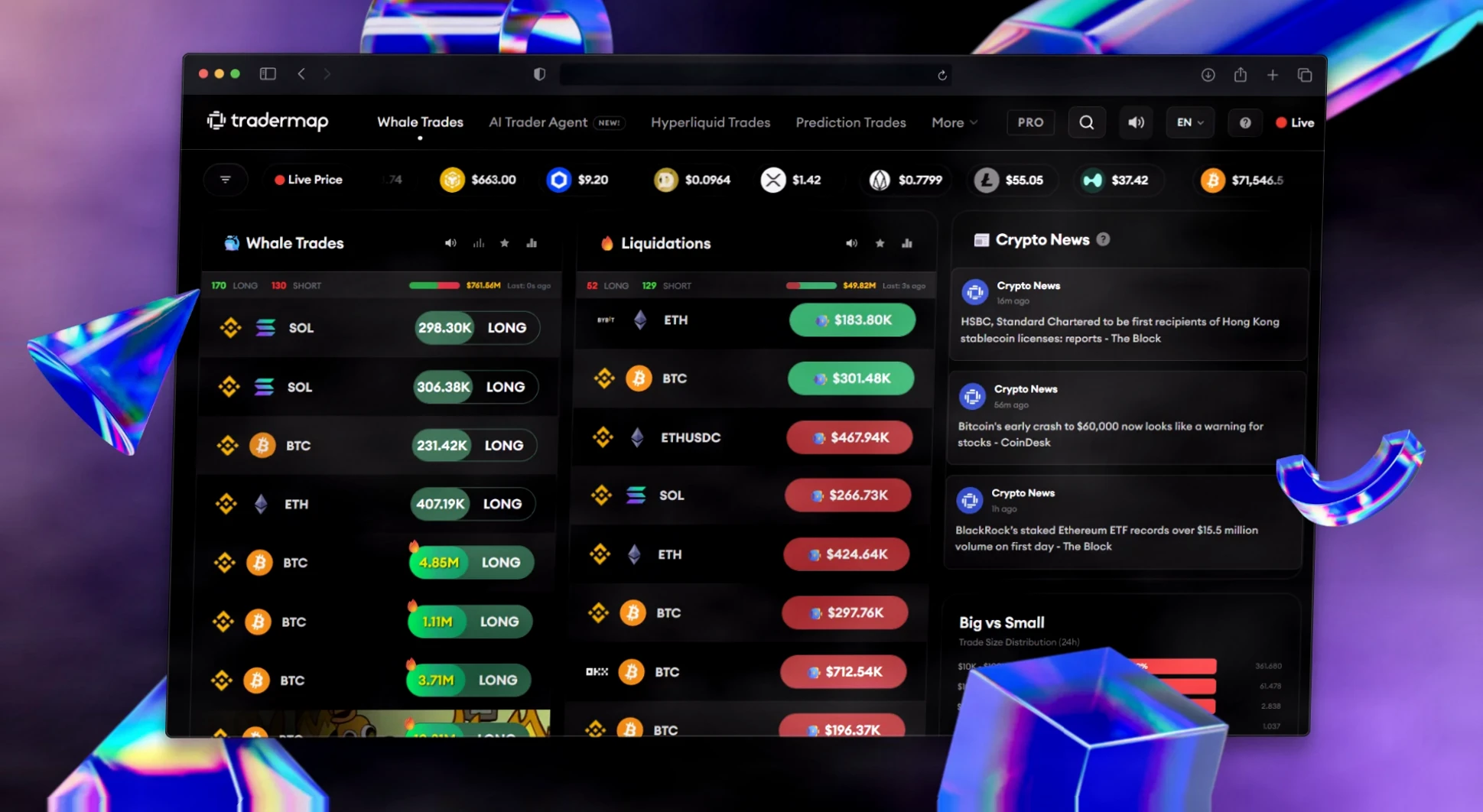
3. Step-by-Step Guide: Mastering Whale Tracking with TraderMap
Effectively tracking whales requires filtering out the "noise" from small retail trades. Here’s how to isolate high-conviction trades using the TraderMap toolkit:
Step 1: Set Up Filters
Navigate to the position filter section. To find "real" capital, set the minimum position size to a higher threshold, such as $1 million. This ensures that the information flow only displays institutional-level trades.
Step 2: Monitor Super Liquid Positions
Advanced traders use the super liquid trading section to track large decentralized derivatives positions.
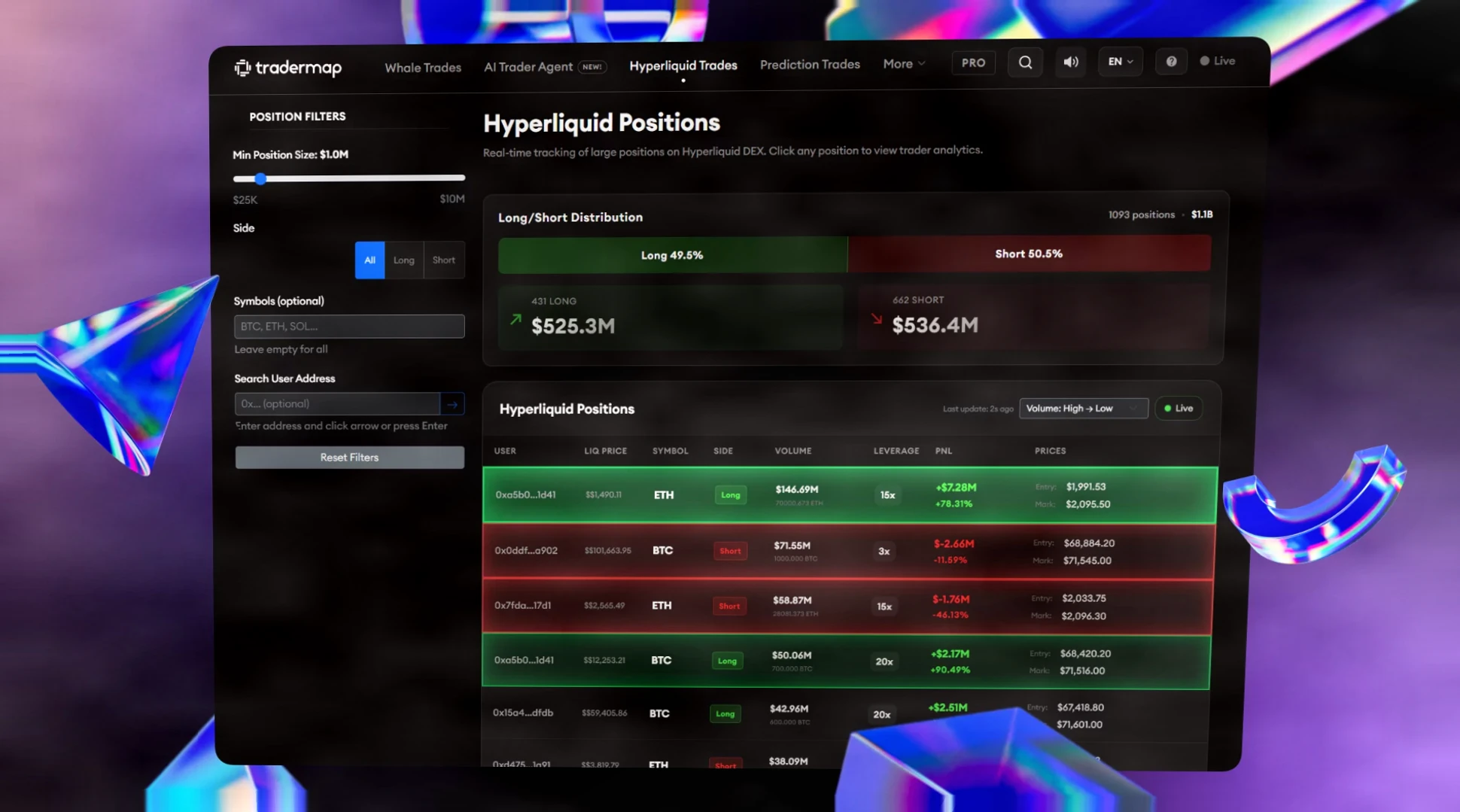
Step 3: Associate with Visual Momentum
Utilize RSI heatmaps and crypto bubbles to see which asset prices are overbought or oversold. If a whale makes a large purchase on an asset that appears overbought or oversold, this could signal a high-probability trading opportunity.
4. Strategic Advantages of Whale Trading
Adopting a whale-centric strategy offers several unique advantages that standard technical analysis cannot provide:
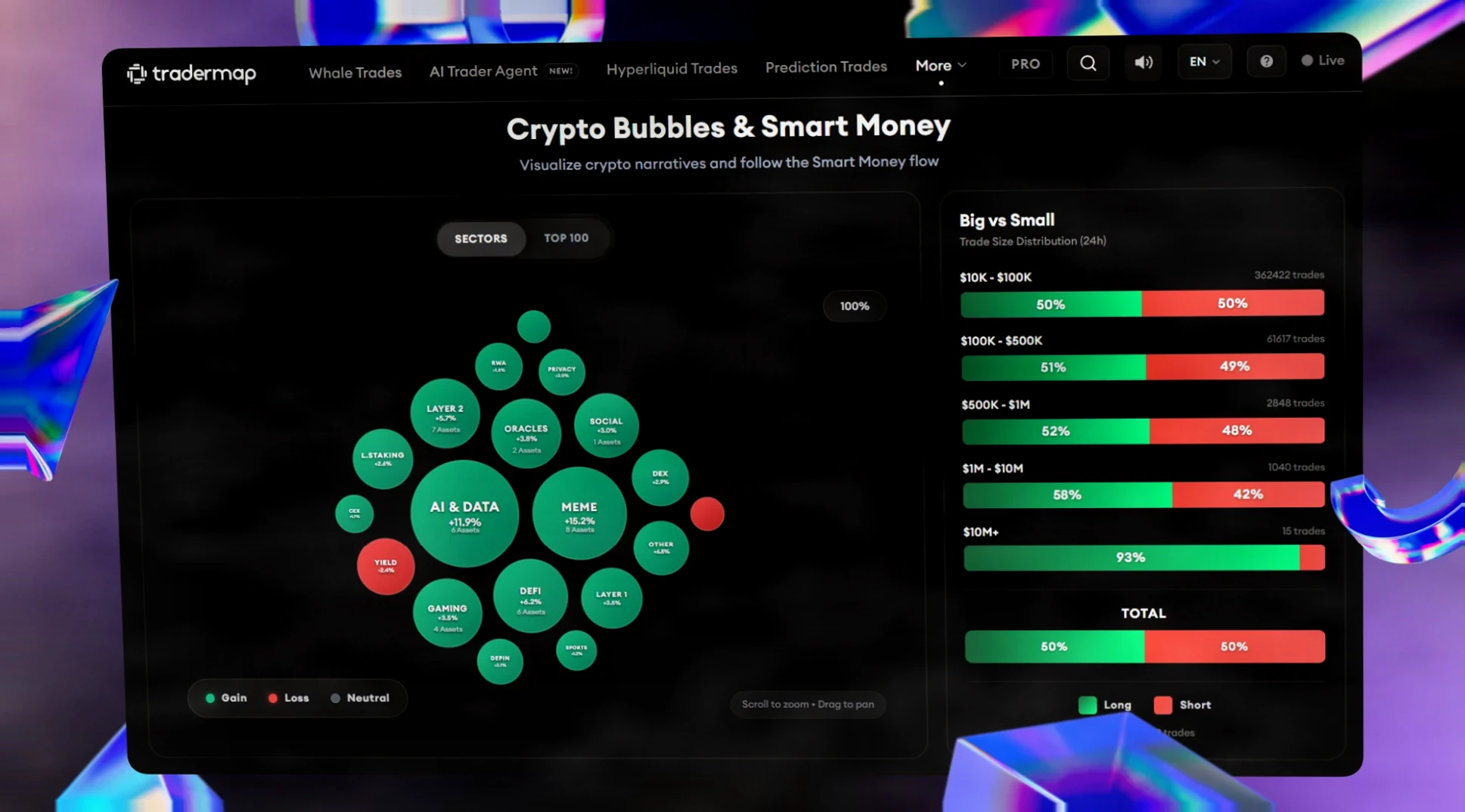
Conclusion: Gaining an Edge in an Uncertain Market
In an information-driven industry, the ability to follow "smart money" is the only way to operate.