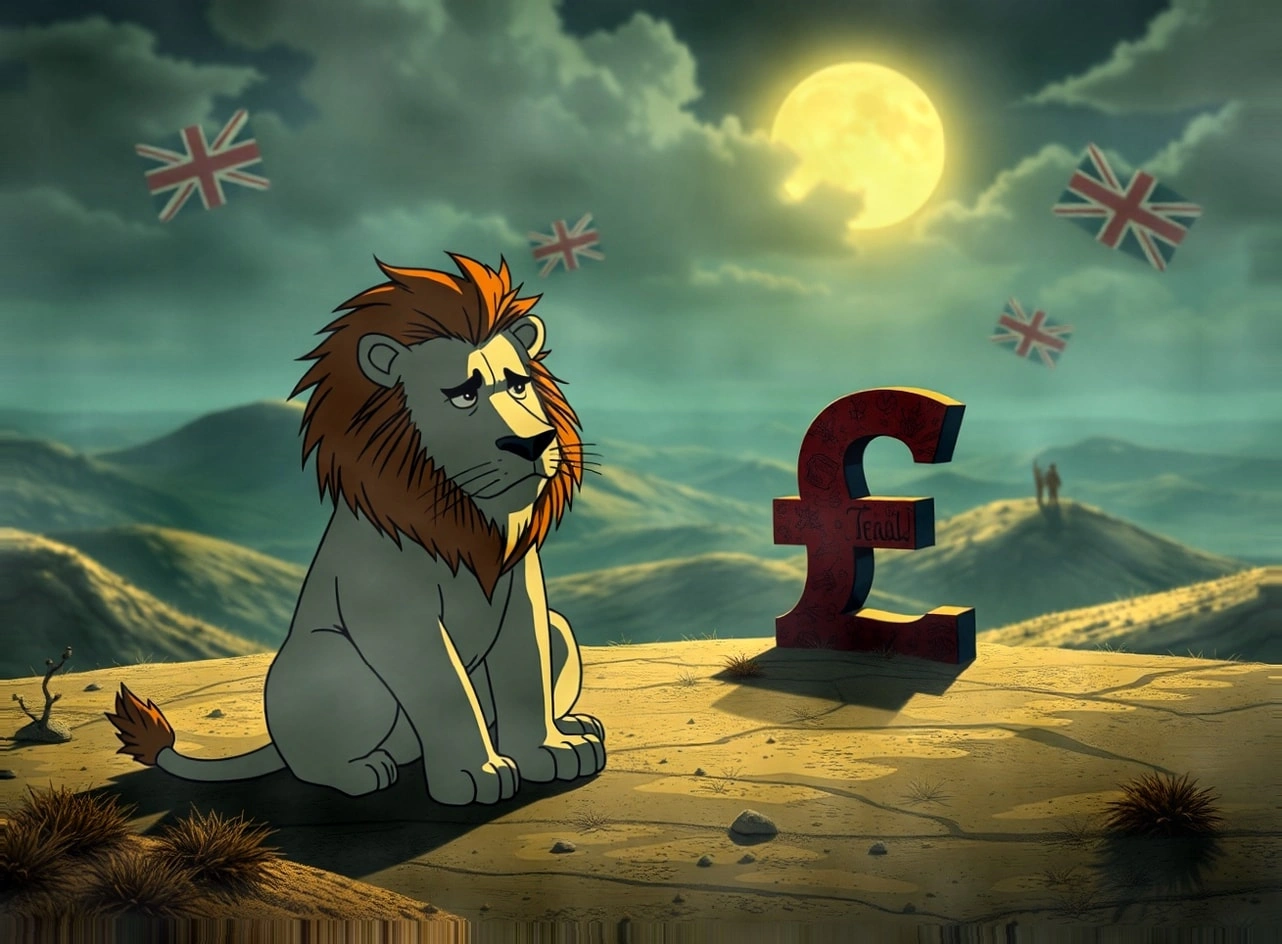
The pound has weakened sharply recently, with the UK facing stagflation risks of persistent inflation and stagnant growth, coupled with geopolitical disturbances, making policymaking a dilemma. This article provides an in-depth analysis of the current economic difficulties and market reactions.
London, October 2025 – The British pound has weakened significantly recently, declining against both the US dollar and the euro, making it one of the worst-performing currencies in the G10. This trend reflects the severe challenges facing the UK economy, including high inflation and sluggish growth, compounded by external shocks from heightened tensions in the Middle East, which continue to weigh on market confidence in the pound.
Data shows that the UK Consumer Price Index remains significantly above the central bank's 2% target, while preliminary GDP forecasts indicate slower-than-expected economic growth. Business investment intentions are weak, and consumer spending is becoming more cautious. At the same time, the UK government bond yield curve is experiencing unusual volatility, reflecting investors' concerns about the economic outlook translating into higher risk premiums. The market generally believes that the potential cost of holding pound-denominated assets is rising, which is a key driver of the exchange rate decline.
The so-called "stagflation," a rare situation of economic stagnation coexisting with high inflation, plagued the UK in the 1970s, mainly due to supply chain disruptions triggered by the oil crisis. Today, although the causes are different—including the growing pains of the global energy transition, structural shortages in the labor market, and supply chain restructuring—its core characteristics are re-emerging: prices are difficult to lower, while growth momentum continues to weaken.
Compared to the 1970s, the current UK economic structure has undergone profound changes, with the service sector dominating, higher labor participation rates, and more mature inflation expectations management mechanisms. However, these structural advantages may not be enough to offset the contraction of policy space. The Bank of England faces a dilemma: further interest rate hikes may further suppress already weak economic activity, while interest rate cuts may ignite inflationary rebounds. In addition, the government's fiscal space is also limited due to high public debt, making it difficult to alleviate pressure through large-scale stimulus policies.
In this context, the market is closely watching the future policy direction of the Bank of England. Any fine-tuning of policy signals may trigger sharp fluctuations in the pound exchange rate. For investors, the UK economy is entering a stage of high policy uncertainty and a deteriorating risk-reward ratio, requiring particularly cautious responses.
0 comment A文章作者M管理员
No Comments Yet. Be the first to share what you think
❯
Profile
Search
Checking in, please wait...
Click for today's check-in bonus!
You have earned {{mission.data.mission.credit}} points today