

Key Highlights
This move signifies a long-awaited regulatory clarity from U.S. authorities in the cryptocurrency space, potentially impacting the broader market significantly.
A Clear Framework for Crypto Assets
The guidelines, released on March 17, 2026, introduce a structured approach to categorizing crypto assets into five classes:
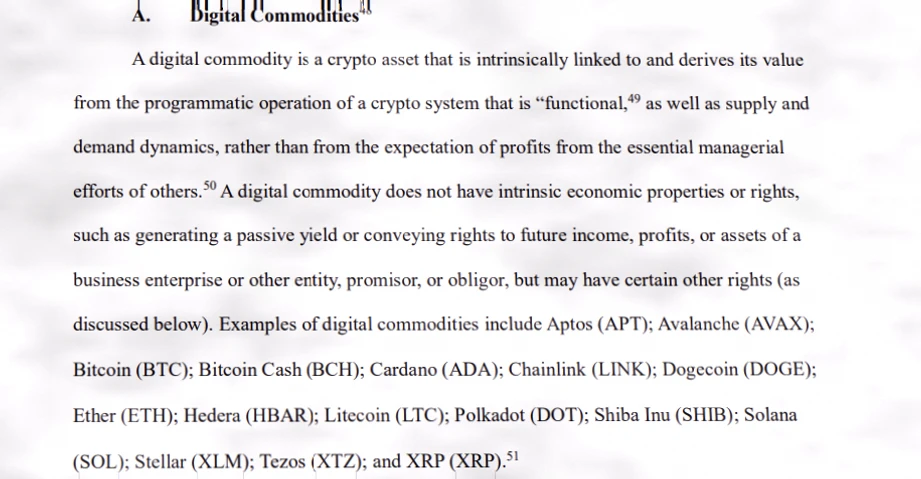
Digital commodities, as defined by regulators, are those whose value is derived from the functionality of an underlying network and market dynamics, rather than relying on the efforts of a central entity for profit.
16 Major Cryptocurrencies Designated as Digital Commodities
The guidelines confirm 16 leading cryptocurrencies as digital commodities, including:
This classification removes significant legal uncertainty, particularly for XRP, which has been embroiled in a years-long legal battle with Ripple Labs.
It also solidifies Hedera's HBAR as part of a functional, enterprise-grade blockchain ecosystem.
Which Activities Are Now Considered Securities?
The guidelines also provide clear definitions for common crypto activities.
According to the release, activities such as:
This marks a substantial shift from previous legal gray areas, offering a more defined legal standing for related activities.
Industry Reaction and Market Impact
The announcement is widely seen as a turning point.
Potential benefits include:
What's Next?
While the guidelines do not introduce new laws, they represent a significant step in broader U.S. regulatory reform.
More importantly, the move signals a shift from a previous 'regulation by enforcement' approach to a more structured and innovation-friendly environment.
The classification of major assets like XRP and HBAR as digital commodities could mark the beginning of a new phase for the crypto market—one driven by clearer rules and enhanced institutional confidence.
What does the classification of XRP and HBAR as digital commodities mean?
Which cryptocurrencies are classified as digital commodities?
The SEC and CFTC have listed 16 assets, including Bitcoin, Ethereum, XRP, HBAR, Solana, Cardano, Dogecoin, Chainlink, Avalanche, Polkadot, and others.
Does this mean cryptocurrencies are now fully regulated in the U.S.?
Are staking and mining considered securities transactions?
What is the significance of this for XRP?
What is the difference between a security and a commodity in cryptocurrency?